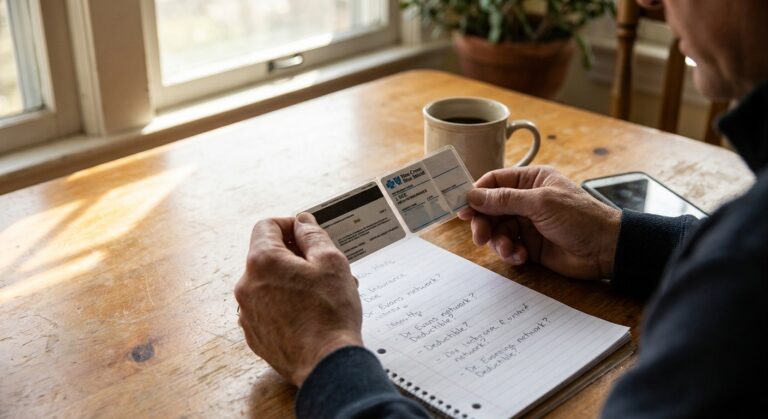

Your brother told you last night he is fine. This morning you found him on the kitchen floor surrounded by unopened mail from three months ago, and when you asked if he slept, he said sleep is for people who deserve it. He will not see a doctor, he will not talk to the therapist you found, and he reminds you that Maryland law says he is an adult who can refuse. You feel out of moves, but you are not. If you have been searching for what to do with a mentally ill family member who refuses treatment, you may have more options than it seems right now, and many of them start with you, not with him.
This page walks through those options in the order families usually need them. It explains why refusal happens, what to write down, when Maryland law lets you step in, who you can call before things reach 911, how to have a conversation that may have a better chance of working, and what changes when drinking or drug use is part of the picture. You do not have to do all of it today. You only need the next step.
Why Won’t They Accept Help When It Is So Obvious They Need It?
Often your loved one cannot see the illness the way you can, and that blind spot is part of the illness itself. The clinical name is anosognosia. It is a symptom, not stubbornness, and it is why calm, logical arguments keep failing.
A national nonprofit focused on serious mental illness reports that anosognosia affects roughly half of people with schizophrenia and about 40 percent of people with bipolar disorder. So when you show your brother the pile of mail and he says nothing is wrong, he may not be lying to you. His brain may simply not be registering the problem. Arguing harder tends to make him dig in, because from where he sits, you are the one who is confused. Knowing this does not make the situation easier, but it can take some of the personal sting out of every “I’m fine.”
The law also protects his right to say no. Medical ethics holds that an adult with decision-making capacity can refuse care, even care everyone around them thinks they need, as this clinical review of refusal of care from StatPearls explains. Capacity is about whether he can understand his situation and the choice in front of him, and it is not about whether he agrees with you. Professional guidelines on the human rights of persons with mental illness stress that people living with mental illness keep their dignity and their rights. That is why Maryland sets a high bar before anyone can be evaluated against their will.
There is one more layer many families miss. Sometimes the refusal is not only about the mental illness. Your loved one may be drinking, taking benzodiazepines, or using heroin, other opioids, or meth to quiet what is happening inside, and saying yes to treatment means facing withdrawal and the fear of being judged. TruHealing Baltimore offers dual diagnosis therapy for people whose mental health symptoms are tangled up with substance use, and that overlap changes how you approach the conversation. We cover it in its own section below.
What Should You Write Down Before the Next Crisis?
Write down specific incidents with dates, exact words, behaviors, and who saw them. The same set of notes can support a court petition if things become dangerous, and it can help the treatment team if your loved one agrees to get help.
Feelings like “he has been off for weeks” are real, but they do not give a judge or a clinician much to work with. Specifics do. Each entry should cover:
- The date and rough time
- What happened, in plain words
- Anything they said that worried you, quoted as closely as you can remember
- Who else was there
- Any police calls, ER visits, or 911 calls, with dates
- Missed work, lost jobs, unpaid bills, or eviction notices
- Days without sleep or food
- Threats toward themselves or others
- Medications they stopped taking
- Substances you saw or found, such as empty bottles or pill bottles with someone else’s name
These notes do two jobs. If your loved one becomes a danger to themselves or someone else, a District Court judge reviewing an emergency petition needs concrete facts, and your notes hold those facts for you when you are too scared to think clearly. If your loved one agrees to treatment instead, the intake team will ask what has been going on, what substances are involved, how much, and when they were last used. Those answers shape a personalized treatment plan, and they matter for safety. Withdrawal from alcohol or benzodiazepines can be dangerous without medical support, which is one reason TruHealing Baltimore offers detox and withdrawal management before residential, PHP, or IOP care begins.
Keep your notes private, in a notebook or a locked note on your phone, and do not use them to confront your loved one. Reading a list of their worst moments back to them will feel like an attack, and it can close a door you are trying to keep open. Think of the notes as your preparation, so that when the moment comes, whether it is a crisis or a quiet yes, you are ready to act at that very minute instead of scrambling.
When Does Maryland Law Let You Step In Without Their Consent?
Maryland lets a family member ask a judge to order an emergency evaluation, called an emergency petition, when someone appears to have a mental disorder and presents a danger to their own life or safety or the safety of others. It is meant for danger, not for slow decline.
The process is set out in Maryland Code, Health-General § 10-620 and the sections that follow. Certain licensed health professionals and police officers can complete a petition directly. A family member or other interested person takes the petition to the District Court of Maryland, which for families in Woodlawn and Windsor Mill means the District Court for Baltimore County. You will describe what you have seen, and this is where your notes matter most. “He said he wants to die and gave away his car keys yesterday” carries far more weight than “he seems depressed.” If the judge finds enough reason to believe the standard is met, the judge endorses the petition, and police take your loved one to an emergency facility, usually a hospital emergency department, for an evaluation.
What happens next is short and often surprising. Under current Maryland law, a person brought in on a petition must be examined promptly and generally cannot be held at the emergency facility for more than about 30 hours. One of three things usually follows. The doctors may find they do not meet the standard, and they go home. They may agree to voluntary treatment. Or two clinicians may certify that they meet the criteria for involuntary admission, and they are admitted, with a hearing before an administrative law judge that typically happens within about 10 days. These rules can change, so ask the court clerk or an attorney to confirm the details for your situation.
Here is the hard truth families often learn too late: many people go home within a day or two because they no longer meet the danger standard and will not sign in on their own. Being picked up by police can also feel frightening and shameful, and it can damage trust. That does not mean you should never file. If your loved one is in danger, a petition can protect their life. It means you should file with a plan for what happens next, because the hours in that emergency department are sometimes the moment a person finally says, “Okay, I’ll go.” If you have already checked insurance and saved 833-782-2241 in your phone, that yes can turn into a real admission instead of a missed chance.
Who Can You Call Before It Gets to 911?
You can call or text 988, the Suicide & Crisis Lifeline, any time of day, and your loved one does not have to be suicidal for you to reach out. Depending on where you live and how busy local teams are, the crisis counselor may be able to arrange for a mobile crisis team to come to your home.
The 988 Lifeline launched nationally in 2022 and is administered by SAMHSA. In Maryland, calls and texts route to local crisis centers staffed by trained counselors. When you call, the counselor listens, helps you sort out how serious the situation is, and can talk with your loved one if they are willing. When a mobile team is available, mental health professionals can visit in person, assess what is going on, and in many cases work to calm things down without police. They can also help you understand whether an emergency petition makes sense, or connect you with a voluntary referral.
For many families, this is the step they did not know existed. It sits between “he keeps saying no” and “we have to call the police.” Picture your brother after four days without sleep: pacing, agitated, convinced the neighbors are watching him, but not threatening anyone. That is a 988 situation, and a trained person can help you figure out what comes next without putting handcuffs into the story.
Call 911 instead when there is immediate physical danger, such as a weapon, an attempt in progress, violence, or a medical emergency like a possible overdose where someone is not breathing, cannot be woken up, or has blue lips. You can tell the dispatcher that this is a mental health crisis and ask whether a crisis-trained officer is available. Calling for help in a true emergency is never the wrong choice, even when your loved one is angry about it afterward.
What to Do With a Mentally Ill Family Member Who Refuses Treatment but Is Not in Danger
Stop trying to win the argument and start building trust in small steps, so that when they are ready to say yes, the path is already clear. For some families, a series of calm conversations works better than one big confrontation or ultimatum.
Most families get stuck arguing about the diagnosis. Your loved one says they are not sick, you say they are, and both of you walk away hurt. Advice from Utah State University Extension on helping a loved one who doesn’t want help points in a different direction: listen first, show you understand how they feel, and look for goals you share. Your brother may never agree that he has bipolar disorder, but he may agree that he wants to sleep again, keep his job, or stop fighting with everyone, so start there. Choose a calm moment, not the middle of a blowup. Use “I” statements like “I am scared when you don’t sleep for days” instead of “You are out of control.” Then offer one small step, such as a single assessment or one phone call, rather than a 30-day stay.
What you avoid saying matters just as much. Labels like “crazy” or “addict” make people defend themselves instead of hearing you, and threats you will not follow through on teach your loved one that your words do not mean much. If they say “not today,” accept it and come back to it later. Each calm conversation helps you build rapport, and rapport is what lets a “maybe” turn into a “yes.”
Now prepare for the yes, because when it comes, the window can be short. Insurance confusion is a hidden reason many families freeze at exactly the wrong moment. TruHealing Baltimore accepts Aetna, Cigna, Blue Cross Blue Shield, Optum, Beacon Health Options, and Humana, and it also accepts private pay. The admissions team can verify your loved one’s benefits before you ever have the conversation. That way, “Will this cost us everything?” is already answered, and you are not on hold with an insurance company while your loved one changes their mind.
What happens after the yes matters too. TruHealing Baltimore can help connect you with detox, residential treatment (RTC), partial hospitalization (PHP), intensive outpatient (IOP), and sober living services, with compassionate care and personalized treatment guiding each step of the journey to recovery, with locations in Woodlawn and Windsor Mill. For someone who never wanted treatment in the first place, every handoff to a new building, a new staff, and a new intake form is another chance to walk out. Staying with one team across levels of care means your loved one does not have to restart from scratch or retell their whole story to strangers at each step.
When you call 833-782-2241, here is what you can expect to cover:
- What is happening right now. Share the incidents from your notes, including sleep, threats, and any stopped medications.
- What substances may be involved. Alcohol, benzodiazepines, heroin, other opioids, and meth each change whether detox needs to come first.
- Insurance or private pay. Have the member ID card for Aetna, Cigna, Blue Cross Blue Shield, Optum, Beacon Health Options, or Humana ready so benefits can be checked.
- Which level of care fits. The team can explain the difference between detox, residential, PHP, IOP, and sober living for your loved one’s situation.
- Next steps. You will leave the call knowing what to do the moment your loved one is willing.
Is Drinking or Drug Use Making the Refusal Worse?
Often, yes. Alcohol, benzodiazepines, stimulants like meth or cocaine, and opioids like heroin can cause or intensify paranoia, depression, and agitation, and fear of withdrawal or of being judged can make someone fight even harder against help.
The National Institute on Drug Abuse notes that substance use disorders and mental illnesses often occur together. Each can make the other worse, and either can hide the other. A person who uses meth can stay awake for days and grow paranoid in ways that look like a primary psychotic illness. A person who drinks heavily every night may look severely depressed, and some of that depression may lift with medically supported detox and treatment, while some may need its own care. A person dependent on benzodiazepines may seem anxious and shaky in the mornings, and stopping suddenly without medical help can be dangerous.
Look back at your notes for clues. Hidden bottles, pill bottles with someone else’s name, missing money or valuables, symptoms that get worse at certain times of day, shaking or sweating in the morning, or new friends your loved one will not talk about can all point to substance use. If you see these signs, you may be afraid that bringing up drinking or pills will make them shut down completely, and that fear makes sense. You do not have to lead with it. “I want to help you feel less shaky in the mornings” may land better than “I know you are drinking.”
When substance use is part of the picture, it changes both the plan and the treatment. Detox may need to come first so withdrawal is managed safely. TruHealing Baltimore offers specific programs for alcohol, benzodiazepine, heroin, opiate and opioid, and meth addiction, and its dual diagnosis therapy treats the mental health symptoms and the substance use together, using evidence-based therapies such as cognitive behavioral therapy (CBT), rather than sending your loved one to one place for drinking and another for depression. You can read more about how TruHealing Baltimore approaches mental health and addiction treatment in Woodlawn. If you are not sure whether substance use is involved, that is okay. Call and describe what you are seeing, and the team can help you work out what kind of care may fit.
What Mental Health Care Does TruHealing Baltimore Offer?
Once your loved one is open to help, it helps to know exactly what is available so you can describe it to them in plain words. TruHealing Baltimore serves families from its Woodlawn and Windsor Mill locations, and the sections below lay out the programs, the types of treatment, and the levels of care.
What mental health programs are available in Baltimore?
TruHealing Baltimore offers these mental health programs for people living in and around Baltimore:
- Mental health treatment for people whose symptoms are affecting daily life
- Dual diagnosis therapy for people living with both mental health symptoms and substance use
- Cognitive behavioral therapy (CBT) to help people notice and change the thoughts that drive painful patterns
- Personalized treatment planning built around each person’s history, symptoms, and goals
- Medical support and detox support when withdrawal from alcohol, benzodiazepines, heroin, or other opioids is part of the picture
What are the different types of mental health treatment?
Mental health treatment is not one single thing, and that can be a relief to hear when your loved one is afraid of being “locked away.” Talk therapy, like cognitive behavioral therapy, helps a person understand how their thoughts, feelings, and actions connect and gives them practical tools for hard moments. Dual diagnosis treatment looks at mental health and substance use together, because treating only one side often leaves the other to pull a person back down. Medical support covers the physical side, including safe withdrawal and monitoring, so a person is not trying to work on their mental health while their body is in crisis. At TruHealing Baltimore, evidence-based therapies are combined with medical support in a personalized treatment plan, so your loved one gets the mix that may fit what they are going through.
What levels of care are available in Baltimore and Woodlawn?
TruHealing Baltimore offers these levels of care, so your loved one can step up or down without switching providers:
- Detox and withdrawal management with medical support
- Residential or inpatient treatment (RTC) with around-the-clock structure
- Partial hospitalization (PHP), a full-day program while living at home or in sober living
- Intensive outpatient (IOP), several sessions a week with more room for work and family
- Sober living for added support between treatment and everyday life
How do you know if treatment is right for your loved one?
If you are reading this page, something has already told you that your loved one is struggling more than they can manage alone, and that instinct is worth trusting. Treatment may be a step to consider when symptoms are getting in the way of sleep, work, relationships, or basic safety, when drinking or drug use seems tied to what they are feeling, or when past attempts to “just get through it” keep ending in the same place. You do not have to be certain, and neither does your loved one. A phone call with the admissions team is not a commitment, and it is often the easiest way to find out whether a level of care may fit, so you can stop guessing and start planning together.
Questions Families Ask Before They Make the Call
Here are short, direct answers to the questions that come up most when a loved one refuses help. Use them as a starting point, and confirm legal details with the court or an attorney.
Can I force my family member into mental health treatment in Maryland?
Only in limited situations. Maryland allows an emergency petition when someone appears to have a mental disorder and presents a danger to themselves or others. For everyone else, voluntary pathways built on trust, preparation, and good timing may help, because when a person chooses to be there, they may be more open to staying in treatment.
What is an emergency petition, and how do I file one near Baltimore?
An emergency petition asks a judge to order an emergency mental health evaluation. Family members file at the District Court of Maryland, which for families in Woodlawn and Windsor Mill is the District Court for Baltimore County. You will need to describe specific behavior that shows danger, so bring your notes.
What should I do if my loved one refuses to see a therapist but is not in immediate danger?
Keep documenting specific incidents, and call or text 988 if you need guidance or a possible mobile crisis visit. Verify insurance ahead of time, and plan calm, low-pressure conversations that offer one small step instead of an ultimatum.
How do I know if substance use is part of my family member’s mental health crisis?
Paranoia, depression, sleeplessness, and refusal can overlap with, or get worse from, alcohol, benzodiazepine, meth, cocaine, heroin, or other opioid use. Clues include hidden bottles, missing money, and morning shakes. A dual diagnosis assessment can help clarify the full picture.
What insurance plans does TruHealing Baltimore accept for mental health treatment?
TruHealing Baltimore accepts Aetna, Cigna, Blue Cross Blue Shield, Optum, Beacon Health Options, and Humana, along with private pay. The admissions team can check your loved one’s specific benefits for detox, residential, PHP, and IOP before admission, so you know what to expect before anyone walks through the door.
What are the office hours and contact information for TruHealing Baltimore?
You can reach TruHealing Baltimore by phone at 833-782-2241 or by email at pwilson@truhealingcenters.com. The team serves families from its Woodlawn, MD 21207 location and its Windsor Mill location, and you can find more at truhealingbaltimore.com. When you call, ask the admissions team about current hours for calls and visits.
What happens after the emergency evaluation ends?
Maryland generally limits the hold at an emergency facility to about 30 hours. If your loved one does not meet the criteria for involuntary admission and will not agree to voluntary treatment, they are usually discharged. Having a treatment option lined up and insurance already verified gives them a real place to say yes to.
One Call Can Start the Plan, Even If They Still Say No
You can call TruHealing Baltimore before your loved one agrees to anything. Many families call first to understand their options, verify insurance, and get ready for the moment their person is willing.
TruHealing Baltimore operates in Woodlawn and Windsor Mill and serves families across Baltimore, Anne Arundel, Howard, and Carroll counties. The team offers compassionate care for people living with both mental health symptoms and substance use, with personalized treatment from detox through residential, PHP, IOP, and sober living, so the start of your loved one’s journey does not get lost in a transfer between providers. Things can improve in ways that may surprise you, even when it does not feel that way tonight.
Call TruHealing Baltimore at 833-782-2241 to speak with an admissions specialist. They can walk you through what to document, verify coverage with Aetna, Cigna, Blue Cross Blue Shield, Optum, Beacon Health Options, or Humana, and explain next steps for your family member, whether you are preparing for a calm conversation or considering an emergency petition. Before you call, do one concrete thing: open a note today and write down the last three incidents that scared you, with dates and the exact words you remember. Figuring out what to do with a mentally ill family member who refuses treatment often comes down to being ready on the day they finally say yes, and those few lines will help a judge, a crisis counselor, or an intake team understand what you have been living with.
You Don’t Have to Navigate This Alone
Watching someone you love struggle while refusing help can leave you feeling powerless and uncertain about what comes next. If your family member is ready to consider treatment, or if you need guidance on how to support them through this challenging time, the team at TruHealing Baltimore understands what you’re facing. Reach out today to explore your options and find a path forward that honors both their needs and yours.
This article is for general information and is not legal or medical advice. If someone is in immediate danger, call 911. For mental health or substance use crisis support, call or text 988.