

Finishing detox is a major milestone, but many people are surprised when recovery doesn’t immediately become easy. Weeks after withdrawal ends, they may still experience mood swings, trouble sleeping, anxiety, difficulty concentrating, or unexpected cravings. It can feel confusing—especially if they thought the hardest part was already behind them.
These ongoing challenges may be related to post-acute withdrawal syndrome, a collection of lingering symptoms that can occur as the brain and body continue healing after substance use. Understanding this phase can be reassuring because it reminds people that recovery is still happening, even when progress feels slow.
If you’re preparing for recovery or have recently completed detox, learning more about TruHealing Baltimore’s medical detox program can help you understand how treatment supports both the initial withdrawal process and the transition into ongoing care.
Recovery isn’t measured by feeling better every day. It’s measured by continuing to heal, even when some days are more difficult than others.
What It Is
Most people think of withdrawal as the physical symptoms that occur during the first several days after stopping alcohol or drugs.
However, recovery doesn’t end when those early symptoms improve.
Some individuals continue experiencing emotional and cognitive challenges long after acute withdrawal has passed. This stage is commonly called post-acute withdrawal syndrome (often shortened to PAWS).
PAWS is not a separate illness or a sign that recovery isn’t working. Instead, it reflects the brain’s gradual adjustment after prolonged substance use. Drugs and alcohol change the brain’s reward system, stress response, and communication pathways. As these systems recover, temporary symptoms may continue even after the body is free of the substance.
Not everyone experiences PAWS, and the severity varies from person to person.
Common PAWS Symptoms
The symptoms are often more emotional and mental than physical.
People may notice:
- Mood swings
- Anxiety
- Irritability
- Depression
- Difficulty concentrating
- Brain fog
- Memory problems
- Trouble making decisions
- Sleep disturbances
- Fatigue
- Low motivation
- Increased sensitivity to stress
- Cravings that seem to appear unexpectedly
These symptoms often come and go rather than remaining constant. Someone may feel well for several days before experiencing a temporary increase in cravings or emotional discomfort.
This pattern can be frustrating, but it is not uncommon during recovery.
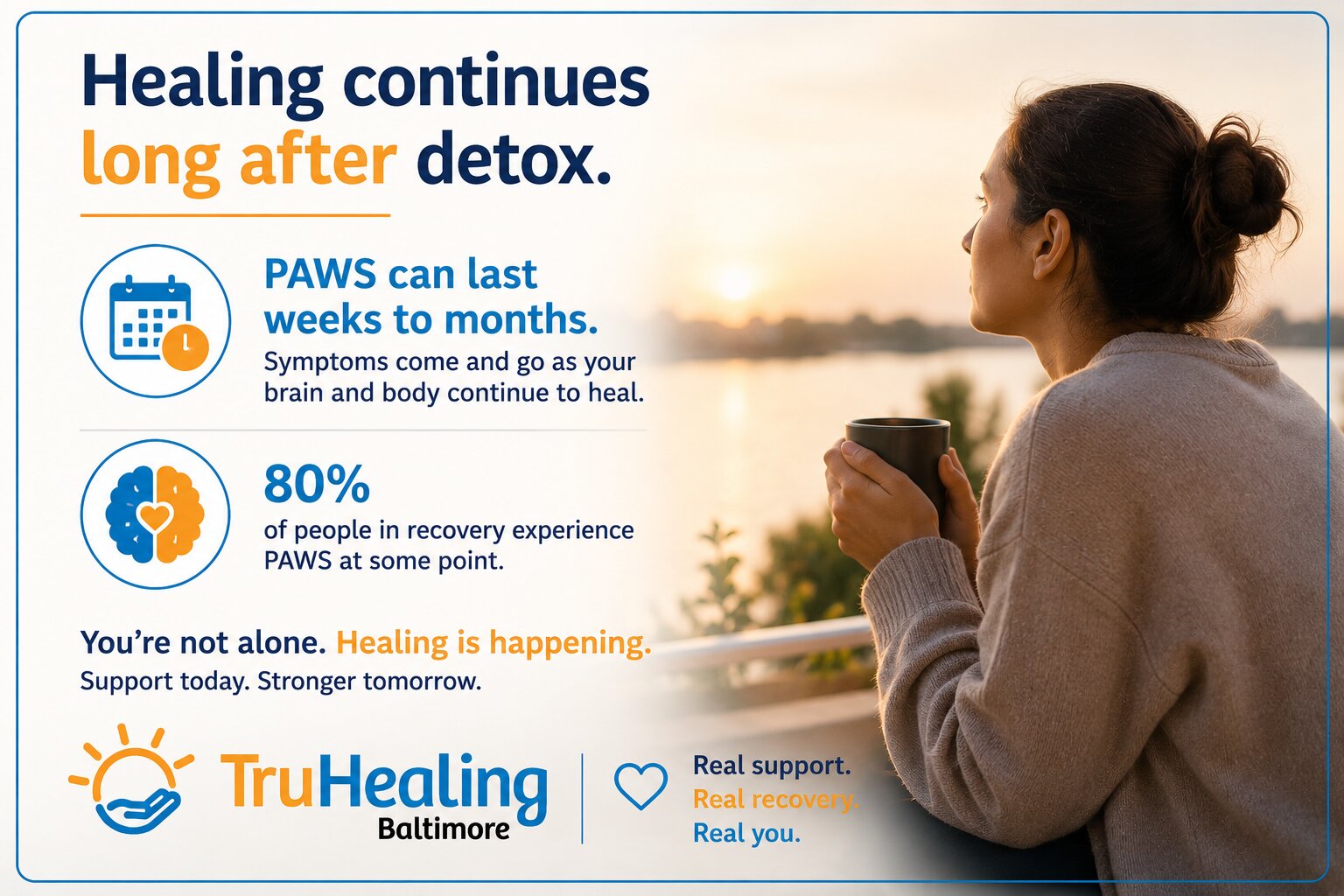
The Timeline
One of the most common questions is how long these symptoms last.
Unfortunately, there isn’t a single answer.
The duration depends on many factors, including:
- Which substance was used
- Length of use
- Frequency and amount of use
- Overall physical health
- Mental health history
- Individual differences in brain recovery
In general:
First Few Weeks
Many people notice improvements after detox but continue experiencing occasional mood changes, poor sleep, or cravings.
One to Three Months
Symptoms often become less frequent but may still appear during stressful situations or major life changes.
Several Months or Longer
For some individuals—particularly those recovering from long-term alcohol, opioid, benzodiazepine, or methamphetamine use—certain symptoms may gradually improve over several months.
Recovery is rarely a straight line.
Good days and difficult days can both be part of normal healing.
How to Manage PAWS During Recovery
Although lingering symptoms can feel discouraging, there are effective ways to manage them while the brain continues healing.
Stay Engaged in Treatment
Continuing therapy or outpatient treatment provides support during periods when motivation decreases or cravings return.
Treatment also helps identify triggers before they lead to relapse.
Maintain Healthy Sleep Habits
Poor sleep can worsen anxiety, mood changes, and cravings.
Helpful habits include:
- Keeping a consistent bedtime
- Limiting caffeine late in the day
- Avoiding screens before sleep
- Creating a relaxing nighttime routine
Build Daily Structure
Having a predictable routine reduces stress and provides stability during emotional ups and downs.
Simple routines around meals, exercise, work, and recovery activities can make symptoms feel more manageable.
Learn Healthy Stress Management
Stress is one of the most common triggers for lingering symptoms.
Many people benefit from:
- Mindfulness exercises
- Deep breathing
- Physical activity
- Journaling
- Spending time outdoors
- Talking with trusted support people
Connect With Others
Isolation often makes recovery more difficult.
Support groups, recovery meetings, therapists, sponsors, and family members can provide encouragement when symptoms become frustrating.
Knowing others have experienced similar challenges can reduce feelings of discouragement.
Why This Is Not Failure—and When to Get Support
Many people worry that continued cravings or emotional struggles mean they’re doing something wrong.
That isn’t necessarily true.
Recovery involves ongoing healing, and the brain often needs time to adjust after prolonged substance use.
Experiencing occasional cravings or difficult emotions does not erase the progress you’ve already made.
However, some situations deserve additional professional attention.
Reach out to your treatment team if:
- Cravings become overwhelming
- Depression continues worsening
- Anxiety interferes with daily functioning
- Sleep problems persist for weeks
- You begin thinking about returning to substance use
- You experience thoughts of harming yourself
Seeking support isn’t a setback.
It’s part of protecting your recovery.
Many relapses occur because people believe they should manage every challenge alone. Continuing to ask for help is one of the strongest predictors of long-term success.
Frequently Asked Questions
How long does PAWS last?
The duration varies for every person. Some individuals experience symptoms for several weeks, while others notice occasional emotional or cognitive challenges for several months. Symptoms typically become less intense and less frequent as recovery continues.
What are the symptoms?
Common symptoms include mood swings, anxiety, irritability, sleep problems, brain fog, difficulty concentrating, fatigue, and cravings. These symptoms often come and go rather than remaining constant.
Does it go away?
For most people, yes. As the brain continues healing, symptoms generally improve over time. Staying engaged in treatment, maintaining healthy routines, and seeking support when needed can make the recovery process more manageable.
Continue Healing with Support That Lasts Beyond Detox
Recovery doesn’t end when detox is over. If you’re still experiencing emotional ups and downs, cravings, or difficulty concentrating, it doesn’t mean you’ve failed—it may simply mean your brain is continuing to heal. With time, patience, and ongoing support, these challenges often become more manageable.
At TruHealing Baltimore, we provide compassionate, evidence-based care that helps people move beyond detox and build a strong foundation for long-term recovery. Whether you’re just beginning treatment or navigating the next stage of healing, our team is here to help.
Call TruHealing Baltimore today at (833) 782-2241 to learn more about our medical detox program and recovery services.