


It doesn’t always look like a crisis at first.
It looks like distance. Irritability. Silence where there used to be conversation.
If you’re here, something in you is already paying attention—and that matters more than you think. You can begin exploring support like structured daytime care before things reach a breaking point.
And maybe the hardest part is this: not knowing if now is the right time to act—or if you’re overreacting.
You’re Not Imagining This—You’re Sensing a Shift
Parents rarely arrive at this point by accident.
It’s usually a slow awareness:
- “They’re not themselves lately.”
- “Something feels off, but I can’t explain it.”
- “I keep hoping it will pass, but it hasn’t.”
You might find yourself replaying conversations. Watching patterns. Questioning your instincts.
That doesn’t mean you’re overreacting.
It means you’re paying attention to something real.
And often, that awareness shows up before a clear “problem” can even be named.
Waiting for a Crisis Can Quietly Make Things Harder
There’s a common belief that things need to get worse before help makes sense.
That you’ll “know for sure” when it’s time.
But crisis rarely arrives with clarity.
It builds quietly:
- Withdrawal turns into isolation
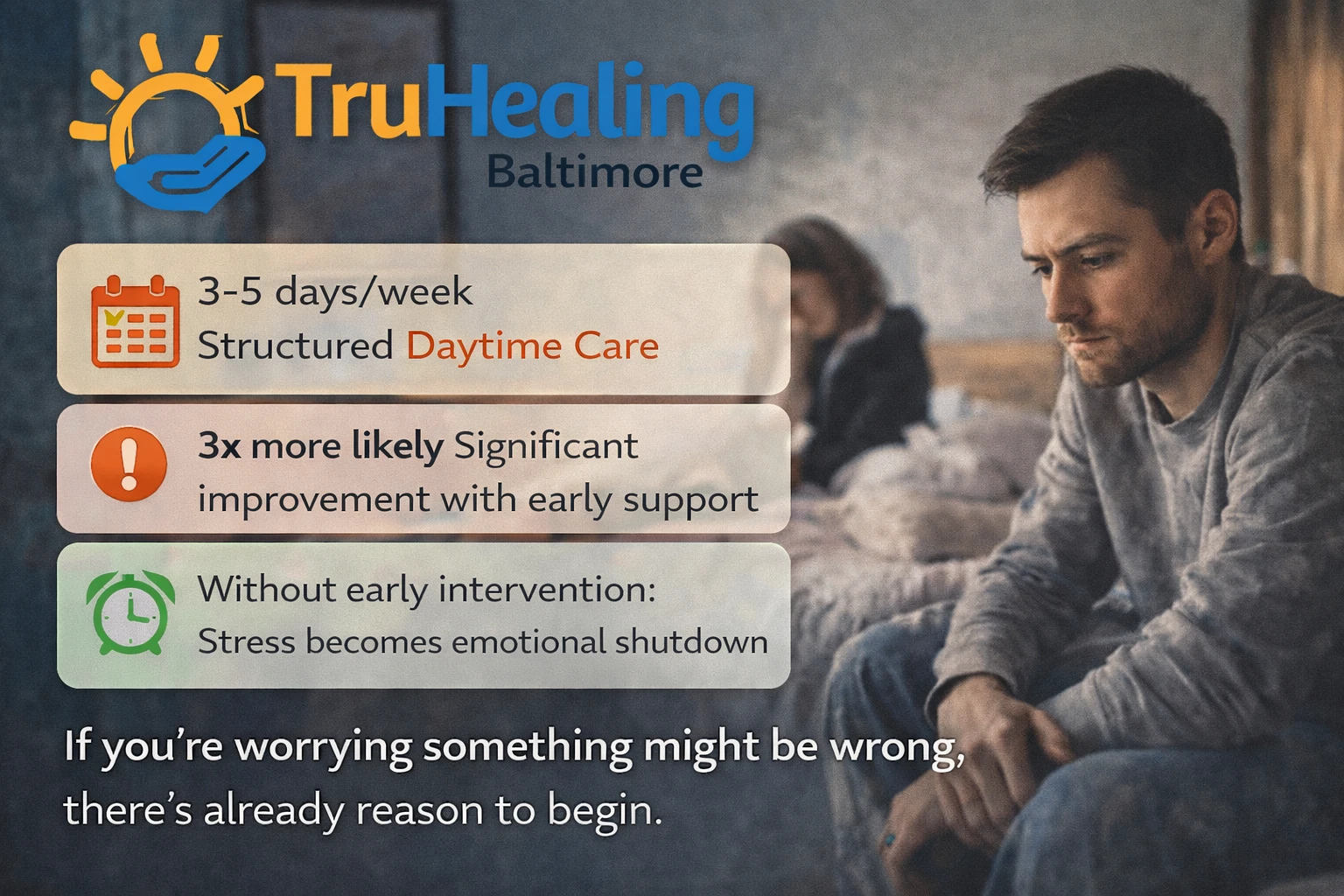
- Stress becomes emotional shutdown
- Small concerns become daily patterns
By the time it feels undeniable, things can already feel overwhelming—for both you and your child.
Early support isn’t about overreacting.
It’s about preventing escalation.
You Don’t Need a Diagnosis to Take This Seriously
One of the biggest things that keeps parents stuck is uncertainty.
“What exactly is going on?”
“Is this anxiety? Depression? Something else?”
You don’t need those answers to begin.
You don’t need a label.
You don’t need certainty.
You just need to recognize that something has changed—and it’s affecting your child’s well-being.
Support can begin from that place.
Different Levels of Support Exist for a Reason
A lot of parents assume there are only two options:
Either everything is fine… or it’s severe enough for extreme intervention.
But there’s a wide middle space that often gets overlooked.
Some individuals need:
- Full-time, immersive care
Others benefit from:
- Consistent, structured support during the day
- A routine that helps stabilize emotions and behavior
- Space to work through challenges without complete disruption to daily life
This middle ground can be where meaningful change begins.
It’s not about choosing the most intense option.
It’s about choosing the right level for where things are right now.
Resistance Is Common—And It Doesn’t Mean You’re Wrong
If you’ve tried to bring this up, you may have heard:
- “I’m fine.”
- “Nothing’s wrong.”
- “You’re making a big deal out of nothing.”
That response can make you question everything.
But resistance is often part of the process—not a sign that help isn’t needed.
For many young adults, admitting something is wrong feels overwhelming.
So they avoid it.
Deflect it.
Push it away.
You can respect their feelings without ignoring what you’re seeing.
Both can exist at the same time.
You Don’t Have to Solve This Alone
It’s easy to feel like this is your responsibility to figure out.
To research everything. Make the right call. Say the right thing.
But this isn’t something you’re meant to carry alone.
Support systems exist not just for your child—but for you as well.
Reaching out doesn’t mean you’ve failed.
It means you’re stepping into guidance instead of guessing.
Early Action Often Creates More Options, Not Fewer
There’s a quiet window where intervention can make a significant difference.
Before patterns become deeply ingrained.
Before everything feels urgent.
Before relationships become more strained.
That window is often where:
- Communication can still be rebuilt
- Routines can be reintroduced
- Emotional stability can begin to return
Some parents in Baltimore County, Maryland notice that acting during this stage gives their child more flexibility in how they receive support—rather than waiting until choices feel limited.
And others in Anne Arundel County, Maryland describe a sense of relief simply from not waiting until things reached a breaking point.
What Changes When You Take the First Step
There’s something that shifts—not necessarily in your child right away, but in the situation itself.
Uncertainty becomes direction.
Isolation becomes support.
Guessing becomes guided action.
You may not have all the answers immediately.
But you’re no longer standing still.
And that alone can change the trajectory.
What Many Parents Say Later (That They Wish They Said Sooner)
We hear this often:
“I knew something was wrong earlier—I just didn’t trust myself.”
Not because they didn’t care.
But because they didn’t want to overreact.
Or make things worse.
Or push too hard.
But taking action earlier rarely creates harm.
Waiting, however, can allow things to deepen quietly.
You’re Allowed to Trust What You’re Feeling
This isn’t about panic.
It’s about attention.
It’s about noticing the subtle changes before they become overwhelming ones.
You don’t need permission to care.
You don’t need confirmation to act.
You’re the one who sees your child every day.
And that perspective matters.
If something feels different, it’s worth exploring.
FAQs for Parents Navigating Early Concerns
How do I know if this is serious enough to seek help?
If you’re asking that question, it’s worth exploring. You don’t need certainty—concern alone is enough to start the conversation.
What if my child refuses help?
This is very common. You can begin by seeking guidance yourself and learning how to approach the conversation in a supportive way. Change often starts gradually.
Will starting support overwhelm them?
The right level of care is designed to meet your child where they are. It’s not about overwhelming—it’s about stabilizing step by step.
What if I choose the wrong option?
You’re not locked into one path. Support can evolve. The most important step is starting somewhere rather than waiting.
How quickly should I act?
If you’re noticing ongoing changes or growing concern, sooner is usually better. Waiting for clarity can sometimes delay needed support.
Can things really improve at this stage?
Yes. Early support can significantly change direction—especially before patterns become more deeply rooted.
What if I’m just overthinking this?
Parents often worry about this—but more often than not, those instincts are grounded in real observations. It’s okay to trust what you’re noticing.
You don’t have to wait for things to get worse to take action.
Sometimes the most important step is the quiet one—the moment you decide to trust yourself.
If you’re ready to explore what support could look like, even just to ask questions, we’re here.
Call (833) 782-2241 or visit our partial hospitalization program in Baltimore, Maryland to learn more.