

You haven’t missed a deadline.
You haven’t been written up.
You haven’t “lost everything.”
You’ve just started noticing that the version of you who closes deals, leads teams, manages households, and solves problems all day… disappears the moment the door shuts at night.
If you’ve been quietly exploring confidential support for alcohol use, it’s probably not because your life imploded.
It’s because the cost of holding it together is getting heavier.
Across Baltimore County, Maryland, I meet professionals who look composed from the outside and privately feel like they’re one bad week away from cracking. In Anne Arundel County, Maryland, I’ve sat with executives, physicians, entrepreneurs, and parents who whisper the same sentence:
“I’m not out of control. I’m just… not okay.”
High-functioning doesn’t mean healthy.
It means the consequences hide longer.
You Don’t Fit the Stereotype — And That’s the First Barrier
You likely compare yourself to extremes.
You think:
“I don’t drink in the morning.”
“I’ve never been arrested.”
“I still perform.”
And you’re right.
But high performance can camouflage dependency.
The question isn’t whether you’re functioning.
The question is how much energy it takes to maintain that performance while managing alcohol.
Many high-achievers operate at a constant low-grade anxiety level. Alcohol becomes the off-switch. The exhale. The reward.
At first, it works.
Then it becomes required.
Control Is Your Superpower — Until It Isn’t
You built your life on discipline.
You optimize schedules. You track metrics. You anticipate problems before they happen.
Alcohol may be the only place where you allow looseness.
But here’s what often happens quietly:
One drink to unwind.
Two to feel it.
Three because tomorrow will be stressful.
You still wake up. Still execute. Still outperform.
But your sleep erodes. Your patience thins. Your nervous system stays activated.
High-performers rarely explode.
They erode.
You’re Managing It — But It’s Managing You Too
You might tell yourself:
“I deserve this.”
“It helps me sleep.”
“It’s not affecting my work.”
But look closer.
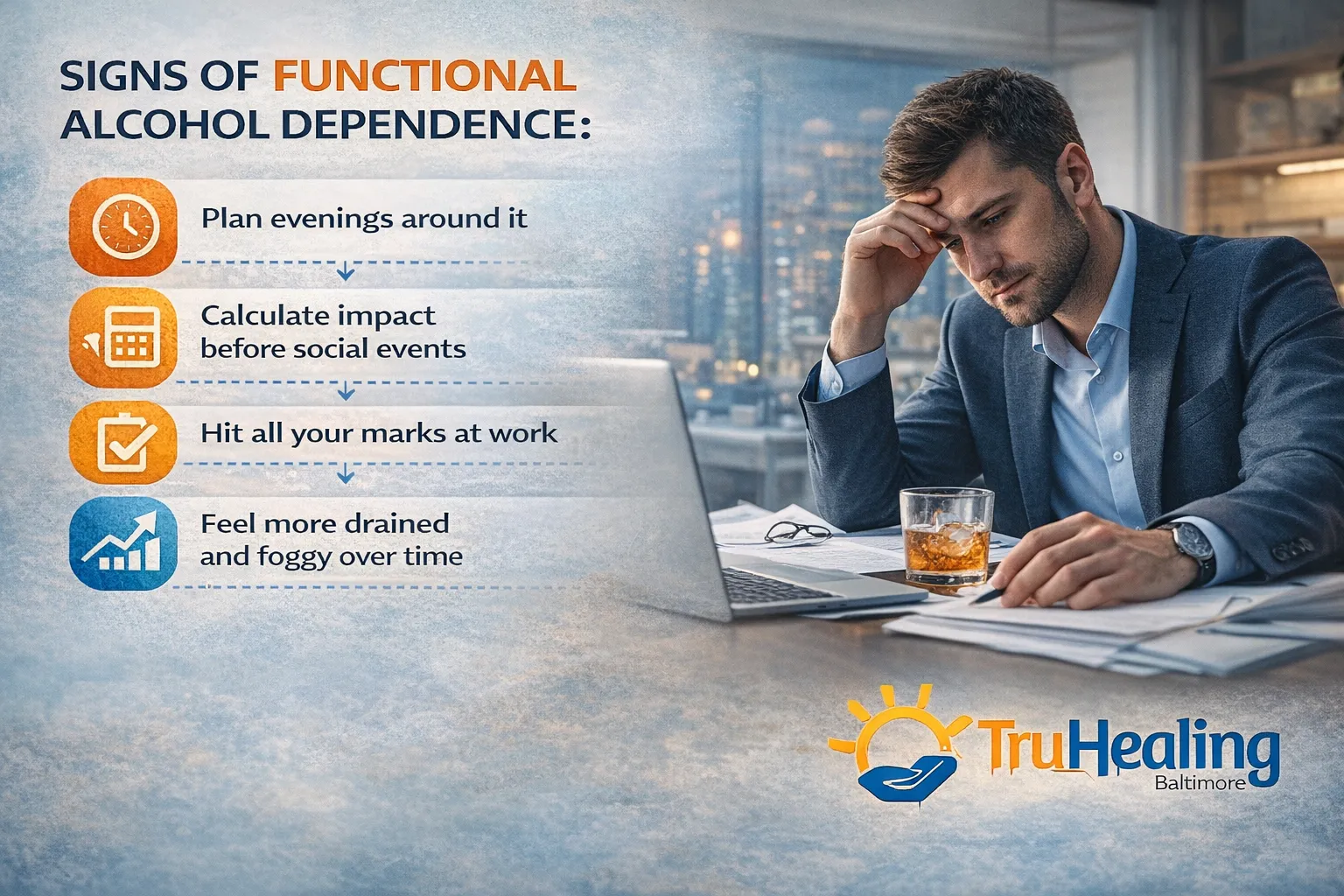
Do you plan evenings around it?
Do you calculate how much you can drink without visible impact?
Do you ever feel irritated when something interferes with it?
That’s management.
And management is a form of mental load.
You already carry enough.
Why Treatment Looks Different for You
The image you may have in your head is disruptive.
Weeks away. Public exposure. Professional fallout.
That image keeps many high-functioning people from seeking Alcohol addiction treatment until consequences force the issue.
But care for high-performers often looks different.
It can mean structured daytime care that allows continued leadership responsibilities. Multi-day weekly treatment that integrates into your schedule. Private, clinically grounded support that respects discretion.
The goal is not to dismantle your life.
It’s to protect it.
Intervening before collapse is strategic — not dramatic.
Performance Can Replace Presence
One of the most common things I hear from high-achievers is this:
“I feel disconnected.”
You’re productive, but not present.
You achieve, but you don’t absorb the achievement.
You unwind with alcohol, but you don’t truly rest.
Alcohol narrows emotional range over time. It softens stress, yes — but it also dulls joy, patience, and authentic connection.
You may still be succeeding.
But you may not be fully living.
That’s a different kind of loss.
The Fear of Slowing Down
Here’s the honest question many high-performers avoid:
If you removed alcohol, what would you feel?
Stress?
Emptiness?
Loneliness?
Burnout?
Alcohol can act like insulation.
Treatment removes the insulation gently — not to expose you harshly, but to help you build sustainable coping instead.
High-functioning individuals often fear that without alcohol, their edge will disappear.
In reality, what often disappears is the background noise.
Clarity sharpens performance.
Sleep restores decision-making.
Emotional steadiness improves leadership.
You don’t lose drive.
You lose volatility.
You Don’t Need a Public Crisis to Justify a Private Concern
Rock bottom for high-achievers rarely looks dramatic.
It looks like:
Chronic exhaustion.
Irritability at home.
A subtle decline in focus.
A quiet anxiety about how much you’re drinking.
You don’t have to wait for visible fallout.
Early intervention is not weakness.
It’s leadership — applied inward.
What Actually Changes When You Engage Support
When high-performing professionals step into treatment, the shift is often subtle but powerful.
Sleep stabilizes.
Morning anxiety decreases.
Decision-making feels clearer.
Conversations at home become less reactive.
Energy becomes consistent rather than spiking and crashing.
One executive once told me, “I didn’t realize how loud my brain had been until it got quiet.”
That quiet isn’t dullness.
It’s capacity.
You’re Not Giving Up Control — You’re Reclaiming It
There’s a misconception that seeking help means surrendering autonomy.
In reality, it’s reclaiming it.
Right now, alcohol likely dictates:
When you relax.
How you unwind.
How you handle stress.
Engaging support shifts that control back to you.
You decide how to regulate.
You decide how to rest.
You decide how to cope.
That’s power — not weakness.
FAQs
Can I keep working while in treatment?
Often, yes. Structured daytime care or multi-day weekly treatment options can allow professionals to maintain responsibilities while receiving support.
What about confidentiality?
Privacy is a core concern for high-performing individuals. Treatment settings prioritize discretion and professionalism.
What if I’m not “bad enough”?
You don’t need catastrophic consequences to justify change. If alcohol feels like it’s quietly gaining ground, that’s reason enough.
Will I lose my edge?
Most high-achievers report improved clarity, steadier energy, and sharper focus after reducing or eliminating alcohol. Your ambition remains — without the volatility.
What if I’ve tried to cut back and failed?
That’s common. High-performers often assume they can self-correct. When alcohol resists self-management, structured support can interrupt the pattern more effectively.
You’ve optimized everything else in your life.
If alcohol is the one area you avoid examining closely, that’s not accidental.
You don’t need collapse to justify change.
You need honesty.
Call 833-782-2241 or visit our Alcohol addiction treatment services to learn more.


