

Somewhere after the one-year mark, something unexpected can happen in recovery.
The chaos is gone. The crisis is over. Life becomes stable again.
And yet… something feels different.
You did the work. You stopped using. You rebuilt relationships. Maybe your career is stronger than ever. From the outside, things look solid.
But inside, there’s a quiet question that shows up late at night or during long drives home:
“Why do I feel so disconnected?”
If that thought has crossed your mind, you’re not failing recovery.
You’re experiencing a phase many long-term alumni quietly go through. And for many people, reconnecting with environments like structured daytime care becomes the place where recovery comes alive again.
Not because something went wrong.
Because recovery keeps evolving.
The Plateau No One Talks About
Early recovery is intense.
Everything feels urgent. Every day matters. You’re rebuilding your life piece by piece.
You learn new habits. You rebuild trust. You rediscover parts of yourself that were buried under addiction.
There’s momentum.
Then something shifts.
Life stabilizes. The routines become normal. The urgency fades.
For a while, that stability feels amazing.
But sometimes stability slowly turns into something else.
Flatness.
You’re not miserable. You’re not using. But the spark that once drove your recovery feels quieter.
Like standing in a room where the music used to be loud and realizing someone slowly turned the volume down.
No one warned you this phase might come.
But it happens more often than people realize.
Why Feeling Stuck Doesn’t Mean You’re Doing Recovery Wrong
A lot of alumni carry a silent belief:
“If I’m sober, I should feel grateful all the time.”
After all, recovery saved your life. Compared to the chaos of addiction, this version of life should feel incredible.
But human beings aren’t designed to live in permanent gratitude.
Life still brings:
Career pressure
Family challenges
Identity changes
Loneliness
Burnout
And when substances are no longer there to numb those experiences, emotions sometimes rise to the surface in new ways.
That can feel confusing.
But it doesn’t mean recovery stopped working.
It usually means recovery is asking for something deeper.
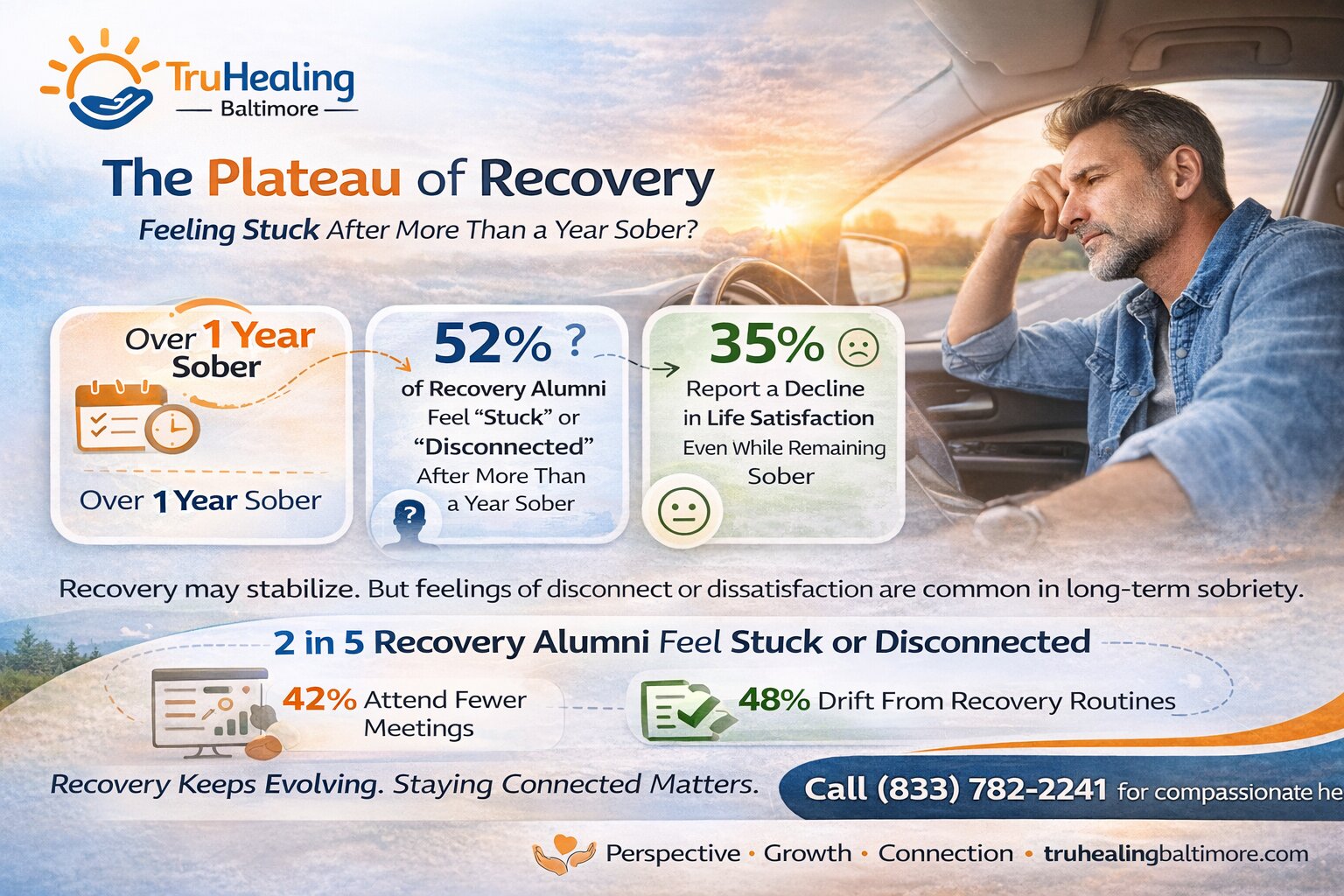
The Slow Drift That Happens to Many Alumni
Disconnection in recovery rarely happens overnight.
It’s gradual.
You might stop attending meetings as often because life gets busy.
You might stop talking openly about struggles because things seem under control.
You might start focusing entirely on work, family, or responsibilities.
None of those choices are inherently wrong.
But over time, recovery can quietly shift from something active to something in the background.
You’re still sober.
But you’re no longer connected to the process that helped you grow.
And when that connection fades, the emotional energy of recovery sometimes fades with it.
The Moment Many Alumni Recognize the Truth
There’s usually a moment when the realization hits.
It doesn’t come during a dramatic crisis.
It comes during a quiet moment.
Maybe you’re driving home from work.
Maybe you’re sitting alone after a long day.
Maybe something stressful happens and you feel that old instinct to escape.
And the thought appears:
“I think I’m stuck.”
Not using.
Not falling apart.
Just stuck.
That realization can feel discouraging at first.
But it’s actually an important signal.
Your recovery is asking for attention again.
Why Reconnecting With Support Can Feel So Powerful
One of the biggest myths about recovery is that once you “graduate,” you shouldn’t need help anymore.
But recovery was never designed to be a one-time process.
Life keeps changing.
Careers evolve. Relationships shift. Responsibilities grow. Stress shows up in new forms.
Many alumni discover that reconnecting with structured environments gives them something they didn’t realize they were missing:
Perspective.
When you return to spaces focused on growth, honesty, and emotional work, things start to move again.
You hear stories that remind you why you chose recovery in the first place.
You reconnect with parts of yourself that had slowly gone quiet.
And the spark that once fueled your recovery begins to return.
Recovery Changes as You Change
The version of you that needed support in early sobriety isn’t the same person you are today.
Back then, the focus may have been survival.
Learning how to stay sober. Learning how to rebuild life from the ground up.
Now your challenges may look different.
You might be navigating leadership roles at work.
Parenting teenagers.
Caring for aging parents.
Facing personal questions about purpose and identity.
Recovery grows with you.
And sometimes the tools that helped you early on need to evolve too.
That evolution isn’t failure.
It’s progress.
The Courage It Takes to Admit You’re Stuck
One of the hardest things for long-term alumni to say is:
“I think I need support again.”
It can feel uncomfortable.
You might worry people will assume you’re relapsing.
You might feel embarrassed asking for help after years of sobriety.
You might question whether your struggle is “serious enough.”
But honesty has always been the foundation of recovery.
And admitting that something feels off takes real strength.
In fact, many people discover that returning to support environments is not about starting over.
It’s about continuing forward with new insight.
What Reconnection Often Feels Like
People who reconnect with recovery spaces after years away often describe a similar experience.
At first it feels strange.
Walking back into rooms where others are earlier in their journey can create hesitation.
But something shifts quickly.
They start hearing familiar stories.
The stress of work.
The quiet loneliness that can creep into sobriety.
The desire for something more meaningful.
And suddenly the room doesn’t feel like a place for people struggling.
It feels like a place for people growing.
That shift can be incredibly powerful.
Because growth is exactly what long-term recovery requires.
Recovery Is a Living Process
One of the biggest lessons many alumni eventually learn is this:
Recovery is not a destination.
It’s a relationship.
A relationship with honesty, growth, and connection.
And like any relationship, it needs attention over time.
Sometimes that means adjusting routines.
Sometimes it means reconnecting with support.
Sometimes it means simply admitting that the version of recovery that worked five years ago needs to evolve.
That realization isn’t a setback.
It’s often the beginning of the most meaningful stage of recovery.
Frequently Asked Questions
Is it normal to feel stuck after years in recovery?
Yes. Many long-term alumni experience periods where recovery feels flat or disconnected. Life changes, stress, and evolving identity can create new challenges that require renewed attention and support.
Does feeling disconnected mean I’m close to relapse?
Not necessarily. Feeling stuck is often a signal that your recovery needs new energy or connection. Addressing it early can strengthen your long-term stability.
Why do people drift away from recovery communities?
As life becomes stable, many alumni focus on work, family, and responsibilities. Over time, recovery routines may fade into the background. Reconnecting can help restore balance.
Can returning to structured support help even after years of sobriety?
Yes. Many people find that revisiting recovery-focused environments helps them process new challenges, reconnect with purpose, and strengthen their commitment to sobriety.
What if I feel embarrassed asking for help again?
Many alumni share this concern. But recovery communities typically welcome returning members with respect and understanding. Seeking support is viewed as strength, not failure.
How do I know if I should reconnect with support?
If recovery feels flat, isolating, or emotionally distant, it may be helpful to talk with a professional or reconnect with supportive environments focused on growth and healing.
If you’ve been feeling stuck or disconnected in recovery, you don’t have to figure it out alone.
Call (833) 782-2241 or explore our treatment programs and structured daytime care to learn more about our treatment programs and partial hospitalization program services.
Recovery isn’t a finish line you cross once.
It’s a path that keeps opening new doors — especially when you’re willing to keep walking.