

You still show up to work.
Your bills get paid. Your responsibilities are handled. People depend on you—and most days, you deliver.
From the outside, life probably looks stable.
But there’s often a quiet question sitting just beneath the surface:
“If everything is technically working… why do I feel like I’m barely holding it together?”
Many sober-curious people start exactly here. Not in crisis. Not after losing everything. Just noticing that something feels unsustainable.
For some, stepping into environments with round-the-clock support like live-in treatment becomes the first real pause they’ve had in years.
Not because their life collapsed.
Because they finally gave themselves permission to step back and listen to what their mind and body have been trying to say.
Step 1: Admit That “Functional” Doesn’t Always Mean Healthy
One of the biggest barriers for sober-curious individuals is the word functional.
It can feel like proof that nothing is truly wrong.
After all, you might still:
- Show up to work every day
- Maintain relationships
- Manage responsibilities
- Handle daily life without obvious problems
That creates a confusing inner dialogue.
You may tell yourself:
“I’m not that bad.”
“I should be able to control this.”
“Other people have real addiction problems.”
But here’s the truth we see often.
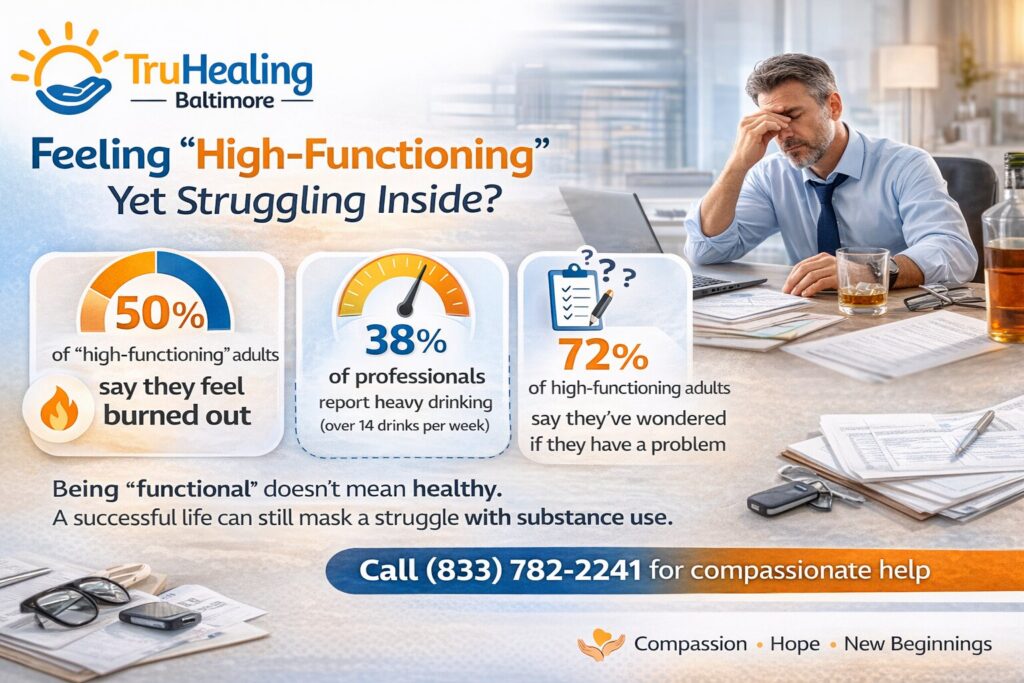
People who appear the most functional externally are sometimes carrying the heaviest internal pressure.
High-functioning individuals often operate at full speed for years before stopping long enough to ask whether their habits are helping—or quietly draining them.
Admitting something feels off doesn’t mean you’re broken.
It means you’re paying attention.
Step 2: Step Away From the Noise of Everyday Life
Modern life is loud.
Work emails never stop. Phones buzz constantly. Deadlines pile up. Family obligations fill the calendar.
When substances become part of coping with that pressure, the cycle can become automatic.
Stress → drink
Overwhelm → escape
Fatigue → numb
And then the next day begins again.
Many people never pause long enough to step outside that rhythm.
Time spent in a live-in recovery environment creates something rare:
Silence.
Not the uncomfortable silence of boredom.
The clarity that comes when the outside world slows down.
Without constant pressure, people begin to see patterns they couldn’t notice before.
How stress builds.
How emotions get pushed aside.
How habits developed over time.
Clarity often begins in that quiet space.
Step 3: Reset Your Relationship With Stress
For many sober-curious individuals, substances weren’t originally about losing control.
They were about relief.
A way to take the edge off a stressful day.
A way to relax after carrying responsibility for everyone else.
But over time, what started as relief can become dependency.
The brain begins associating substances with stress management.
Recovery helps break that automatic link.
People begin learning practical skills like:
- Identifying emotional triggers
- Managing anxiety without substances
- Setting boundaries with work and relationships
- Creating healthier daily routines
These tools don’t just help someone stop using.
They help someone live with less pressure overall.
Step 4: Reconnect With Yourself
One of the most surprising things people discover in recovery is how disconnected they became from themselves.
Years of stress and coping can blur emotional awareness.
You might struggle to answer simple questions like:
Am I tired or overwhelmed?
Am I anxious or burned out?
Am I avoiding something deeper?
Substances often quiet those signals temporarily.
But they don’t resolve the underlying feelings.
Recovery helps people reconnect with their internal compass.
Many individuals rediscover things they haven’t felt clearly in years:
Mental clarity
Emotional awareness
Physical energy
A stronger sense of purpose
It’s less about becoming someone new and more about rediscovering who you were before stress and substances took over.
Step 5: Experience Honest Connection
Many high-functioning individuals live behind carefully managed identities.
Professional roles. Family expectations. Social responsibilities.
Those identities can make honest conversations about stress or substance use difficult.
Inside recovery environments, something different happens.
People talk openly.
They share experiences that once felt isolating.
And many sober-curious individuals realize something surprising:
They’re not the only ones asking these questions.
Others have faced the same pressure, the same doubts, the same quiet fear of losing control.
That shared honesty can dissolve years of isolation.
Because shame grows in silence.
Connection weakens it.
Step 6: Discover That Life Can Feel Bigger, Not Smaller
One of the biggest fears people have about recovery is losing the parts of life they enjoy.
What about socializing?
Relaxing?
Celebrating?
It’s natural to worry that removing substances will make life feel dull.
But many people experience the opposite.
When the mental fog lifts, life becomes sharper.
People begin noticing things they overlooked before:
Better sleep
Clearer thinking
Stronger relationships
A deeper sense of presence
Instead of shrinking life, recovery often expands it.
Experiences feel more genuine.
Moments feel more real.
Energy that once went into managing habits becomes available for living fully.
Step 7: Return to Life With a Stronger Foundation
Eventually, people transition back into everyday life.
Work resumes. Responsibilities return.
But something important has changed.
They now carry tools they didn’t have before.
Healthier coping strategies.
Stronger emotional awareness.
More supportive relationships.
Instead of constantly managing stress through substances, they begin navigating life with clarity and intention.
Recovery becomes less about avoiding something.
And more about building a life that actually feels sustainable.
You Don’t Have to Wait for a Breaking Point
One of the most harmful myths about addiction is the idea that someone must hit rock bottom before seeking help.
Many people begin exploring recovery long before their life falls apart.
They simply notice that something doesn’t feel sustainable anymore.
That awareness can be powerful.
It can be the moment someone chooses to reset their life before deeper consequences appear.
Sometimes the strongest step is asking for help while everything still looks “fine.”
Frequently Asked Questions
Can someone still be “functional” and need help?
Yes. Many people maintain jobs, relationships, and responsibilities while privately struggling with substance use. Being functional externally doesn’t mean someone isn’t experiencing internal stress or dependency.
How do I know if my substance use is becoming a problem?
Some signs include relying on substances to cope with stress, difficulty cutting back, feeling anxious without them, or noticing that your habits are slowly increasing over time.
What if I’m not sure I’m ready to quit completely?
That uncertainty is common among sober-curious individuals. Exploring your relationship with substances and speaking with professionals can help you gain clarity without pressure.
Will treatment disrupt my life completely?
Some programs require stepping away from daily routines temporarily. However, many people find that taking this time helps them return to life with stronger emotional and mental foundations.
Is it normal to feel nervous about asking for help?
Yes. Many people feel uncertain or even embarrassed before seeking support. But those conversations are confidential, compassionate, and focused on helping you explore your options.
What is the first step if I’m thinking about getting help?
The first step is simply reaching out and having a conversation. You don’t need to have all the answers. Asking questions and learning about available support can help you decide what feels right for you.
If you’re beginning to question your relationship with substances, you’re not alone—and you don’t have to figure it out by yourself.
Call (833) 782-2241 or explore our treatment programs and live-in treatment options to learn more about our treatment programs and residential treatment programs services.
You don’t have to wait for your life to fall apart before choosing to build something better.
Sometimes the strongest step forward begins with a simple question:
“What if life could feel easier than this?”