

You’re answering emails. Showing up for family dinners. Closing deals. Helping with homework.
From the outside, everything looks stable.
But inside, there’s a quiet exhaustion most people never see.
You may be calculating how much you drank the night before. Wondering if anyone noticed you were slightly off in that meeting. Promising yourself this weekend will be different.
For many people living this double life, structured support like multi-day weekly treatment becomes the first place where the pressure finally loosens.
Not because life stops.
But because you finally stop carrying everything alone.
The Life That Looks Fine From the Outside
High-functioning addiction rarely looks dramatic.
There are no obvious warning signs most people expect.
You’re still:
- Showing up to work
- Meeting deadlines
- Taking care of your family
- Maintaining your responsibilities
Your life still “works.”
But the internal cost keeps growing.
You might wake up already tired. Coffee becomes survival, not routine. Evenings become the only time your mind slows down, which is often when drinking or substance use begins.
And the next day, the cycle repeats.
The problem isn’t that your life is falling apart.
The problem is that keeping it together is becoming exhausting.
The Mental Load No One Sees
High-functioning individuals often carry a constant mental weight.
You’re managing your job, family obligations, social expectations, and your private relationship with alcohol or substances.
That creates a daily inner dialogue:
- “I’ll only have two tonight.”
- “I’ll stop after this stressful project ends.”
- “I just need to get through this week.”
These negotiations happen quietly.
No one hears them.
But over time, they drain emotional energy and mental clarity.
Even small decisions start to feel heavier.
What once felt manageable slowly becomes overwhelming.
Why Successful People Often Delay Getting Help
Many professionals assume treatment only exists for people whose lives have already collapsed.
If you’re still functioning, it can feel like you don’t qualify.
You might tell yourself:
- “I still have control.”
- “It’s not affecting my work.”
- “Other people need help more than I do.”
But high-functioning addiction has a unique danger.
Because life still appears stable, the problem can quietly grow for years before anyone addresses it.
Meanwhile, stress increases.
Relationships become strained.
And the effort required to maintain appearances grows heavier every day.
The Fear That Getting Help Means Losing Everything
One of the biggest fears professionals have about recovery is disruption.
Work schedules. Family responsibilities. Financial obligations.
The idea of stepping away completely can feel impossible.
You may worry about questions from coworkers, missed income, or letting people down.
For parents and professionals especially, these fears can become a powerful barrier.
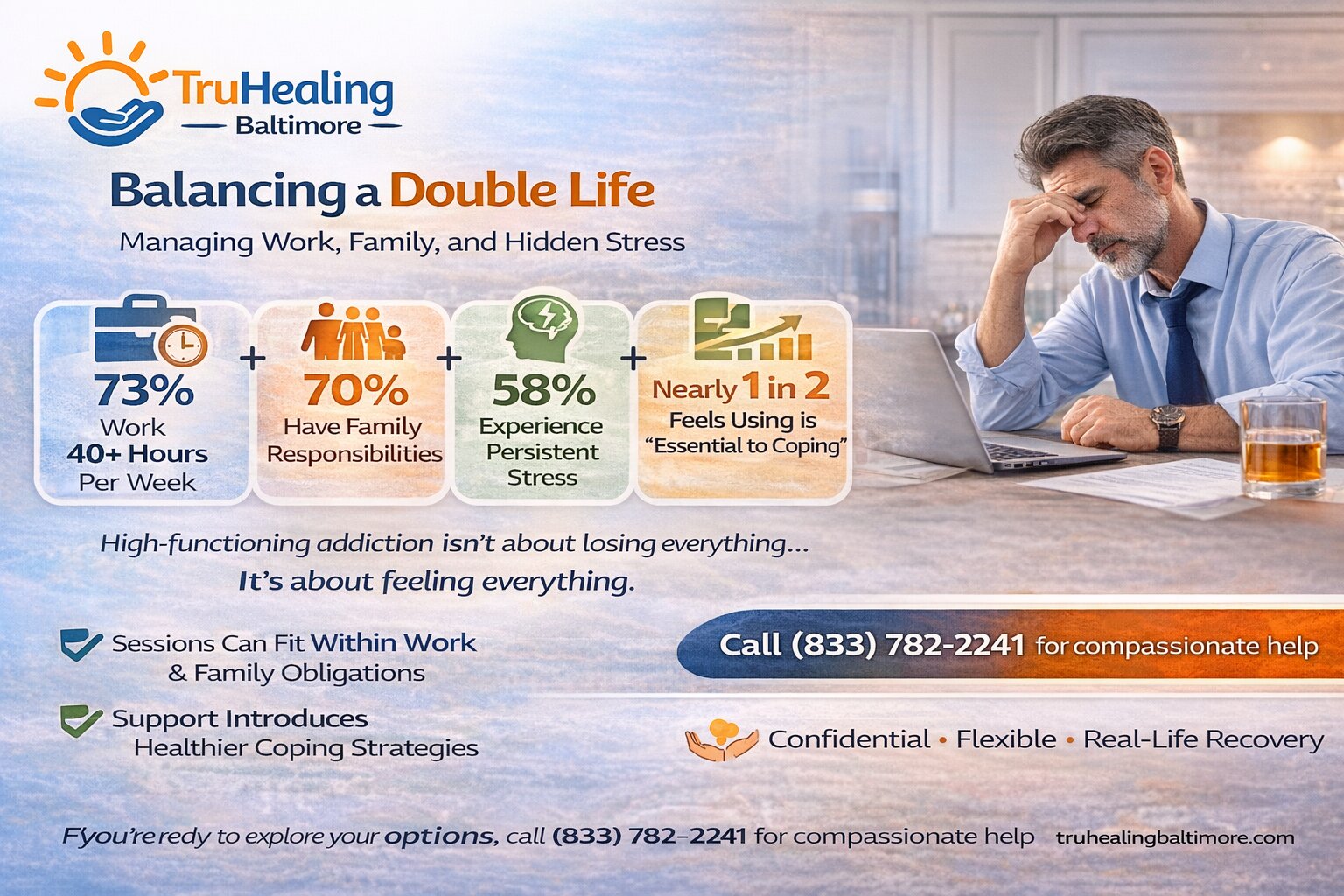
But recovery doesn’t always require stepping away from your entire life.
Many people begin healing while still maintaining the responsibilities that matter most.
And for high-functioning individuals, that balance can make the first step feel far more realistic.
Why Structure Can Change Everything
People who live highly structured lives often respond well to structured recovery.
You’re used to schedules, goals, and accountability.
That same framework can support sobriety and emotional stability.
Instead of trying to fix everything alone, structured care introduces support, guidance, and consistency.
For many people, this creates a rhythm that makes recovery sustainable.
You continue to engage with work and family while dedicating focused time to healing.
And gradually, the chaos behind the scenes begins to settle.
Recovery Isn’t About Losing Your Life
One of the biggest misconceptions about recovery is that it takes something away.
For high-functioning individuals, the opposite often happens.
People frequently discover they regain:
- Mental clarity
- Emotional presence
- Energy they thought was gone
- Authentic connection with loved ones
Work performance often improves.
Relationships become more honest.
And daily life begins to feel lighter.
Many professionals say the most surprising realization in recovery is how much effort they were spending just to appear okay.
Once that pressure lifts, life becomes more manageable.
The Quiet Moment Many People Recognize the Truth
Recovery rarely begins with a dramatic moment.
More often, it begins quietly.
Late at night.
Early in the morning.
In a moment of honesty most people keep to themselves.
You might think:
“I can’t keep living like this.”
That thought doesn’t mean everything is broken.
It means you’re paying attention.
And recognizing the need for change can be the most important step forward.
What Balancing Recovery, Work, and Family Can Look Like
For many professionals and parents, recovery doesn’t happen in isolation.
It happens within real life.
That means learning how to manage stress, boundaries, and routines while still showing up for the people who matter.
Support programs often help individuals:
- Develop healthier coping strategies for work stress
- Rebuild communication with family members
- Replace drinking habits with healthier routines
- Address emotional burnout that built up over years
This process allows people to grow without abandoning the responsibilities they care about.
And slowly, life begins to feel less like survival and more like stability.
You Don’t Have to Reach a Breaking Point
One of the biggest myths about addiction recovery is that people must hit rock bottom before seeking help.
In reality, many high-functioning individuals begin recovery long before that point.
They simply recognize the direction things are heading.
Choosing support early often prevents deeper consequences later.
It protects careers, relationships, and mental health.
More importantly, it allows people to reclaim their lives before the exhaustion becomes unbearable.
Sometimes the strongest decision is asking for help before things collapse.
Frequently Asked Questions
Can someone balance work and recovery at the same time?
Yes. Many professionals seek support while continuing to work and maintain family responsibilities. Structured treatment schedules are often designed to fit around daily obligations, allowing people to receive care without stepping away from their entire life.
How do I know if my drinking or substance use is becoming a problem?
A few warning signs include relying on substances to cope with stress, difficulty cutting back, hiding your usage from others, or feeling mentally drained from trying to control it. If substance use is creating stress or secrecy in your life, it may be worth exploring support options.
What if my life still seems “under control”?
Many high-functioning individuals seek help before experiencing major consequences. Recovery isn’t only for crisis situations. If maintaining your habits requires constant effort or leaves you feeling exhausted, it may be time to consider support.
Will people at work find out if I seek help?
Privacy is extremely important in recovery. Treatment providers prioritize confidentiality, and many professionals receive care without their workplace ever knowing. Programs are designed to support individuals while respecting their personal and professional boundaries.
Is recovery possible without stepping away from family responsibilities?
Yes. Many parents and caregivers successfully pursue recovery while remaining active in their families’ lives. Treatment schedules often allow individuals to attend sessions while still participating in daily routines at home.
What is the first step if I’m thinking about getting help?
The first step is simply having a conversation. Speaking with a professional can help you understand your options, ask questions, and explore whether treatment is the right fit for your situation.
There is no pressure — just information and support.
Holding Everything Together Doesn’t Have to Feel This Heavy
Many people who start recovery say the same thing after a few weeks:
“I didn’t realize how tired I was.”
Balancing work, family, responsibilities, and hidden addiction can create an enormous emotional burden.
You may look like you’re holding everything together.
But that doesn’t mean you have to keep carrying it alone.
If you’re ready to explore your options, call (833) 782-2241 or visit our treatment programs and intensive outpatient program services to learn more about the support available.
You don’t have to lose your life to start getting it back.


