


I was convinced getting help meant stepping out of my life.
Not scaling back—stepping out.
I pictured disappearing from work, explaining things I didn’t want to explain, putting everything on hold while I “fixed myself.”
So I didn’t go.
I kept working. Kept showing up. Kept telling myself I had it under control.
Until the truth got harder to ignore—and I found myself looking into options like flexible outpatient treatment that fits around your schedule.
That’s when something shifted.
Not everything. Just enough to start.
I Was High-Functioning… and Quietly Burning Out
If you saw my life back then, nothing looked wrong.
I had a job.
I paid my bills.
I showed up where I was supposed to.
I wasn’t missing deadlines. I wasn’t falling apart in obvious ways.
But internally?
It was constant noise.
- Overthinking everything
- Drinking or using just enough to “take the edge off”
- Waking up already tired
- Feeling like I was always catching up to myself
I told myself:
This isn’t bad enough for treatment.
But I also knew it wasn’t sustainable.
That’s the part people don’t talk about enough.
You don’t have to hit rock bottom to be exhausted by your own life.
The Belief That Kept Me Stuck the Longest
It wasn’t denial that kept me from getting help.
It was this idea:
If I get help, I lose control of my life.
I thought treatment meant:
- Losing my routine
- Losing my independence
- Losing the version of myself that “had it together”
And honestly, I couldn’t risk that.
So I did what a lot of high-functioning people do.
I managed.
I adjusted.
I coped just enough to stay afloat.
But “staying afloat” isn’t the same as being okay.
The Decision I Almost Didn’t Make
There wasn’t a dramatic breaking point.
No big moment.
Just a quiet realization one night:
If I keep going like this, nothing is going to change.
Not worse. Not better. Just… the same.
And the same had started to feel heavy.
So I made a small decision.
Not “I’m going to change everything.”
Just:
I’m going to look into this.
That was it.
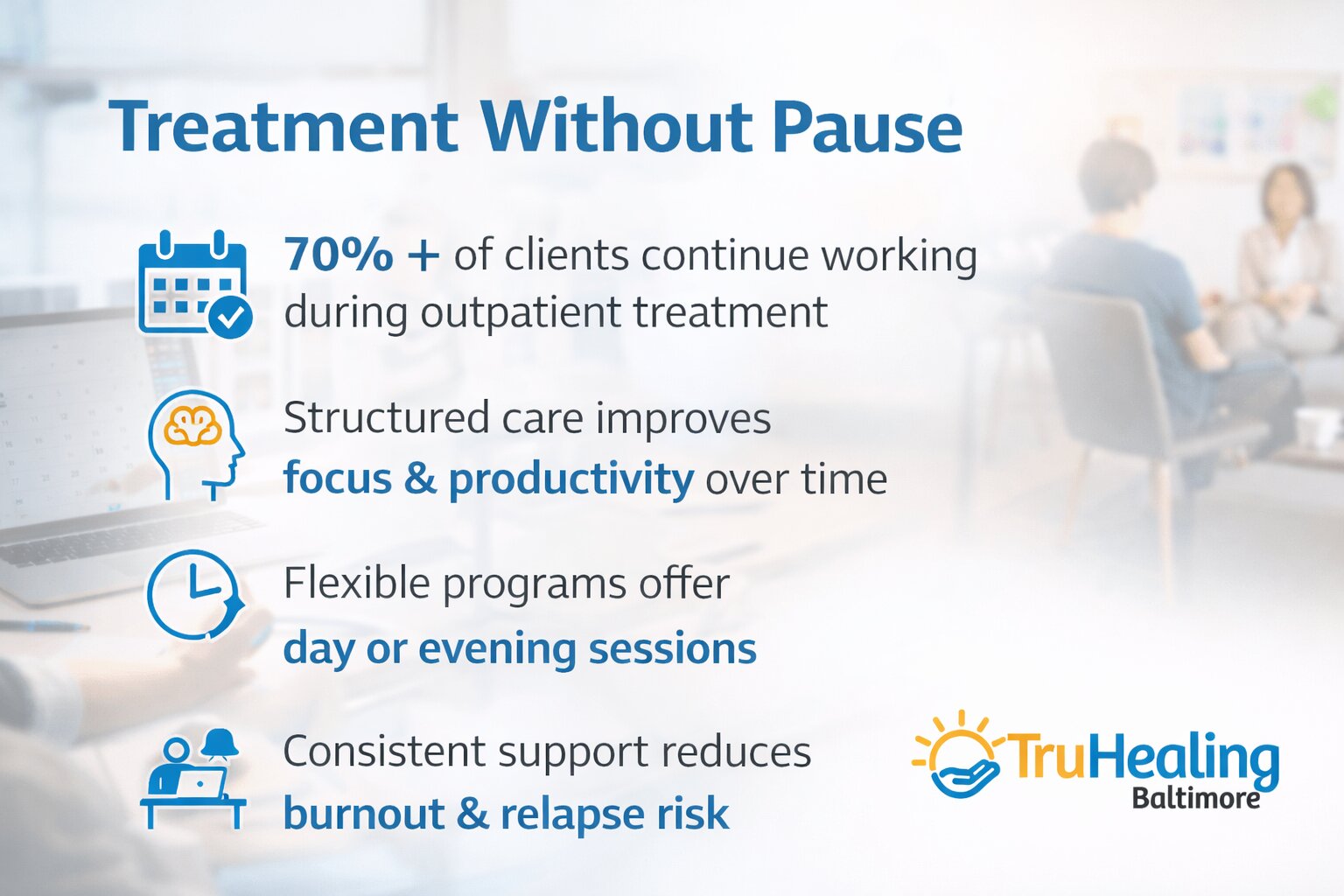
Starting Treatment Didn’t Disrupt My Life—It Anchored It
This is the part I didn’t expect.
I thought treatment would feel like chaos.
Instead, it gave my week structure in a way I didn’t realize I needed.
I still worked.
I still handled my responsibilities.
But I also had space—built into my schedule—to deal with what I’d been avoiding.
That alone changed things.
Because before that, everything emotional got pushed to:
- Late nights
- Weekends
- Or not at all
Having consistent time to actually process things?
That made the rest of my life feel less overwhelming—not more.
Balancing Everything Was Messy—but It Worked
I’m not going to pretend it was easy.
There were days I didn’t want to go.
Days work felt like too much on top of everything else.
Days I questioned if it was worth it.
But something important happened.
I stopped trying to do everything perfectly.
Instead, I focused on:
- Showing up, even if I was tired
- Being honest, even if it was uncomfortable
- Letting things be “good enough” instead of perfect
And over time, that changed how I moved through everything—not just treatment.
Work Didn’t Fall Apart—It Actually Got Better
This was one of my biggest fears.
That if I focused on myself, everything else would slip.
But the opposite happened.
I became:
- More present in meetings
- Less reactive under stress
- Clearer in my thinking
Not because I was trying harder.
Because I wasn’t carrying as much internal pressure anymore.
It’s hard to explain unless you’ve felt it.
But when your internal world gets quieter, your external life becomes easier to manage.
The Question I Didn’t Know I Was Asking
Before starting, I kept thinking:
Can I do this without losing everything else?
What I should have been asking was:
What happens if I don’t do this?
Because the path I was on wasn’t stable.
It just looked stable.
And that’s the trap a lot of high-functioning people fall into.
You can maintain a lot… until you can’t.
Finding the Right Level of Support Matters
I didn’t need to step away from my life completely.
But I did need more than occasional check-ins.
That middle level of care made sense.
If you’re trying to figure out something like IOP vs PHP Baltimore, the real question isn’t just about time commitment.
It’s about how much support you actually need to stay steady while still living your life.
For me, it was:
- Enough structure to stay accountable
- Enough flexibility to keep working
- Enough support to actually change something
And that balance made it possible to stick with it.
It Didn’t Change Me Overnight—But It Changed My Direction
This wasn’t a transformation story.
There was no moment where everything clicked.
But there was a shift.
Instead of slowly burning out, I started stabilizing.
Instead of avoiding things, I started addressing them.
And over time, those small changes added up.
That’s the part people underestimate.
You don’t need a complete overhaul.
You need a different direction.
If You’re Still Holding It All Together Alone
If you’re reading this, you might be doing what I was doing.
Keeping everything going.
Managing just enough.
Telling yourself it’s not “bad enough.”
I get it.
But here’s the honest part:
Functioning isn’t the same as being okay.
And waiting until things fall apart isn’t a strategy.
It’s a delay.
You don’t have to choose between your life and getting help.
There are ways to do both.
If you’re looking for treatment in Baltimore, TruHealing Maryland offers options designed for people who are still showing up to life—but know something needs to change.
FAQs: Balancing Work and Treatment
Can I really keep my job while in treatment?
Yes. Many people continue working while in structured outpatient care. Schedules are often designed to fit around real-life responsibilities.
What if my job is demanding or unpredictable?
That’s common. Flexible scheduling options can help you stay consistent without sacrificing your work commitments.
Will treatment interfere with my performance at work?
Most people find the opposite happens. As internal stress decreases, focus and productivity often improve.
Do I have to tell my employer?
Not necessarily. That decision is personal. Some people choose to share, others don’t.
How do I know if I need more support than I think?
If you’re constantly managing stress, relying on coping habits, or feeling mentally exhausted—it’s worth exploring support.
What if I don’t feel “bad enough” for treatment?
You don’t need to hit a crisis point. Many people seek help to prevent things from getting worse, not just to recover from a breakdown.
You Don’t Have to Wait for Everything to Break
Looking back, the biggest shift wasn’t starting treatment.
It was realizing I didn’t have to lose everything to justify getting help.
You can take care of what’s underneath—while your life is still intact.
Call (833) 782-2241 or visit our treatment programs, intensive outpatient program services in Baltimore, Maryland to learn more about our treatment programs, intensive outpatient program services in Baltimore, Maryland.
And if you’re still trying to hold it all together on your own—
You don’t have to drop everything to get better.
You just have to stop doing it alone.