

At first, they thought they could pull themselves back together quietly.
That’s usually how it starts.
Not with some dramatic collapse. Not with flashing lights or losing everything overnight. Just a growing feeling that life is becoming harder to hold together than anyone around them realizes.
They had already been through treatment once. Already had sober time. Already knew the language of recovery well enough to fake being okay for a while.
That’s what made it dangerous.
From the outside, things still looked mostly functional. Work was still happening. Bills were mostly getting paid. Conversations stayed surface-level enough that nobody asked too many questions.
But internally, something had shifted.
The anxiety was louder.
The isolation was deeper.
And the exhausting cycle of promising themselves “this is the last time” kept repeating until eventually even they stopped believing it.
That quiet realization is what eventually brought them back to TruHealing Maryland’s residential treatment programs. Not because they had completely destroyed their life, but because part of them understood they were getting closer every day.
Relapse Usually Begins Emotionally Before It Becomes Physical
A lot of alumni expect relapse to arrive suddenly.
But for many people, it starts emotionally long before substances fully return.
It begins with withdrawal from support.
Skipped meetings.
Ignored texts.
Staying in bed longer.
Feeling emotionally flat one day and unbearably overwhelmed the next.
Sometimes people stop talking honestly because they don’t want anyone to hear how much they’re struggling. Other times they genuinely convince themselves things are “not serious enough yet” to ask for help.
That emotional drift matters.
Many people who relapse later describe feeling disconnected from themselves weeks or even months before they started using again. The substances often arrive afterward as an attempt to quiet something internally that already felt unbearable.
And because the early warning signs are quieter than people expect, many wait too long before reaching back out.
Shame Has a Way of Making People Disappear
One of the hardest parts about relapse after treatment is the shame attached to it.
Especially after having time sober.
People often feel like they lost credibility with everyone around them. They worry family members will stop believing in them. They worry treatment providers will feel disappointed. They worry they’ve somehow erased all the progress they made.
That shame can become isolating fast.
Instead of reaching for support, people start hiding more:
- Avoiding calls
- Pulling away from sober friends
- Lying about how they’re doing
- Convincing themselves they can “fix it quietly”
But addiction and mental health struggles tend to grow stronger in secrecy.
Many alumni spend months trying to privately regain control before realizing they’re exhausted from carrying everything alone.
That exhaustion is often the moment people begin considering structured support again.
Sometimes Mental Health Symptoms Become Impossible to Ignore
One thing many alumni notice after relapse is that emotional symptoms often intensify quickly.
Anxiety becomes constant.
Depression deepens.
Sleep patterns collapse.
Small problems start feeling emotionally catastrophic.
Some people begin using substances again trying to manage panic, loneliness, burnout, or emotional numbness. Others relapse after long periods of trying to function while silently struggling with untreated mental health symptoms.
Eventually, the substances stop feeling like relief and start amplifying the chaos.
That overlap between mental health struggles and substance use can become incredibly difficult to untangle alone.
For many people searching for inpatient rehab Baltimore residents can access with detox and emotional support together, the goal is bigger than simply stopping substances. They want stability. Clarity. Sleep. Relief from feeling emotionally trapped inside their own head.
Sometimes people are not only trying to get sober again.
They’re trying to feel okay enough to exist again.
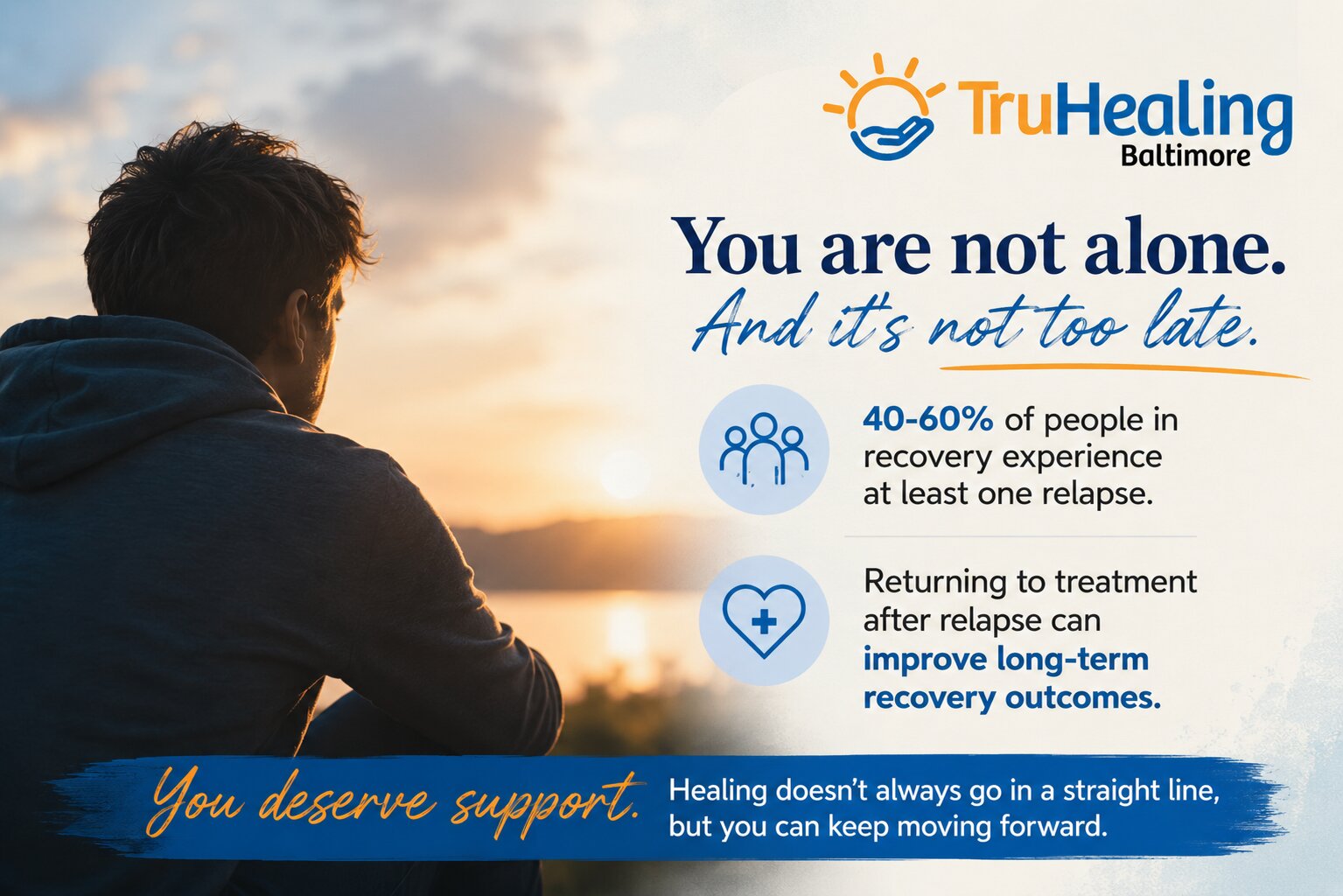
Returning to Treatment Often Feels More Vulnerable the Second Time
A lot of alumni describe the second return to treatment differently than the first.
The first time often carries adrenaline. Fear. Crisis energy. A desperate hope that life can still change.
The second time can feel heavier emotionally.
There’s embarrassment.
Grief.
Disappointment.
A quiet fear that maybe recovery just isn’t possible anymore.
But strangely enough, many people also become more honest the second time around.
Less performance.
Less pretending.
Less trying to “graduate” from recovery perfectly.
Instead, people start talking more openly about things they hid before:
- Loneliness
- Trauma
- Emotional burnout
- Fear of failure
- Feeling disconnected even during sobriety
- The exhaustion of trying to appear okay constantly
That honesty can become a turning point.
Not because relapse is good, but because it often strips away the illusion that someone can heal while hiding everything painful underneath.
Detox Isn’t Only About Withdrawal
A lot of people think detox is only physical.
But many alumni returning after relapse describe the emotional side as equally intense.
There’s fear about the future.
Fear they permanently ruined their progress.
Fear they disappointed everyone.
And underneath all of that is often deep emotional exhaustion.
Some people arrive feeling emotionally numb. Others feel everything at once.
That’s one reason structured support matters so much during early recovery. Stabilization is not only about helping the body recover. It’s also about helping the nervous system slow down after months of chaos, stress, secrecy, and emotional overwhelm.
People often underestimate how exhausting survival mode really is until they finally step out of it.
The Environment Can Change More Than People Expect
One thing alumni commonly describe after returning to live-in treatment is the relief of leaving the cycle behind temporarily.
Not forever.
Just long enough to breathe again.
Because trying to recover in the same environment where everything keeps unraveling can feel almost impossible for some people.
Same apartment.
Same routines.
Same emotional triggers.
Same isolation.
Sometimes people genuinely need distance from the noise long enough to hear themselves think clearly again.
Inside a structured environment, something important often happens: the constant pretending begins to soften.
People stop carrying every struggle alone.
They stop waking up each day trying to convince themselves they’re still fully in control when they already know they’re slipping.
And slowly, many begin reconnecting with parts of themselves that felt buried underneath survival mode.
Recovery After Relapse Often Becomes More Honest
This surprises many people.
A lot of alumni eventually describe their second recovery experience as more emotionally real than the first.
Not easier.
But more honest.
People begin recognizing earlier warning signs instead of waiting for catastrophe:
- Emotional isolation
- Constant exhaustion
- Romanticizing old habits
- Pulling away from support
- Feeling emotionally detached from life
- Quietly believing nobody would understand
Those signs matter.
Because relapse rarely arrives out of nowhere.
It usually builds slowly underneath the surface while someone keeps trying to appear functional externally.
Learning to notice those quieter shifts can change everything.
Recovery becomes less about perfection and more about staying connected before things spiral again.
You Don’t Have to Wait Until Everything Is Gone
This is something many alumni wish they understood sooner.
You are allowed to ask for help before your life completely collapses.
You do not need to lose your job, family, housing, health, or future before seeking support again.
Sometimes the bravest moment is not surviving total destruction.
Sometimes it’s admitting:
“I know where this is heading if I keep pretending I’m okay.”
That realization deserves compassion—not punishment.
And for many people, returning to structured support after relapse is not about starting over from nothing.
It’s about refusing to disappear completely.
FAQ
Is relapse common after treatment?
Relapse can happen during recovery, especially during periods of stress, emotional isolation, untreated mental health symptoms, or major life changes. Many people return for additional support after relapse, and doing so does not erase previous progress.
Why do some people return to live-in treatment after relapse?
Some individuals benefit from stepping away from their everyday environment to focus fully on recovery. Round-the-clock support can help provide structure, accountability, emotional stabilization, and distance from triggers connected to relapse.
Can mental health symptoms get worse during relapse?
Yes. Anxiety, depression, panic, emotional numbness, sleep problems, and emotional exhaustion often intensify during relapse. Many people need support for both mental health and substance use at the same time.
Does returning to treatment mean recovery failed?
No. Recovery is rarely linear. Returning for support can reflect increased self-awareness and a willingness to ask for help before things become even more dangerous.
What are some emotional warning signs of relapse?
Common warning signs include isolation, avoiding support systems, emotional numbness, worsening anxiety, romanticizing substance use, skipping recovery routines, and feeling emotionally disconnected from yourself or others.
Why does environment matter so much in recovery?
For many people, remaining in the same environment connected to stress, relapse patterns, or emotional triggers can make healing more difficult. A structured setting can provide stability and reduce outside pressures during early recovery.
Is detox only physical?
No. Detox often involves emotional stabilization too. Many people experience intense anxiety, shame, depression, exhaustion, or emotional overwhelm during early recovery, which makes mental health support especially important.
What if I feel embarrassed about needing help again?
That feeling is extremely common among alumni after relapse. But needing additional support does not erase your previous growth or make you weak. Many people return to treatment after realizing they cannot continue carrying everything alone.
If you’ve been quietly wondering whether you need more support again, you do not have to wait until everything completely falls apart to ask for help. TruHealing Maryland offers compassionate treatment in Baltimore for people seeking stability, safety, and a place to begin reconnecting with themselves again.
Call (833) 782-2241 or visit TruHealing Maryland’s residential treatment programs services in Baltimore, Maryland to learn more about our treatment programs and supportive care options.