

The first weeks of recovery can bring unexpected emotions. After months or years of living with substance use, some people suddenly feel energized, hopeful, motivated, and excited about the future. Everyday life seems brighter, relationships begin improving, and recovery feels easier than expected.
For many people, this experience is known as pink cloud recovery. While these positive emotions can provide valuable motivation, they don’t last forever. Understanding why this phase happens—and preparing for what comes next—can help prevent disappointment from becoming a setback.
If you’re beginning treatment, learning more about TruHealing Baltimore’s substance abuse treatment programs can help you build the skills and support needed for lasting recovery long after the initial excitement fades.
Recovery isn’t about avoiding difficult emotions forever. It’s about learning how to navigate both the highs and the lows without returning to substance use.
What This Early Recovery Experience Is
Many people notice an emotional lift shortly after stopping drugs or alcohol.
They may feel:
- Optimistic about the future
- Highly motivated
- More energetic
- Emotionally connected
- Excited to rebuild relationships
- Confident about staying sober
- Grateful to have started treatment
This period is commonly referred to as the pink cloud. Although it isn’t a medical diagnosis, addiction professionals frequently use the term to describe the surge of hope and enthusiasm that can occur during early recovery.
Some people experience it within days of becoming sober, while others notice it after completing detox or beginning treatment. Not everyone experiences it, and that’s completely normal.
Why It Happens
Several factors may contribute to this temporary emotional boost.
Relief After Chaos
Many people entering recovery have spent months or years managing cravings, hiding substance use, worrying about consequences, or living through repeated crises.
Simply stepping away from that constant stress can create a tremendous sense of relief.
Physical Healing Begins
As the body begins recovering from alcohol or drug use, sleep often improves, nutrition becomes more consistent, and physical health gradually starts returning.
Feeling physically better naturally improves mood.
Renewed Hope
Recovery offers something many people haven’t felt in a long time: possibility.
Starting treatment, reconnecting with family, making new friends in recovery, or reaching early milestones can create genuine excitement about the future.
Brain Chemistry Is Adjusting
Substance use changes the brain’s reward system over time.
During early recovery, the brain begins adapting to functioning without drugs or alcohol. While recovery of brain chemistry takes much longer than a few weeks, temporary improvements in mood can occur alongside emotional relief and positive life changes.
The result is an emotional period that often feels encouraging, motivating, and full of possibility.
The Risk When the Feeling Changes
The difficult part isn’t experiencing this emotional high.
The challenge comes when it naturally begins to fade.
As recovery continues, everyday life returns.
People may face:
- Work responsibilities
- Financial stress
- Relationship conflicts
- Family obligations
- Boredom
- Anxiety
- Sadness
- Unexpected cravings
Many begin wondering:
“Wasn’t recovery supposed to feel better than this?”
When expectations don’t match reality, discouragement can develop.
Some people mistakenly believe they’re failing because they no longer feel the same excitement they experienced during the first weeks of sobriety.
In reality, recovery is simply entering its next stage.
Without preparation, this emotional shift can increase relapse risk because substances may seem like a quick way to escape disappointment or emotional discomfort.
This doesn’t mean recovery has stopped working.
It means real recovery work is beginning.
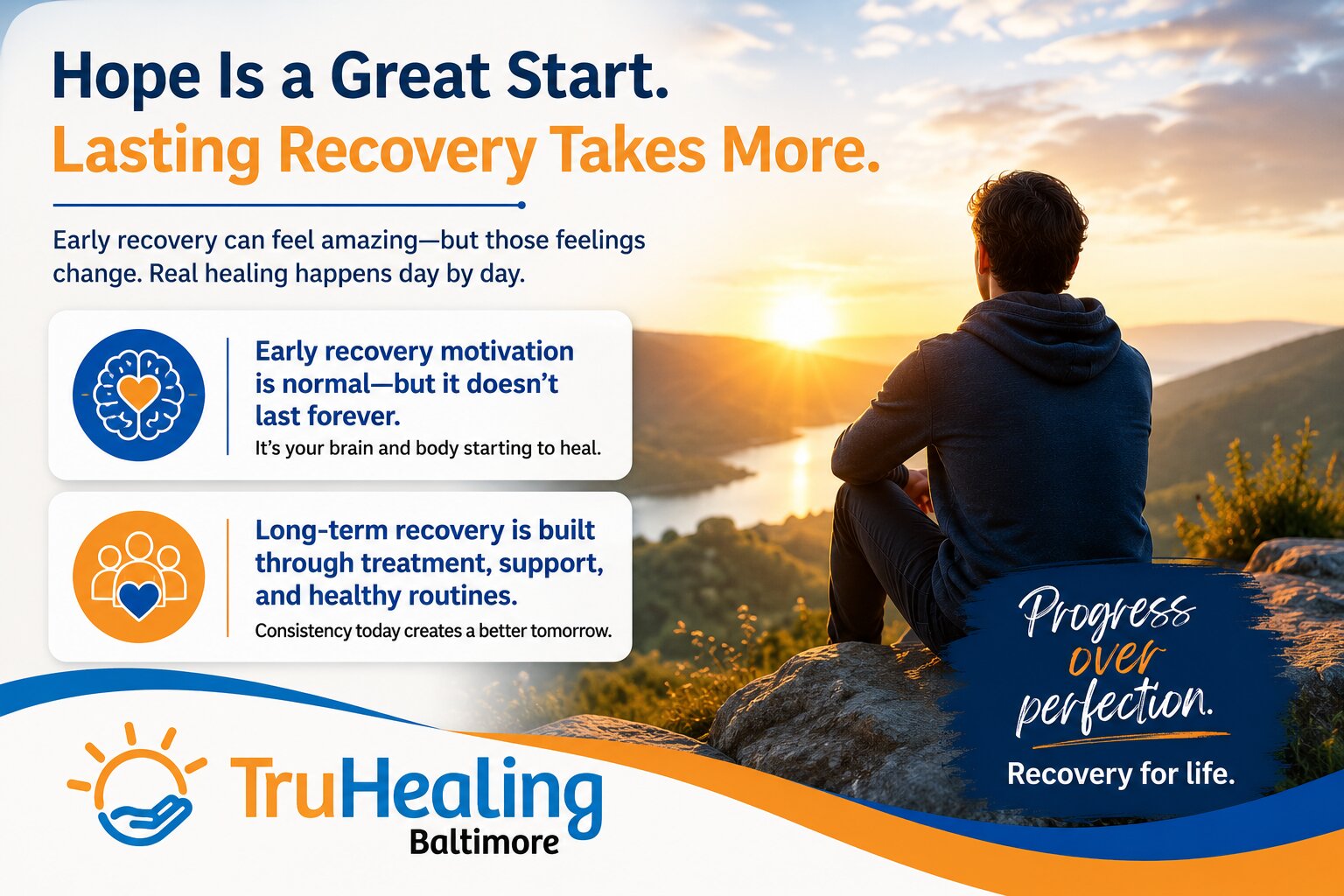
How to Stay Grounded Through Both Phases
The goal isn’t to avoid feeling excited.
Hope is one of recovery’s greatest strengths.
Instead, the goal is to enjoy positive emotions without expecting them to last forever.
Several strategies can help.
Continue Attending Treatment
Even when recovery feels easy, continuing therapy, counseling, or outpatient treatment helps build skills that remain useful long after the initial excitement fades.
Build Healthy Routines
Consistent habits provide stability regardless of mood.
Helpful routines include:
- Regular sleep schedules
- Healthy meals
- Exercise
- Recovery meetings
- Therapy appointments
- Time with supportive people
Structure becomes especially valuable during emotionally difficult periods.
Expect Emotional Ups and Downs
Healing isn’t linear.
Some days feel inspiring.
Others feel frustrating.
Both are normal parts of recovery.
Accepting this reality makes emotional changes less frightening.
Celebrate Progress Beyond Feelings
Instead of measuring success by happiness alone, look for lasting improvements such as:
- Better relationships
- Improved physical health
- Financial stability
- Increased honesty
- Emotional resilience
- Personal growth
These milestones continue even when excitement naturally settles.
Stay Connected
Isolation increases relapse risk.
Remaining involved with treatment providers, sponsors, peer support groups, or trusted family members creates accountability and encouragement during both positive and difficult seasons.
Building a Recovery Foundation That Lasts
Early motivation is valuable, but lasting recovery depends on much more than motivation alone.
Successful long-term recovery often includes:
- Professional treatment
- Relapse prevention planning
- Mental health care when needed
- Healthy coping skills
- Supportive relationships
- Lifestyle changes
- Patience with the recovery process
Rather than chasing the emotional high of early sobriety, lasting recovery focuses on creating a life that remains meaningful even on ordinary days.
Over time, confidence grows not because every day feels exciting, but because you’ve learned you can handle life’s challenges without returning to substance use.
That confidence tends to be far more durable than temporary feelings of euphoria.
Frequently Asked Questions
What is the pink cloud in recovery?
The pink cloud describes a period of heightened optimism, motivation, and emotional well-being that some people experience during early recovery from alcohol or drug use. While it can be encouraging, it is generally temporary and is considered a normal part of recovery for some individuals.
How long does it last?
There is no fixed timeline. For some people, the experience lasts only a few days, while others may notice it for several weeks or even a few months. Every recovery journey is different.
Is it a bad thing?
No. Feeling hopeful and motivated can be a positive source of encouragement. Problems arise only if someone expects those feelings to last indefinitely or mistakes the end of this phase as a sign that recovery is failing. Continuing treatment and maintaining healthy routines can help people navigate the transition successfully.
Build a Recovery That Lasts Beyond the Early High
Feeling hopeful during early recovery is something to celebrate. At the same time, understanding that emotions naturally change can help you stay committed when recovery begins to feel more like everyday life. Long-term sobriety is built through consistent support, healthy habits, and evidence-based treatment—not temporary emotional highs.
At TruHealing Baltimore, we help individuals throughout Baltimore and Maryland build a strong foundation for lasting recovery through personalized, compassionate care. Whether you’re just beginning treatment or looking for continued support, our team is here to help.
Call TruHealing Baltimore today at (833) 782-2241 to learn more about our substance abuse treatment programs and take the next step toward lasting recovery.