

There’s a quiet kind of panic that can happen between therapy appointments.
You leave a session feeling slightly lighter. Slightly clearer. Maybe even hopeful.
Then life rushes back in.
The stress. The numbness. The overthinking. The exhaustion. The effort it takes just to answer texts or get through work without falling apart in the bathroom.
By the second or third day after therapy, it can feel like the ground disappears again.
A lot of people assume this means they’re failing therapy.
It doesn’t.
Sometimes it means your depression has grown bigger than one hour a week can realistically hold.
And if you’ve been searching for structured daytime mental health support while quietly thinking, I need more help, but I don’t want to lose my freedom, you are not alone in that fear.
More support does not automatically mean losing your life, your identity, or your independence.
Sometimes it simply means you deserve more care than you’ve been getting.
Many First-Time Treatment Seekers Feel Guilty for Needing More Help
One of the most painful things about depression is how often people minimize their own suffering.
Especially high-functioning people.
Especially people who are still technically “getting through the day.”
They tell themselves:
- “Other people have it worse.”
- “I should be able to manage this.”
- “Maybe I’m just lazy.”
- “I already go to therapy. Why am I still struggling?”
- “I don’t want to overreact.”
So they keep pushing.
Meanwhile, simple tasks begin feeling strangely impossible.
Laundry piles up.
Texts go unanswered.
Eating becomes inconsistent.
Sleep gets worse.
Work starts taking twice the emotional energy.
Even joy can begin to feel unreachable, like trying to hear music through a wall.
A lot of first-time treatment seekers carry shame because they believe needing additional support means they somehow failed at healing correctly.
But depression is not a personal weakness.
And needing more care is not a moral issue.
Weekly Therapy Can Be Helpful—and Still Not Be Enough Right Now
This is important to say clearly.
Weekly therapy is valuable. For many people, it’s life-changing.
But therapy is also limited by time.
If someone is spending the other 167 hours of the week:
- emotionally overwhelmed
- isolated
- unable to function consistently
- deeply depressed
- battling suicidal thoughts
- struggling to regulate emotions
- unable to apply coping skills outside sessions
then one appointment may not provide enough support during that season of life.
That doesn’t mean therapy “isn’t working.”
It may simply mean the level of care no longer matches the intensity of what you’re carrying.
Think of it this way:
If someone was severely dehydrated, giving them one sip of water every seven days would not mean water failed them.
They would simply need more consistent support.
Mental health can work the same way.
A Lot of People Fear Being “Locked In”
This fear stops many people from reaching out earlier.
They imagine that asking for more support automatically means:
- being hospitalized against their will
- losing all privacy
- giving up normal life
- being treated like a danger
- losing control over decisions
- disappearing from family or work responsibilities
And honestly, media portrayals of mental health care have not helped.
But there’s a large middle ground between once-a-week therapy and live-in treatment.
Some people benefit from structured daytime care because it offers more support without fully removing them from daily life.
That can look like:
- attending therapy multiple days a week
- receiving more emotional support during difficult periods
- accessing psychiatric care if needed
- building coping skills more consistently
- returning home afterward instead of staying overnight
For many people, this kind of care feels less like punishment and more like finally exhaling after holding tension for too long.
Depression Often Makes People Isolate Before They Realize It
One of the hardest parts about worsening depression is how subtle the changes can seem at first.
You stop responding to friends as quickly.
You cancel plans more often.
You stay in bed longer on weekends.
You begin surviving instead of participating in your own life.
But because the decline happens slowly, many people adapt to the pain instead of recognizing it.
Until eventually:
- getting through the day feels exhausting
- basic decisions feel overwhelming
- motivation disappears
- hope feels distant
- emotional numbness settles in
Depression can become so loud internally while remaining almost invisible externally.
Some people still go to work every day while privately wondering how much longer they can keep functioning.
Others smile through conversations while mentally rehearsing how soon they can go back home and shut the world out again.
That’s part of why more structured support can matter.
Not because someone is “crazy.”
Because depression can become incredibly heavy to carry alone.
There Are Options Between “Fine” and “Emergency”
This is something many people genuinely do not know.
Mental health care is not only:
- weekly therapy
or - psychiatric hospitalization
There are levels of support designed for people who are struggling significantly but still want connection to their normal lives and routines.
That’s why some individuals start researching alternatives to inpatient depression support once they realize they need more than occasional sessions—but less than round-the-clock care.
This middle space matters.
Because many people are not in immediate danger, but they are also not okay.
They are:
- emotionally exhausted
- struggling to function consistently
- overwhelmed most days
- increasingly isolated
- carrying thoughts they haven’t told anyone
- afraid their depression is getting deeper
Those people deserve support too.
Not only once things become catastrophic.
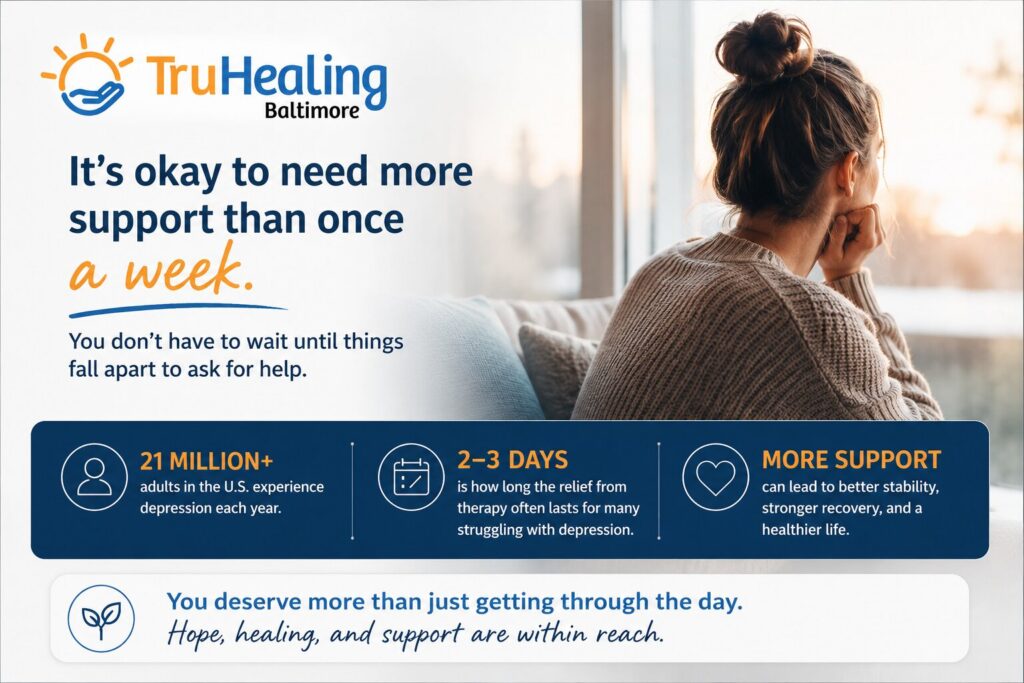
More Support Can Create Stability, Not Chaos
A common fear among first-time treatment seekers is:
“If I enter a higher level of care, my life will completely fall apart.”
But for many people, the opposite happens.
More support often creates more stability.
Instead of spending the majority of the week trying to survive alone after one therapy session, people begin receiving:
- consistent therapeutic connection
- structured emotional support
- daily coping reinforcement
- medication management if appropriate
- routine and accountability
- a safer environment to stabilize emotionally
And something else happens too:
People stop spending all their energy pretending they’re okay.
That alone can be profoundly relieving.
Depression is exhausting partly because so many people feel forced to perform normalcy while drowning internally.
Treatment creates space where people no longer have to fake being fine every second.
You Don’t Need to Completely Collapse Before You Deserve Help
A lot of people delay care because they think they haven’t “earned” it yet.
They tell themselves:
- “I’m still functioning.”
- “I still go to work.”
- “I’m not in crisis.”
- “I’m not suicidal enough.”
- “Other people need treatment more.”
But pain does not need to become catastrophic before it deserves attention.
You do not need:
- a hospitalization
- active self-harm
- a total breakdown
- complete inability to function
- a public crisis
to justify needing additional support.
Sometimes the clearest sign someone needs help is simply this:
They are exhausted from trying so hard just to feel okay.
That matters.
And getting help earlier can prevent things from becoming much more severe later.
Fear Before Treatment Is Completely Normal
People often think they need to feel confident before reaching out for help.
Most don’t.
Many people feel:
- scared
- uncertain
- ashamed
- emotionally numb
- skeptical
- overwhelmed
- afraid treatment won’t help
- afraid it will help and change their life
All of those reactions are normal.
Especially for first-time treatment seekers who have spent months—or years—trying to manage things privately.
Asking for more support can feel vulnerable because it requires admitting something important:
What you’re carrying has become too heavy to hold alone.
That admission is not weakness.
It’s honesty.
And honesty is often where healing finally begins.
You Are Allowed to Need More Than Survival
This is the part many people need to hear most.
You are not failing because weekly therapy stopped feeling sufficient.
You are not dramatic because depression has become harder to manage.
And you are not weak for wanting help before things completely unravel.
A lot of people wait for permission to seek more care.
Permission from family.
Permission from work.
Permission from some imaginary standard of “sick enough.”
But you do not have to earn the right to feel supported.
You are allowed to want relief before reaching a breaking point.
You are allowed to want your life back.
And there are treatment options designed specifically for people who need more support without wanting to completely disappear from the world.
FAQ: Questions People Quietly Ask Before Reaching Out
How do I know if once-a-week therapy is no longer enough?
If you’re struggling to function between sessions, feeling emotionally unsafe most days, isolating heavily, or feeling like therapy relief disappears almost immediately, it may be worth exploring more structured support.
Does needing more care mean I’m getting worse?
Not necessarily. Sometimes it simply means your current support system no longer matches the level of emotional pain or stress you’re experiencing right now.
Can I get more support without staying overnight somewhere?
Yes. Some treatment options provide structured daytime care while still allowing people to return home afterward.
What if I’m scared of treatment?
That fear is incredibly common. Many first-time treatment seekers worry about losing control, independence, or privacy. Asking questions before committing to care is completely okay.
Are there treatment options between therapy and hospitalization?
Yes. Many people seek alternatives to inpatient depression care because they need more support than weekly therapy but do not require live-in treatment.
Will people think I’m “crazy” for needing more support?
Depression is a health condition, not a character flaw. Reaching for additional support during a difficult season is a sign of self-awareness—not failure.
What if I’m still functioning at work or school?
Many people struggling with depression continue functioning externally while suffering internally. You do not have to completely stop functioning before you deserve help.
Can structured treatment help with anxiety too?
Yes. Depression and anxiety often overlap, and many people entering treatment are dealing with both emotional exhaustion and chronic anxiety at the same time.
What happens if I start treatment and realize I need something different?
Treatment plans can evolve. A quality care team helps determine what level of support fits your needs instead of forcing a one-size-fits-all approach.
You do not have to wait until everything falls apart before asking for more support.
Call (833) 782-2241 or visit TruHealing Baltimore’s partial hospitalization program services to learn more about supportive mental health treatment options that meet you where you are.