

There’s a moment that doesn’t feel dramatic—but it changes everything.
It’s not rock bottom. It’s not a crisis headline.
It’s quieter than that.
It sounds like: “I’ve tried everything I know how to try… and I’m still struggling.”
If you’re here, you might already be in that moment. And that doesn’t mean you’ve failed—it means you’ve reached the edge of what you can carry alone. You can begin exploring options like round-the-clock support when the weight starts to feel too constant to manage by yourself.
It Usually Builds Slowly—Until It Doesn’t Feel Manageable Anymore
Most people don’t wake up one day and decide they need more support.
It builds.
A little more stress. A little less energy. A little more effort just to get through the day.
Until one day, you notice something has shifted:
- You’re exhausted even when nothing “big” happened
- Your coping strategies aren’t working the way they used to
- You feel like you’re constantly trying to catch up with yourself
It’s not always obvious.
But it’s real.
You Start Organizing Your Life Around Avoiding the Hard Parts
At some point, life stops feeling like something you’re living—and starts feeling like something you’re managing.
You might notice:
- Avoiding certain places, people, or situations just to stay stable
- Rearranging your day to prevent overwhelm
- Needing more and more effort just to feel “okay”
And even then, “okay” doesn’t last.
It’s like trying to hold water in your hands—it takes constant effort, and it keeps slipping through.
You’ve Already Tried to Handle It on Your Own
This matters.
Because most people don’t consider deeper support lightly.
You’ve probably already:
- Tried to push through difficult days
- Told yourself to be stronger, more disciplined, more in control
- Looked for ways to manage things without outside help
And maybe, for a while, that worked.
But if you’re here, something inside you already knows:
It’s not working enough anymore.
And that’s not a failure of effort.
It’s a signal that the level of support needs to change.
The Environment Around You Might Be Keeping You Stuck
This is one of the hardest truths to sit with.
You might be trying to heal in the same environment that’s contributing to the struggle.
The same routines. The same stress. The same expectations.
Even if nothing is “wrong” externally, your nervous system might never fully settle there.
Some people stepping into deeper support in Howard County, Maryland describe it as the first time things actually felt quiet enough inside their own mind to focus on healing.
Not because their life disappeared—but because the constant pressure eased.
You Don’t Have to Hit a Breaking Point to Deserve More Support
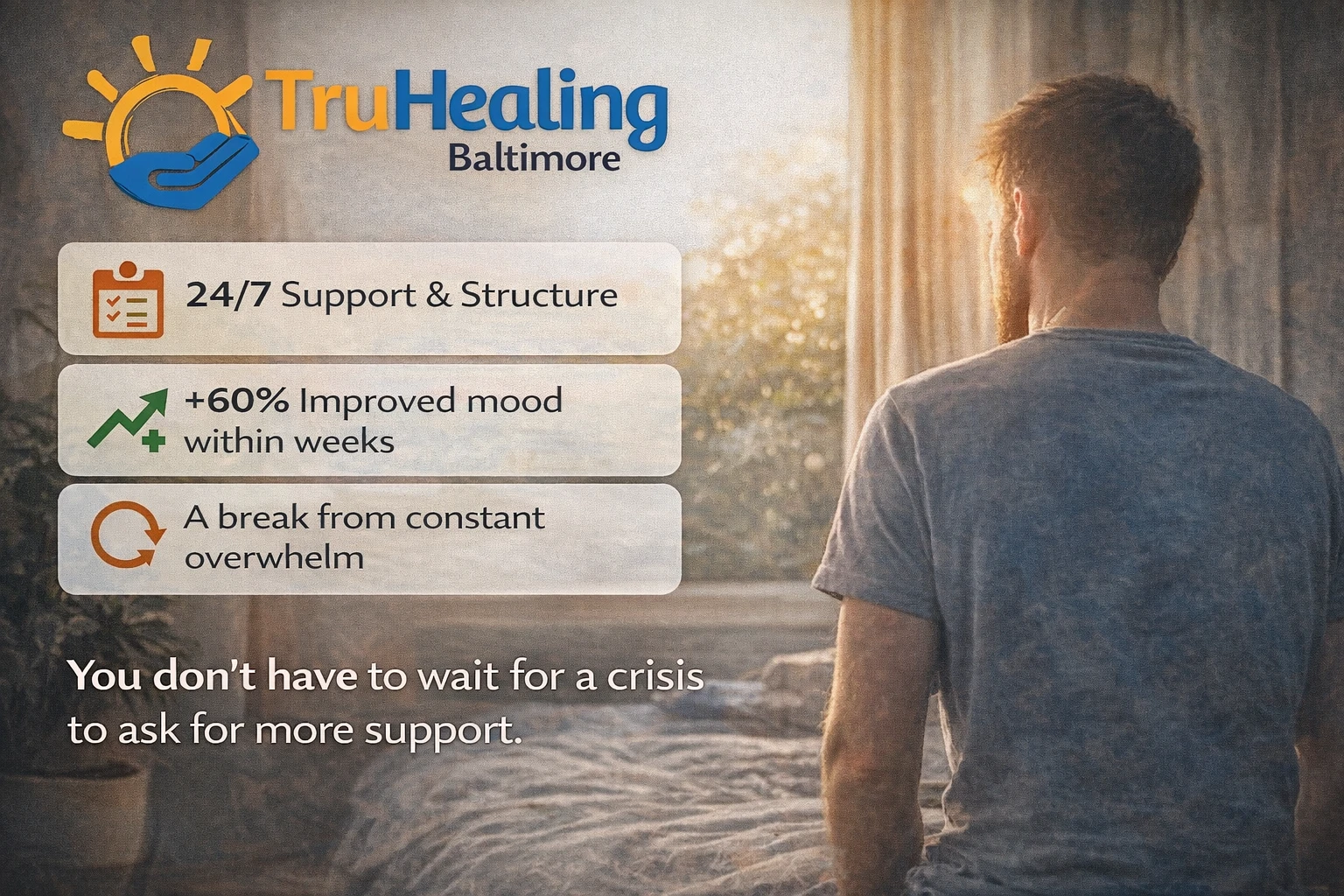
There’s a dangerous myth that you have to reach a crisis before taking a bigger step.
You don’t.
You don’t need:
- A dramatic event
- A complete loss of control
- A moment where everything falls apart
You just need to recognize that what you’re doing right now isn’t enough to create change.
That realization alone is enough.
The Fear of “What This Means” Can Keep You Stuck
For many people, the hesitation isn’t about the support itself.
It’s about what it represents.
- “Does this mean things are worse than I thought?”
- “Am I really at that point?”
- “What will people think?”
Those questions are heavy.
But here’s the truth:
Needing more support doesn’t define how “bad” things are.
It reflects how honest you’re willing to be about what you need.
What Changes When You Stop Doing This Alone
This is where things start to shift.
Not overnight. Not perfectly.
But meaningfully.
When you’re no longer relying on willpower alone:
- Support becomes consistent instead of occasional
- You don’t have to fight through every moment by yourself
- There’s space to actually process, not just survive
And that space matters more than most people expect.
Because healing doesn’t happen in chaos.
It happens where there’s enough stability to feel safe.
It’s Not About Losing Control—It’s About Getting Some Back
A lot of people hesitate because it feels like giving something up.
Freedom. Independence. Control.
But when everything feels overwhelming, control already feels fragile.
Choosing more support isn’t giving it up.
It’s stabilizing it.
It’s creating a structure that holds you up while you rebuild.
You Might Still Feel Unsure—And That’s Completely Normal
You don’t need to feel confident to take this step.
You don’t need certainty.
Most people feel:
- Doubt
- Fear
- Resistance
Those feelings don’t mean it’s the wrong decision.
They mean it matters.
And often, the people who feel the most unsure are the ones who benefit the most—because they’re finally stepping outside of what hasn’t been working.
There’s a Version of You That’s Not Constantly Fighting to Get Through the Day
This is the part that’s hard to imagine when you’re in it.
But it exists.
A version of you that:
- Isn’t exhausted all the time
- Doesn’t feel like everything is a struggle
- Has space to breathe, think, and feel without overwhelm
Not perfect.
Not easy.
But more stable.
Some individuals who’ve taken that step in Carroll County, Maryland describe it not as a dramatic transformation—but as a gradual return to themselves.
And that’s often what people are really looking for.
If You’re Thinking About This, Something Inside You Is Already Shifting
People don’t land here randomly.
If this thought has crossed your mind—even briefly—it means something inside you is recognizing that change is possible.
Not guaranteed.
Not immediate.
But possible.
And sometimes, that small awareness is the beginning of everything.
FAQs About Taking the Next Step Toward More Support
How do I know if I need more than what I’m doing now?
If you’re still struggling despite your efforts, or if daily life feels overwhelming, it may be time to consider a higher level of support.
Do I have to wait until things get worse?
No. In fact, acting earlier can make the process more manageable and create better outcomes.
What if I’m scared to take this step?
That’s completely normal. Fear often shows up when something matters. You don’t need to feel fearless—you just need to be willing.
Will this actually help if other approaches didn’t?
It can—especially if your previous support didn’t match the level of need. A different environment can create a different experience.
What if I feel like I should be able to handle this on my own?
That belief is common—but it can also keep you stuck. Support isn’t a sign of weakness. It’s a shift in strategy.
How quickly should I act on this feeling?
If things feel consistently overwhelming or unchanged, it’s worth exploring your options sooner rather than later.
What if I’m not fully ready?
You don’t have to be. Readiness often develops after you begin—not before.
You don’t have to wait for everything to fall apart to take this step.
Sometimes the most important decision is the quiet one—the moment you stop trying to carry everything alone.
If you’re ready to explore what that could look like, we’re here to help.
Call (833) 782-2241 or visit our residential treatment programs in Baltimore, Maryland to learn more about.