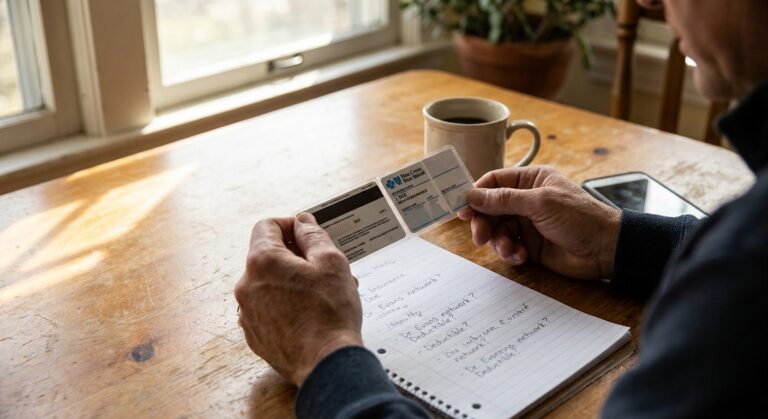
You didn’t fall apart.
You adapted. You kept going. You made it work—until “working” started to feel like barely holding the line.
If you’re here, something in you already knows it’s not sustainable. And you’re starting to wonder what help could look like without everything else collapsing.
Early on, many people start quietly researching options. If you’ve already looked into something like an intensive outpatient program, it’s not random. It’s usually a sign you’re closer to change than you think.
You’re Functioning—But It’s Taking More Than It Should
From the outside, your life makes sense.
You meet expectations. You respond when people need you. You handle your responsibilities. Nothing about your life would immediately signal “problem.”
But inside, there’s a constant calculation happening:
How much energy do I have left?
How do I get through today without slipping?
What do I need just to feel normal?
That quiet strain is easy to hide—and easy to dismiss. Especially when you’re still performing.
But functioning isn’t the same as being okay.
There’s a difference between managing your life and quietly surviving it.
Anxiety Doesn’t Stay Subtle Forever
At first, it’s manageable.
You write it off as stress. A busy season. A rough patch. You tell yourself it’ll pass once things slow down.
But then it doesn’t.
Your thoughts start looping. Sleep gets lighter, shorter, or inconsistent. You feel restless even when nothing’s technically wrong. Your patience shortens. Your mind races ahead of you.
And somewhere along the way, you start reaching for something to take the edge off.
Not in a dramatic way. Not to escape everything.
Just enough to quiet things down.
Just enough to get through.
That’s where anxiety and substance use begin to overlap—not as separate problems, but as part of the same cycle.
You’re Not Losing Control—You’re Losing Margin
This is where high-functioning people often get stuck.
Because nothing has collapsed, it’s easy to tell yourself it’s not serious. You’re still working. Still showing up. Still managing.
But what’s disappearing is your margin.
The space to rest.
The ability to recover.
The sense that you’re actually okay underneath everything.
Instead, everything starts to feel like effort.
Even the things that used to feel easy.
And that’s usually the point where people start searching for something different—even if they don’t fully know what that is yet.

You Don’t Have Time to Step Away—But You Can’t Keep Going Like This
This is the tension that keeps people in place.
You can’t just stop your life. You have responsibilities, people relying on you, commitments you can’t drop overnight.
But at the same time, continuing exactly like this doesn’t feel possible either.
So you sit in the middle:
Too functional to step away.
Too overwhelmed to keep going as-is.
That’s where flexible, structured care becomes relevant—not because things are extreme, but because they’re quietly unsustainable.
What Support Looks Like When You’re Still “Holding It Together”
Not all care requires you to disappear from your life.
Some programs are designed specifically for people who need real support—but also need to stay engaged in their day-to-day responsibilities.
That’s where structured, virtual care comes in.
For individuals across Maryland, including professionals and caregivers in Baltimore, this kind of support allows you to:
- Attend therapy multiple days a week without leaving home
- Stay present at work or with family while still getting help
- Address both anxiety and substance use in a connected way
- Build routines that support you instead of draining you
This is where terms like online IOP Maryland start to show up in your search—not because you were looking for treatment, but because you were looking for relief that fits your life.
You Don’t Have to Prove It’s “Bad Enough”
One of the biggest barriers for high-functioning people is this idea that things have to get worse before they qualify for help.
They don’t.
You don’t need a breaking point.
You don’t need consequences stacked up behind you.
You don’t need to explain or justify how hard this feels.
If you’re tired, that matters.
If you’re relying on something just to feel steady, that matters.
If your anxiety is starting to shape your days instead of just passing through them, that matters.
Help isn’t reserved for the worst-case scenario. It’s for the moment you realize something needs to change.
What Actually Changes With the Right Support
This isn’t about flipping a switch or becoming a different person.
It’s about reducing the pressure you’ve been carrying alone.
With consistent, structured support, people often begin to notice:
- Their thoughts slow down enough to actually process them
- They don’t need to rely on substances in the same way
- Their sleep begins to stabilize
- They feel less reactive and more grounded
- They regain a sense of control—not forced, but real
It’s not instant. But it’s noticeable.
And more importantly, it’s sustainable.
The Turning Point Is Usually Quiet
There’s rarely a dramatic moment.
No big collapse. No obvious line crossed.
Just a quiet realization:
“I don’t want to keep doing this alone.”
That thought matters.
It’s the point where things can begin to shift—not because everything is falling apart, but because you’re ready for something to feel different.
Starting Doesn’t Mean You’re Committing Forever
A lot of people hesitate because they think reaching out means making a huge decision.
It doesn’t.
It means asking questions.
Understanding your options.
Seeing what support could actually look like for your life—not someone else’s version of recovery.
If you’re in Maryland and trying to navigate anxiety and substance use without stepping away from everything, there are options designed for exactly that.
And they start with a conversation.
FAQs: Real Questions High-Functioning People Ask
Do I have to stop working to get help?
No. Many people in structured outpatient care continue working, especially with virtual options. Schedules are often designed to fit around professional and personal responsibilities.
What if I’m not sure I have a “real” problem?
That’s more common than you think. You don’t need a label to start exploring support. If something feels off or harder than it should be, that’s enough reason to talk to someone.
Is this only for severe addiction?
No. Many people seek help before things escalate. Programs often support a wide range of substance use patterns, especially when combined with anxiety or stress.
Will people find out I’m in treatment?
Confidentiality is taken seriously. Virtual care adds another layer of privacy, allowing you to attend sessions from your own space without disrupting your routine.
What does a typical week look like?
Most programs include multiple sessions per week—individual therapy, group support, and skill-building. The structure helps create consistency without overwhelming your schedule.
Can this actually help with anxiety, or is it just about substance use?
Both are addressed together. For many people, substance use is tied to managing anxiety. Treating them separately often doesn’t work long-term—integrated care does.
What if I start and feel unsure?
You’re allowed to feel unsure. Starting doesn’t lock you in—it gives you information. From there, you decide what feels right.
You don’t need to wait until things fall apart to take this seriously.
You don’t need to keep managing it alone just because you’ve been able to.
Call (833) 782-2241 to learn more about our treatment programs, intensive outpatient program in Baltimore, Maryland.