
When someone decides to stop using alcohol or drugs, one of the first concerns is often what withdrawal will feel like. Detox symptoms can range from mild discomfort to life-threatening medical emergencies, depending on the substance involved, how long it has been used, and a person’s overall health.
Understanding what to expect can make the process feel less overwhelming, but it’s equally important to recognize when professional medical care is necessary. For many people in Baltimore and throughout Maryland, entering a medically supervised detox program provides a safer, more comfortable way to begin recovery.
If you’re considering treatment, learning more about TruHealing Baltimore’s detox program can help you understand how medical professionals monitor withdrawal, manage symptoms, and prepare you for ongoing addiction treatment.
Common Detox Symptoms
Although every substance affects the body differently, many withdrawal experiences share similar physical and emotional symptoms as the brain and nervous system adjust to functioning without drugs or alcohol.
Common withdrawal symptoms may include:
- Anxiety or restlessness
- Irritability or mood swings
- Insomnia or disrupted sleep
- Sweating
- Chills or goosebumps
- Nausea and vomiting
- Diarrhea
- Muscle aches
- Tremors
- Fatigue
- Headaches
- Increased heart rate
- Difficulty concentrating
- Strong cravings
Some people experience only mild discomfort, while others develop severe complications that require immediate medical attention. The risk depends largely on the substance involved.
Detox Symptoms by Substance
Substance |
Common Detox Symptoms |
Highest Risk Period |
Medical Detox Recommended? |
|---|---|---|---|
| Alcohol | Tremors, sweating, nausea, anxiety, insomnia, increased blood pressure | 24–72 hours | Yes |
| Opioids | Muscle pain, body aches, diarrhea, vomiting, chills, dilated pupils, cravings | 48–72 hours | Strongly recommended |
| Benzodiazepines | Anxiety, panic, insomnia, tremors, muscle stiffness, seizures | Several days after stopping (varies by medication) | Always recommended |
| Stimulants | Fatigue, depression, increased sleep, irritability, intense cravings | First several days | Recommended, especially for mental health support |
Alcohol Detox Symptoms
Alcohol withdrawal can become one of the most medically dangerous forms of detox.
Early symptoms often begin within several hours after the last drink and may include:
- Shaking
- Sweating
- Nausea
- Anxiety
- Headaches
- Elevated heart rate
As withdrawal progresses, some individuals may develop hallucinations, seizures, or delirium tremens (DTs)—a medical emergency requiring immediate treatment.
Opioid Detox Symptoms
Withdrawal from heroin, fentanyl, oxycodone, and other opioids is rarely life-threatening by itself, but it can feel extremely intense.
Symptoms commonly include:
- Severe muscle aches
- Bone pain
- Stomach cramps
- Vomiting
- Diarrhea
- Runny nose
- Excessive yawning
- Goosebumps
- Insomnia
- Powerful cravings
Although opioid withdrawal is generally not fatal, dehydration, relapse, and overdose after detox are serious concerns without medical support.
Benzodiazepine Detox Symptoms
Withdrawal from medications such as Xanax®, Ativan®, Klonopin®, or Valium® carries significant medical risks.
Symptoms may include:
- Severe anxiety
- Panic attacks
- Tremors
- Sensitivity to light and sound
- Insomnia
- Confusion
- Elevated blood pressure
More severe withdrawal can lead to seizures, hallucinations, or delirium. Because symptoms can develop days after the last dose, medical monitoring is strongly recommended.
Stimulant Detox Symptoms
Withdrawal from cocaine, methamphetamine, or prescription stimulants usually affects mood more than physical health.
People may experience:
- Extreme fatigue
- Increased sleep
- Depression
- Anxiety
- Irritability
- Difficulty concentrating
- Increased appetite
- Strong cravings
Although stimulant withdrawal rarely causes dangerous physical complications, severe depression and suicidal thoughts can occur, making professional supervision important.
Which Symptoms Are Dangerous?
Many detox symptoms are uncomfortable but manageable with medical support. Others require immediate attention because they can become life-threatening.
Potential emergency symptoms include:
- Seizures
- Hallucinations
- Delirium tremens (DTs)
- Confusion or inability to stay oriented
- Chest pain
- Difficulty breathing
- Extremely high blood pressure
- Irregular heartbeat
- Persistent vomiting leading to dehydration
- Loss of consciousness
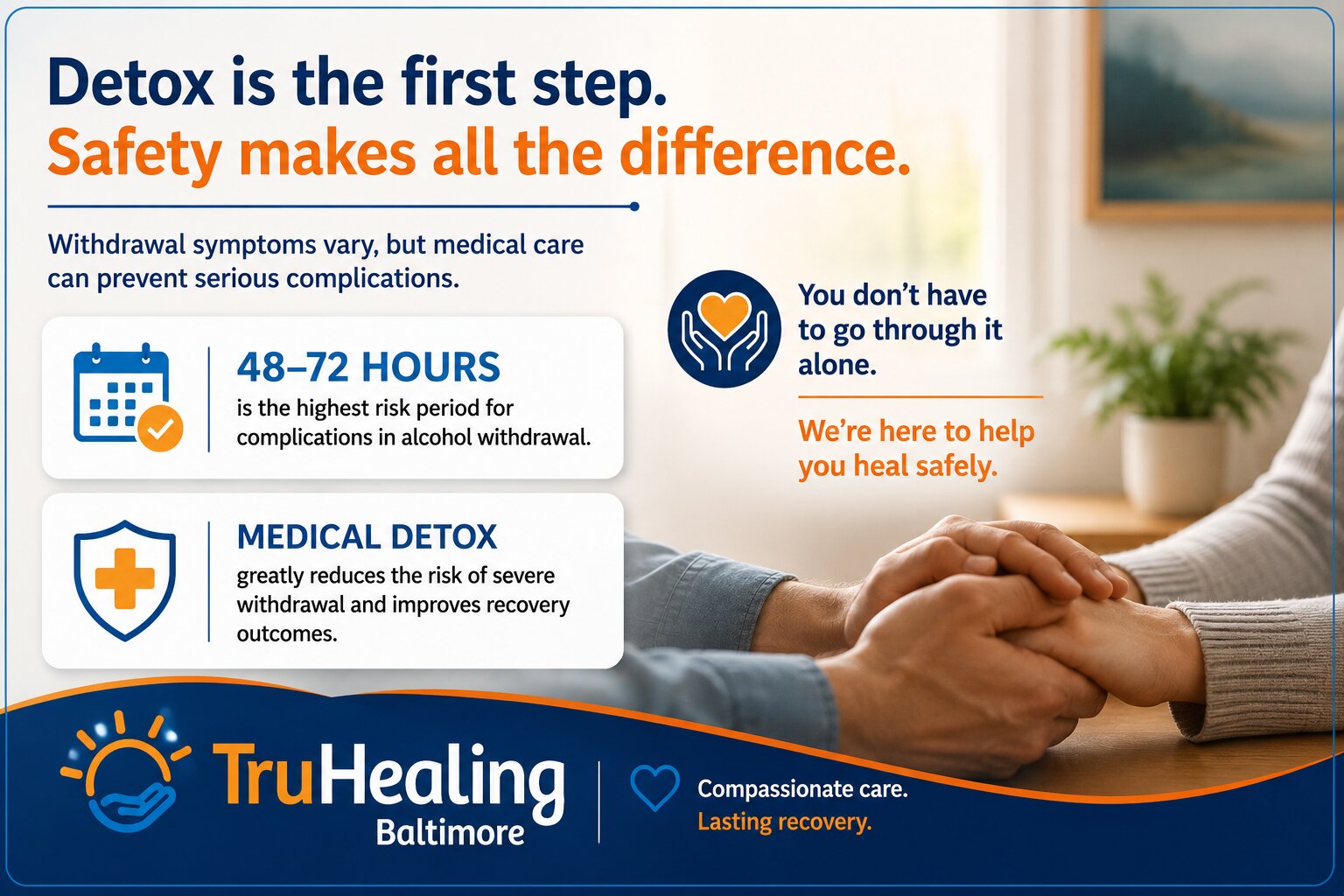
Alcohol and benzodiazepine withdrawal carry the highest risk of life-threatening complications.
Individuals should never attempt to manage severe withdrawal symptoms alone at home. Emergency medical care may be necessary if dangerous symptoms develop.
The Timeline: How Long Detox Symptoms Last
The exact withdrawal timeline depends on:
- The substance used
- Length of use
- Typical dosage
- Overall health
- Whether multiple substances were used
First 6–24 Hours
Many people begin noticing early withdrawal symptoms such as anxiety, sweating, restlessness, or cravings.
Days 1–3
For many substances, symptoms become more intense during this period.
Alcohol withdrawal complications like seizures often occur during this window.
Opioid withdrawal frequently reaches peak intensity during the second or third day.
Days 4–7
Many physical symptoms begin improving.
Sleep, appetite, and energy may slowly start returning, although cravings often continue.
Weeks After Detox
Some individuals experience post-acute withdrawal symptoms (PAWS), which can include:
- Mood changes
- Anxiety
- Sleep disturbances
- Difficulty concentrating
- Occasional cravings
These symptoms generally improve over time with ongoing treatment and recovery support.
Why Medical Detox at TruHealing Baltimore Is the Safe Choice
Detox is about much more than simply waiting for substances to leave the body.
Medical detox provides continuous monitoring so healthcare professionals can:
- Monitor vital signs
- Manage withdrawal symptoms with appropriate medications when indicated
- Prevent serious complications
- Keep patients hydrated and medically stable
- Respond immediately if emergencies develop
- Prepare patients for residential or outpatient addiction treatment
For many individuals throughout Baltimore and surrounding Maryland communities, medical detox offers a significantly safer and more comfortable beginning to recovery than attempting withdrawal alone.
Detox also creates an opportunity to transition directly into evidence-based addiction treatment, helping reduce the risk of relapse after withdrawal ends.
Frequently Asked Questions
How long does detox last?
Most medically supervised detox programs last between 3 and 10 days, although the exact length depends on the substance used, the severity of dependence, and each person’s medical needs. Some medications, particularly benzodiazepines, may require longer tapering schedules.
What are the worst detox symptoms?
The most severe withdrawal symptoms include seizures, delirium tremens (DTs), hallucinations, severe dehydration, dangerously high blood pressure, and irregular heart rhythms. These complications are most commonly associated with alcohol and benzodiazepine withdrawal.
Is detox dangerous?
It can be. While many withdrawal symptoms are uncomfortable but not life-threatening, alcohol and benzodiazepine withdrawal can become medical emergencies without proper treatment. Even opioid or stimulant withdrawal can increase the risk of dehydration, relapse, overdose, or mental health crises. Medical detox provides monitoring and treatment to improve safety throughout the withdrawal process.
Begin Detox Safely in Baltimore
Detox symptoms can vary widely depending on the substance involved, but one thing remains consistent: beginning recovery is safest when medical professionals are available to monitor withdrawal and respond to complications if they arise.
At TruHealing Baltimore, our medical detox team provides compassionate, evidence-based care that helps patients manage withdrawal safely while preparing for the next stage of recovery. Whether you’re withdrawing from alcohol, opioids, benzodiazepines, or stimulants, you don’t have to go through the process alone. Call TruHealing Baltimore today at (833) 782-2241 to learn more about our medical detox program or verify your insurance. Recovery begins with a safe first step.