


A lot of people searching treatment questions aren’t fully convinced they belong there.
That’s important to understand.
Many are still working. Parenting. Paying bills. Showing up to dinners and laughing at jokes. From the outside, life still appears mostly intact.
But privately, something feels off.
Maybe drinking has become the reward, the escape hatch, the nightly shutdown button. Maybe every attempt to “cut back” quietly turns into another negotiation.
And somewhere underneath all of that is one uncomfortable thought:
What if this is getting bigger than I can manage alone?
Then another fear shows up immediately after:
What if treatment is too much?
If you’ve been looking into live-in alcohol treatment options while wondering how long people stay—or what happens if they leave early—you are asking questions many people are too scared to say out loud.
Especially sober curious people who aren’t sure whether they’re “bad enough” yet.
The good news is this:
You do not need to be certain before exploring help.
And fear before treatment is incredibly normal.
Most People Imagine Treatment as More Extreme Than It Actually Is
A lot of people hear the phrase “residential treatment” and immediately picture losing control of their entire life.
They imagine:
- disappearing for months
- losing their identity
- being trapped
- being judged
- sitting in sterile rooms feeling miserable
- having no privacy or freedom
That fear keeps many people stuck far longer than they need to be.
In reality, treatment is often much more human than people expect.
Yes, it’s structured. Yes, it asks people to slow down and honestly look at their relationship with alcohol.
But it’s also full of regular people who never imagined they’d need help either.
Teachers.
Parents.
Nurses.
Business owners.
College students.
People who “still had it together.”
One of the most common things we hear from new clients is:
“I thought everyone here would be completely different from me.”
Usually, they realize pretty quickly that they are not alone at all.
Stop Trying to Mentally Survive the Entire Process at Once
This matters more than people realize.
A lot of people panic before treatment because they keep asking themselves:
“How am I supposed to survive 30 days?”
“What about 60?”
“What if they want me there longer?”
But recovery doesn’t happen all at once.
And trying to mentally process an entire treatment timeline before even beginning can make everything feel impossible.
Instead of asking:
“How will I survive the next month?”
Sometimes it helps to ask:
“What would it look like to stop fighting myself for one day?”
Recovery often starts much smaller than people expect.
One honest conversation.
One completed intake.
One sober night.
One decision not to leave during a hard moment.
People don’t heal by magically becoming fearless.
They heal by continuing despite fear.
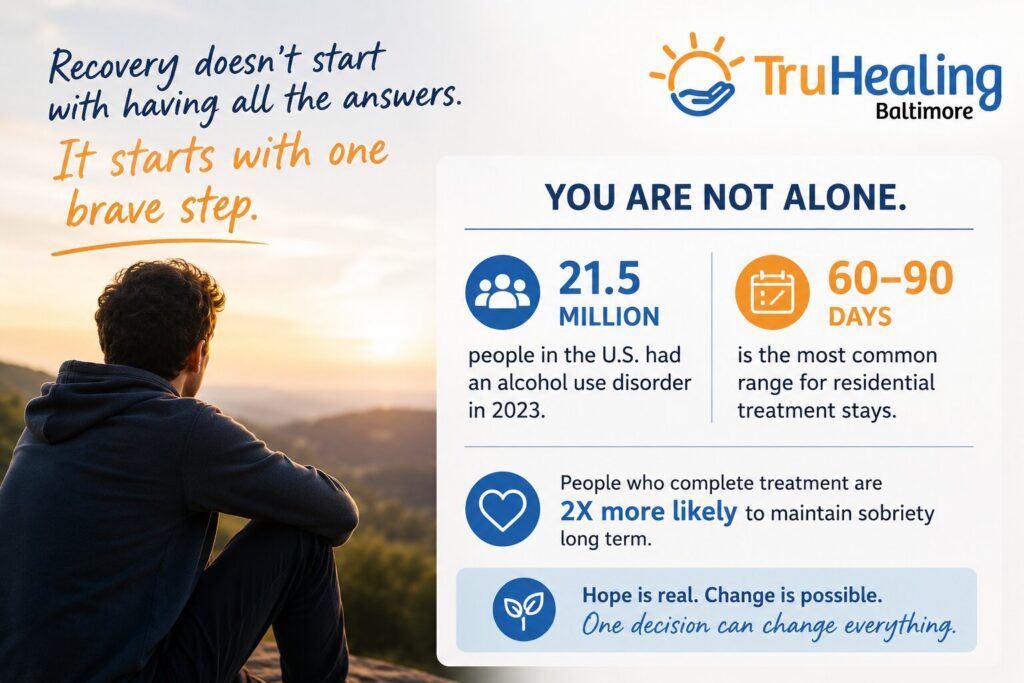
So…How Long Do People Usually Stay?
There isn’t one universal timeline.
And honestly, that’s a good thing.
Because people are different.
The length of someone’s stay may depend on:
- how long alcohol use has been happening
- physical withdrawal symptoms
- mental health needs
- relapse history
- home environment
- support systems
- medical concerns
- emotional stability
- progress during treatment
Some people begin with a shorter stay and transition into continued care afterward. Others discover they need more time once they finally slow down enough to recognize how exhausted they really are.
That’s why searches like how long is inpatient rehab rarely have one simple answer.
Recovery is not assembly-line work.
It’s human work.
And healing timelines are rarely identical.
The First Few Days Can Feel Emotionally Strange
This surprises a lot of people.
Most sober curious individuals worry about physical withdrawal first. And yes, that can absolutely require medical attention and support.
But emotionally, the first few days can feel unexpectedly intense too.
Why?
Because alcohol often serves purposes beyond intoxication.
For many people, it becomes:
- stress relief
- emotional buffering
- social confidence
- routine
- sleep support
- escape from overthinking
- temporary relief from anxiety or sadness
When alcohol suddenly disappears, emotions can feel louder before they become manageable.
People sometimes feel:
- restless
- emotionally raw
- anxious
- guilty
- homesick
- mentally overwhelmed
- uncertain whether they made the right decision
That does not mean treatment is failing.
It means your brain and nervous system are adjusting to honesty after a long period of numbing.
Almost Everyone Thinks About Leaving at Some Point
This is one of the most important things people should know before entering treatment.
Wanting to leave does not automatically mean you shouldn’t be there.
Many people experience moments where they think:
- “I’m overreacting.”
- “I can manage this myself.”
- “This is uncomfortable.”
- “I don’t belong here.”
- “Other people need this more than I do.”
Those thoughts are incredibly common—especially early on.
Because treatment interrupts patterns that may have been emotionally protective for years.
Alcohol may have helped someone:
- avoid painful memories
- suppress anxiety
- tolerate loneliness
- quiet self-criticism
- feel socially comfortable
- manage pressure
Without those coping patterns, discomfort rises temporarily before healthier regulation begins developing.
That transition can feel vulnerable.
But discomfort is not the same thing as failure.
What Happens If Someone Leaves Early?
This question carries a lot of shame for people.
Many worry:
“If I leave, does that mean recovery is over for me?”
No.
Leaving treatment early does not make someone hopeless or doomed.
Some people leave because:
- fear overwhelms them
- they miss home
- shame kicks in
- cravings intensify
- emotional discomfort feels unbearable
- they convince themselves they’re “fine”
And sometimes people later return when they’re ready for more support.
We’ve seen many individuals come back after leaving early and go on to build meaningful recovery.
Healing is rarely linear.
What matters most is not disappearing into shame afterward.
Because shame isolates people.
Support reconnects them.
Recovery Usually Starts Before Someone Feels Ready
This is something sober curious people especially need to hear.
You do not need complete certainty before reaching out.
Most people entering treatment still have doubts.
They wonder:
- “Am I exaggerating?”
- “Can I just cut back instead?”
- “What if I’m making too big a deal out of this?”
- “What if I fail?”
Those thoughts are common because alcohol problems rarely begin as obvious catastrophes.
For many people, it starts quietly:
- one extra drink at night
- relying on alcohol to sleep
- using weekends to recover emotionally
- increasing anxiety without alcohol
- feeling mentally consumed by moderation attempts
Eventually, people become exhausted not only from drinking—but from constantly thinking about drinking.
That mental battle alone can wear people down.
The Goal Isn’t to Become a Completely Different Person
A lot of sober curious people fear treatment because they think recovery means losing themselves.
Especially social, funny, creative, or high-achieving individuals.
They worry:
- “Will I still be fun?”
- “Will I still feel like me?”
- “Will my personality disappear?”
- “What if sobriety makes life boring?”
Those fears are real.
But many people eventually realize alcohol wasn’t preserving their personality.
It was slowly exhausting it.
One former client described recovery this way:
“I thought alcohol made me more alive. By the end, it mostly made me unavailable.”
Treatment is not about erasing identity.
It’s about helping people reconnect with themselves underneath survival habits that stopped working.
Healing Takes More Than Insight Alone
One reason longer stays sometimes help is because recovery requires repetition.
Not just awareness.
Most people already know alcohol is hurting them before entering treatment.
Knowledge is rarely the missing piece.
What people often need is:
- consistency
- structure
- emotional safety
- accountability
- routine
- support during difficult moments
- time away from constant triggers
Healing tends to happen through practice.
Day by day.
Conversation by conversation.
Choice by choice.
And many people discover they’re capable of much more change than they originally believed.
FAQ: Questions People Quietly Ask Before Alcohol Treatment
How long do people usually stay in alcohol treatment?
Length of stay varies depending on physical health, emotional needs, relapse history, and recovery progress. Some individuals stay a few weeks while others benefit from longer support and continued care afterward.
Is it normal to feel scared before treatment?
Very normal. Many people feel uncertain, overwhelmed, or afraid before entering treatment—especially first-time clients who are still unsure how serious their drinking has become.
What happens if I leave treatment early?
Leaving early does not mean recovery is impossible. Some people return later, continue care differently, or reconnect with support when they’re ready. Shame does not have to be the end of the story.
Do people usually want to leave at first?
Yes. Many individuals experience moments of doubt, discomfort, or panic during early recovery. Those feelings often decrease as the body and mind stabilize.
Can treatment still help if I’m not sure I’m an alcoholic?
Absolutely. Many sober curious people seek help because alcohol has started negatively affecting their quality of life, emotional health, relationships, or sense of control.
Why do some people stay longer than others?
Recovery timelines differ because people’s histories, mental health needs, support systems, and physical health are different.
Will treatment completely “fix” me before I leave?
Treatment helps stabilize and support recovery, but healing continues afterward too. Recovery is usually an ongoing process—not a single event.
What if I’m still functioning in daily life?
Many people entering treatment are still outwardly functioning. You do not need to lose everything before asking whether alcohol is becoming harmful.
Can I continue care after live-in treatment?
Yes. Many individuals transition into outpatient therapy, structured daytime care, support groups, or ongoing recovery planning after residential treatment ends.
What if I’m worried sobriety will change my personality?
That fear is very common. Many people eventually discover they become more emotionally present, connected, and authentic in recovery—not less themselves.
You do not need to have your entire future figured out before reaching out.
Sometimes the bravest thing a person can do is simply admit:
“This way of living isn’t working anymore.”
Call (833) 782-2241 or visit TruHealing Baltimore’s residential treatment program services to learn more about alcohol treatment options and what recovery can realistically look like.