


Missing one session can quietly turn into disappearing altogether.
At first, maybe you planned to go back next week. Then next week became next month. The longer you stayed away, the heavier it started to feel. Eventually, even opening a text from the program felt uncomfortable.
A lot of people who stop attending treatment think they’ve ruined their chance to come back.
They imagine disappointed staff. Awkward conversations. Judgment. Lectures. Questions they don’t know how to answer.
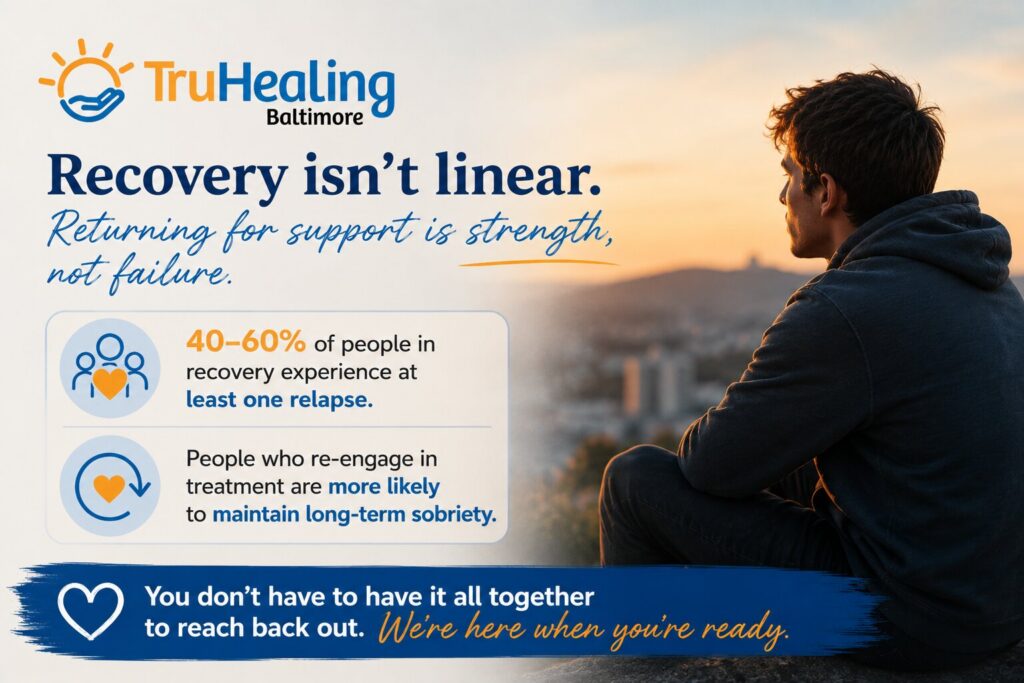
But most of the time, the people helping you are not sitting around angry that you struggled. They understand something many clients don’t realize yet: recovery is messy, emotional, and rarely linear.
If you’ve been thinking about reconnecting with support, TruHealing Maryland’s intensive outpatient program is designed to support people through real-life recovery—not perfect recovery.
Start Smaller Than You Think You Need To
A lot of people delay reaching back out because they think it has to be some huge emotional moment.
It doesn’t.
You do not need to write a perfect explanation for why you stopped attending. You don’t need a dramatic apology. You don’t need to promise that this time will be different forever.
You just need to make contact.
That could look like:
- Replying to an old text
- Sending a short email
- Calling and asking a question
- Saying, “I think I need support again”
- Admitting you’ve been avoiding reaching out
That’s enough to begin.
Sometimes people imagine recovery has to restart with some powerful breakthrough moment. In reality, it often starts with one shaky text message sent while sitting in a parking lot.
Small steps still count.
Understand That Ghosting Treatment Is More Common Than You Think
People rarely talk openly about dropping out of treatment, which makes it feel isolating.
But it happens constantly.
Some people leave because life gets overwhelming. Some relapse and feel embarrassed. Some convince themselves they’re suddenly okay. Others get emotionally exhausted and stop showing up because opening up every week starts to feel too vulnerable.
And honestly, sometimes people leave because treatment is working enough that they start feeling uncomfortable facing deeper things underneath the substance use.
None of this makes you uniquely broken.
A lot of clients disappear quietly because shame gets louder than connection.
That shame says things like:
- “They probably don’t want me back.”
- “I wasted everyone’s time.”
- “I should be able to figure this out myself.”
- “It’s too late now.”
But shame is not always truthful. It’s just loud.
Don’t Wait Until Everything Falls Apart Again
This is one of the biggest traps people fall into after leaving treatment early.
They tell themselves:
- “I’ll go back if it gets really bad.”
- “I can probably manage this on my own.”
- “At least I’m functioning.”
- “Other people have it worse.”
Meanwhile, they’re exhausted.
Drinking more than they planned. Isolating. Struggling emotionally. Losing sleep. Feeling disconnected from themselves. Pretending everything is manageable while privately feeling overwhelmed.
A lot of people think they need to hit some dramatic rock bottom before they deserve support again.
You don’t.
You are allowed to reach back out while your life is still mostly intact.
Actually, that’s often the best time to do it.
Recovery becomes much harder when shame, isolation, and emotional burnout have months to grow unchecked.
Be Honest About Why You Stopped Going
You don’t need to share every detail immediately, but honesty helps.
If scheduling became impossible, say that.
If group sessions made you anxious, say that.
If you relapsed and disappeared because you felt embarrassed, say that too.
Treatment teams cannot help address barriers they don’t know exist.
A lot of people assume they failed treatment when the reality is they were trying to carry too much at once. Work stress, mental health symptoms, family pressure, financial problems, loneliness—these things matter.
For many people, finding support that fits into real life feels important. That’s one reason some people begin looking for alcohol help without rehab that completely removes them from home, work, or family responsibilities.
Structured support can still exist without putting your entire life on pause.
Expect Some Awkwardness—But Don’t Let It Stop You
This part is important because many people expect reconnecting to feel emotionally smooth right away.
It might not.
You may feel embarrassed walking back in.
You may overthink what people are thinking about you.
You may want to explain yourself too much or apologize repeatedly.
That’s normal.
But awkwardness is survivable.
And honestly? Most people around you are probably far less judgmental than your own inner voice.
One thing I noticed after returning to support was how many other people had similar stories. People who disappeared for weeks. People who relapsed. People who left because they thought they didn’t need help anymore.
Nobody looked shocked.
Because recovery spaces are full of people learning how to come back to themselves after pulling away.
Stop Treating Recovery Like a Pass-or-Fail Test
A lot of treatment dropouts secretly believe they failed permanently.
That mindset can keep people stuck for months or years.
But recovery isn’t school. You don’t get one opportunity to “pass” and then lose everything forever if you struggle again later.
You still carry the things you learned before:
- Coping tools
- Emotional insight
- Awareness of triggers
- Moments of honesty
- Supportive relationships
- Evidence that change is possible
Even if you stopped attending, those experiences still exist inside you.
Coming back doesn’t mean starting over from zero.
It means continuing before things get harder.
Give Yourself Permission to Need More Support
Some people avoid returning because they think needing treatment again means they’re weak.
But healing is not a willpower contest.
Sometimes people genuinely need more structure during difficult seasons of life. Stress accumulates. Mental health shifts. Burnout deepens. Old coping patterns return quietly.
That doesn’t make you incapable of recovery.
It makes you human.
And honestly, many people who reconnect with support later end up approaching recovery more honestly the second time around. Less performance. Less pretending. More willingness to admit what’s actually difficult.
That kind of honesty can become a turning point.
Try Not to Romanticize “Handling It Alone”
This one is sneaky.
After leaving treatment, many people start convincing themselves they should be able to manage everything independently.
They tell themselves:
- “I don’t want to rely on treatment.”
- “I should be stronger than this.”
- “I can fix this privately.”
But isolation has a way of making struggles grow roots.
The longer you sit alone with shame, drinking, anxiety, depression, or emotional exhaustion, the more normal it starts to feel.
Connection interrupts that pattern.
Even one honest conversation can break through weeks of isolation.
That’s why reaching back out matters before things become unbearable.
Recovery Sometimes Looks Like Returning
Not everybody’s recovery story is clean and linear.
Some stories include pauses.
Some include ghosting.
Some include relapse.
Some include circling back after months of silence because a part of you finally got tired of pretending everything was okay.
That part deserves attention, not punishment.
You do not have to earn your way back into support by suffering longer first.
You are allowed to return because you’re tired. Because you’re struggling. Because you miss feeling connected to yourself. Because you quietly know where things are heading if nothing changes.
That’s enough reason.
FAQ
Is it common for people to stop attending treatment?
Yes. Many people leave treatment early or stop attending for periods of time. This can happen because of work, family stress, relapse, emotional overwhelm, financial concerns, or fear of vulnerability. You are not alone if this happened to you.
Can I go back to treatment after ghosting a program?
In many cases, yes. Treatment programs often understand that recovery is not linear. Reaching back out after time away is more common than many people realize.
What should I say when reaching back out?
You do not need a perfect explanation. A simple message like “I’ve been struggling and wanted to reconnect” is enough to start the conversation.
Will treatment staff judge me for leaving?
Most treatment professionals understand that people sometimes pull away during difficult periods. Their focus is usually on helping you reconnect with support—not punishing you for struggling.
What if I relapsed after leaving treatment?
Relapse can happen during recovery, and it does not mean you failed permanently. Many people seek additional support after relapse to help regain stability and rebuild healthy routines.
Can I get support without going into live-in treatment?
Yes. Some people benefit from structured care that allows them to continue living at home while attending treatment during the week. This can provide flexibility while still offering meaningful support and accountability.
How do I know if I need help again?
You may benefit from reconnecting with support if you’ve been isolating, drinking more than intended, struggling emotionally, avoiding responsibilities, or feeling increasingly overwhelmed. You do not need to wait for a major crisis to ask for help.
If part of you has been thinking about reaching back out lately, listen to that voice. You don’t have to wait until things completely unravel to deserve support again. TruHealing Maryland offers compassionate treatment in Baltimore for people looking to reconnect with care in a realistic, human way.
Call (833) 782-2241 or visit TruHealing Maryland’s intensive outpatient program services in Baltimore, Maryland to learn more about our treatment programs and supportive care options.