

Many people delay seeking treatment because they believe they haven’t suffered “enough” yet. They tell themselves they still have a job, their family is still speaking to them, or they haven’t experienced the kind of crisis they’ve seen in movies or heard about from others.
This belief often leads people to keep waiting—hoping things won’t get worse while quietly knowing that alcohol or drug use is becoming harder to control.
The truth is that hitting rock bottom isn’t a medical requirement for recovery. It’s a personal experience, and it looks different for everyone. More importantly, you don’t have to wait for a devastating loss before deciding your life is worth changing.
If you’re questioning your relationship with alcohol or drugs, learning more about TruHealing Baltimore’s substance abuse treatment programs can help you understand your options before substance use causes further harm.
Recovery begins with a decision—not with a disaster.
What “Rock Bottom” Really Means
People often imagine rock bottom as losing everything:
- A career
- A marriage
- A home
- Financial stability
- Physical health
- Freedom
While some people do experience these severe consequences, many begin recovery long before life reaches that point.
For one person, rock bottom might be waking up after another blackout.
For someone else, it could be realizing they need alcohol just to get through the day.
It might be noticing that relationships are becoming strained, feeling ashamed after using again, or recognizing that life revolves around obtaining and using a substance.
There is no universal definition.
Rock bottom is the moment someone decides that continuing to live the same way is no longer acceptable.
The Myth: You Have to Wait
One of the most damaging misconceptions about addiction is the belief that people cannot recover until they have completely fallen apart.
This simply isn’t true.
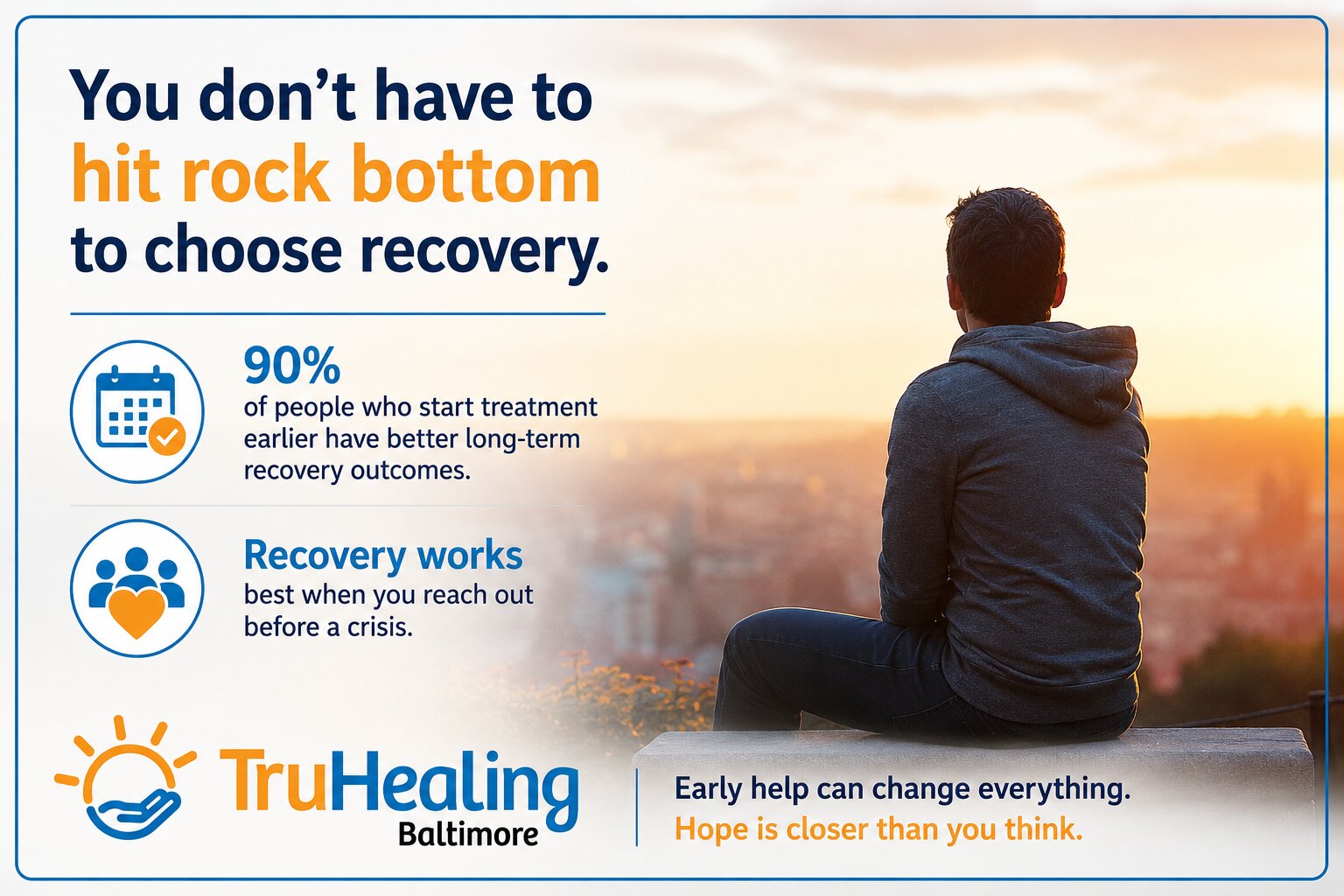
Research consistently shows that earlier treatment often leads to better outcomes because people typically have:
- Fewer medical complications
- Less severe substance dependence
- Stronger support systems
- More emotional and financial stability
- Greater flexibility in choosing treatment options
Waiting for addiction to become “bad enough” rarely makes recovery easier.
Instead, substance use disorders tend to become more severe over time if left untreated.
The sooner someone receives help, the sooner healing can begin.
Choosing to Act Before a Crisis
Some recovery communities talk about “raising your bottom.”
Instead of waiting for life to force change, you choose to make a change while important parts of your life are still intact.
That decision might happen because you notice:
- Drinking or drug use is increasing
- You’re hiding your substance use
- You’re making promises you can’t keep
- Anxiety about your use is growing
- Relationships feel more distant
- You’re relying on substances to cope with everyday stress
These experiences matter.
You don’t need permission from a judge, an employer, or an emergency room to decide it’s time for help.
You are allowed to choose recovery simply because you want a healthier life.
Signs It’s Time to Reach Out
Every person’s experience is different, but certain warning signs suggest alcohol or drug use may be becoming more serious.
Consider seeking a professional assessment if you notice:
Loss of Control
You regularly use more than you planned or struggle to stop once you’ve started.
Increased Tolerance
You need larger amounts to experience the same effects.
Cravings
You spend significant time thinking about drinking or using drugs.
Withdrawal Symptoms
You feel sick, anxious, shaky, or irritable when you stop using.
Life Revolves Around Substance Use
Activities, schedules, or social plans increasingly depend on access to alcohol or drugs.
Relationships Are Changing
Friends or family have expressed concern, or you’ve started avoiding people because of your substance use.
You’ve Tried to Quit Before
Repeated attempts to cut back or stop have not lasted as long as you hoped.
You don’t need every sign to benefit from treatment.
Even recognizing one or two patterns may be enough to begin a conversation with a professional.
Taking the First Step with TruHealing Baltimore
Many people hesitate because they worry treatment means giving up control.
In reality, reaching out simply starts a conversation.
A professional assessment can help determine:
- Whether treatment is appropriate
- Which level of care best fits your needs
- What recovery options are available
- How to safely begin the process if withdrawal is expected
Treatment plans are personalized because every recovery journey is unique.
Some people begin with medical detox.
Others enter residential treatment or outpatient care depending on their circumstances.
The important part isn’t choosing the perfect moment.
It’s choosing not to wait until life becomes even harder.
Frequently Asked Questions
What is rock bottom?
Rock bottom is a personal point where someone decides they can no longer continue living with the effects of addiction. It doesn’t have a universal definition and looks different for everyone.
Do you have to hit it before getting help?
No. Recovery can begin at any stage of addiction. In fact, seeking treatment earlier often improves safety, preserves relationships, and leads to better long-term outcomes.
What are the signs it’s time to seek help?
Signs include increasing substance use, cravings, withdrawal symptoms, unsuccessful attempts to quit, growing secrecy, strained relationships, and relying on alcohol or drugs to cope with everyday life. You don’t need to experience a major crisis before reaching out.
Choose Recovery Before Addiction Chooses for You
You don’t have to wait until everything falls apart before asking for help. If alcohol or drug use is beginning to affect your health, relationships, work, or peace of mind, that’s reason enough to explore your options. Choosing recovery early is not giving up—it’s choosing to protect what matters most.
At TruHealing Baltimore, we provide compassionate, evidence-based substance use treatment tailored to each person’s unique needs. Whether you’re considering treatment for the first time or looking for support after previous attempts, our team is here to help.
Call TruHealing Baltimore today at (833) 782-2241 to learn more about our substance abuse treatment programs and take the first step toward lasting recovery.