

“He told me not to worry.”
Parents hear that sentence all the time.
Usually right before they spend the entire night worrying anyway.
Maybe your son said he was done drinking and planned to detox at home for a few days. Maybe he sounded confident. Maybe he promised he’d hydrate, rest, and “push through it.”
And maybe part of you wanted desperately to believe him.
But another part—the exhausted, hyper-alert part that’s been watching this unfold for months or years—felt uneasy immediately.
That feeling matters.
As clinicians, we want parents to know this clearly:
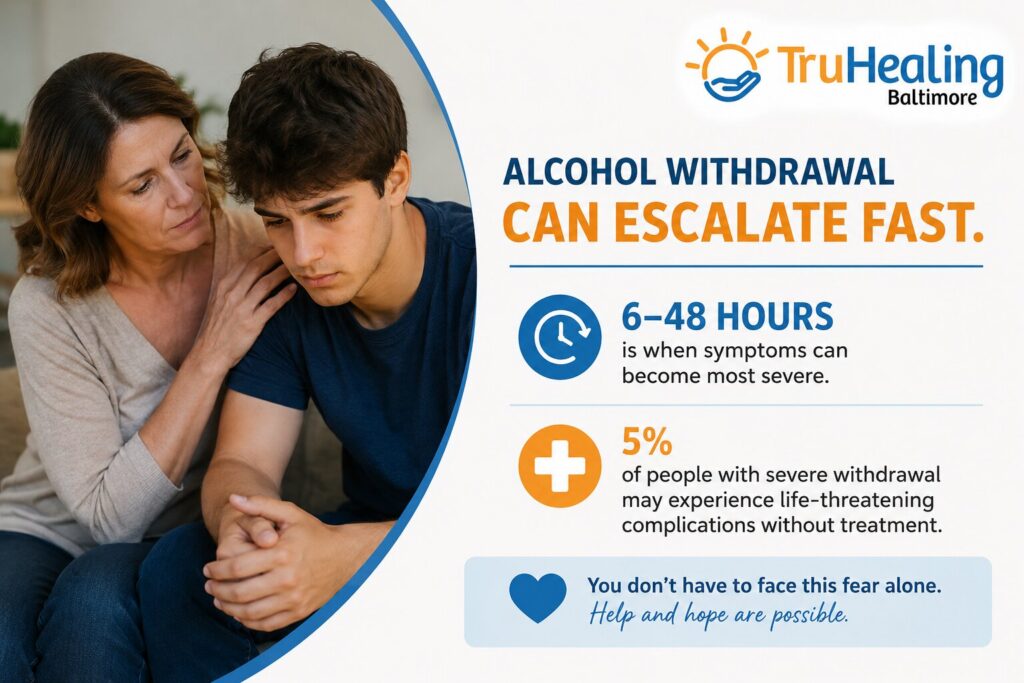
Alcohol withdrawal can become medically dangerous very quickly for some people. And many families underestimate the risk because alcohol is socially normalized in ways other substances often are not.
If you’ve been researching live-in treatment and detox support while quietly wondering whether detoxing alone is actually safe, you are not overreacting.
You are responding to something serious.
Alcohol Withdrawal Is Not Just “Feeling Sick for a Few Days”
This is one of the biggest misconceptions families carry.
People often imagine alcohol withdrawal as uncomfortable but manageable:
- headaches
- sweating
- nausea
- shakiness
- trouble sleeping
And yes, those symptoms can happen.
But severe withdrawal can also involve:
- seizures
- hallucinations
- dangerous spikes in blood pressure
- rapid heart rate
- confusion
- severe agitation
- delirium tremens (DTs)
- cardiac complications
What makes alcohol withdrawal especially frightening is how unpredictable it can become.
Someone may appear relatively stable initially and then worsen quickly over several hours.
That unpredictability is part of why clinicians take alcohol detox so seriously.
The nervous system becomes physically adapted to alcohol over time. When alcohol suddenly disappears, the body can struggle to regulate itself safely.
This is not about weakness.
It’s biology.
Parents Often Spend Months Trying to Decide If Things Are “Bad Enough”
One painful reality families experience is constant self-doubt.
Especially parents.
They ask themselves:
- “Am I overreacting?”
- “Maybe all young adults drink like this.”
- “What if I push too hard?”
- “I don’t want him to hate me.”
- “I can’t tell what’s normal anymore.”
That confusion is incredibly common.
Alcohol problems often escalate gradually. Families adapt little by little until behaviors that once seemed alarming start feeling strangely routine.
Parents normalize things they never imagined they would normalize:
- hidden bottles
- slurred late-night phone calls
- emotional volatility
- blackouts
- unexplained illnesses
- isolation
- sleeping all day
- constant promises to stop drinking “soon”
Meanwhile, underneath all that adaptation is grief.
Not just fear.
Grief.
The quiet heartbreak of watching someone you love slowly disappear into survival mode.
Shame Makes Many People Minimize Their Drinking
This matters more than families realize.
Many people struggling with alcohol use do not fully disclose how much they’re drinking—not always because they’re intentionally dishonest, but because shame and addiction often work together.
Parents may only know part of the story.
A son might say:
“I just drink socially.”
Meanwhile:
- alcohol is hidden throughout the house
- drinking begins earlier in the day than anyone realizes
- withdrawal symptoms appear between drinks
- anxiety spikes intensely without alcohol
- memory blackouts are becoming frequent
This is one reason conversations about alcohol detox at home dangers are so important.
Families are often making safety decisions without having complete information.
And unfortunately, addiction tends to protect itself through minimization.
That does not mean your child is manipulative or beyond help.
It often means they are scared, ashamed, and trying to maintain some sense of control.
Withdrawal Symptoms Can Escalate Quickly
Alcohol withdrawal does not always follow a neat, predictable timeline.
Some symptoms can begin within hours after someone stops drinking heavily.
Families may notice:
- shaking hands
- sweating
- anxiety or panic
- nausea
- insomnia
- irritability
- elevated heart rate
In more severe situations, symptoms can progress into:
- hallucinations
- confusion
- severe agitation
- seizures
- dangerous cardiovascular changes
This is why “just sleeping it off” is not always safe.
And unfortunately, many families don’t realize how medically serious withdrawal can become until symptoms intensify rapidly.
One of the hardest parts for parents is not knowing what’s normal versus what’s dangerous.
That uncertainty alone can become emotionally overwhelming.
Parents Cannot Safely Monitor Serious Withdrawal Alone
A lot of parents quietly take on the role of emergency monitor during at-home detox attempts.
They stay awake listening for sounds.
Checking breathing.
Watching for confusion.
Trying to gauge whether symptoms seem “serious enough.”
They become terrified to leave the room.
And underneath it all is one crushing thought:
“What if something happens while I’m asleep?”
No parent should have to carry that level of fear alone.
You are a parent.
Not a detox nurse.
Not an addiction specialist.
Not an emergency stabilization unit.
Seeking professional support is not abandoning your child.
In many situations, it is the safest and most loving decision available.
Young Adults Often Believe They’re Invincible
This is another heartbreaking dynamic families encounter.
A 20-year-old may genuinely believe:
- “I’ll be fine.”
- “People detox at home all the time.”
- “I don’t need help.”
- “I just need to stop drinking for a few days.”
And because they’re young, families sometimes want to believe withdrawal risk is lower.
But age alone does not eliminate danger.
Risk can depend on:
- frequency of drinking
- amount consumed
- prior withdrawal attempts
- co-occurring drug use
- mental health conditions
- physical health history
Some young adults develop severe withdrawal complications despite appearing outwardly healthy.
That’s part of what makes unsupervised detox so risky.
Treatment Is Not About Punishment
Many people resist detox or residential care because they imagine treatment as shame-based, restrictive, or emotionally harsh.
Parents often hear:
- “I’m not going to rehab.”
- “I’m not like those people.”
- “I don’t want to be locked up.”
- “I can stop on my own.”
Those fears are deeply human.
Especially for young adults still trying to protect their identity and independence.
But treatment is not about humiliating someone into recovery.
It’s about:
- medical safety
- emotional stabilization
- reducing immediate risk
- creating structure during chaos
- helping someone reconnect with themselves underneath the drinking
For many families, one of the most emotional moments is seeing their loved one sleep peacefully for the first time in months after medically supported detox begins.
Not because everything is magically fixed.
But because the body is finally no longer trapped in constant physiological distress.
Recovery Often Starts Smaller Than Families Expect
Parents sometimes desperately want certainty:
- “Will this finally work?”
- “Will he stay sober?”
- “Will treatment change him?”
- “What if he relapses again?”
Those questions are understandable.
But recovery usually does not begin with certainty.
It often begins with:
- one honest conversation
- one safe detox
- one moment of willingness
- one night where fear finally outweighs denial
And importantly:
Relapse history does not erase the possibility of recovery.
Many people who eventually build strong long-term sobriety had earlier moments where they resisted treatment, minimized problems, or attempted to quit alone first.
Hope does not disappear because this became complicated.
Families Need Support Too
Parents often become emotionally consumed by someone else’s addiction.
They stop sleeping normally.
They monitor phones constantly.
They panic when calls go unanswered.
They rehearse worst-case scenarios in their heads all day.
Many parents quietly live in survival mode for months or years.
That level of chronic fear changes people.
And yet parents often feel guilty for being exhausted.
As clinicians, we want families to hear this:
You are allowed to need support too.
You are allowed to feel overwhelmed.
You are allowed to ask questions.
You are allowed to stop carrying this entirely alone.
Loving someone with alcohol use disorder can feel like holding your breath for years.
Support matters for families just as much as it matters for the person struggling.
Wanting Help Is Not the Same Thing as Giving Up
This is something many young adults fear deeply.
They think accepting treatment means admitting failure.
But seeking medical support during alcohol withdrawal is not weakness.
It is often the exact opposite.
Because real courage sometimes looks like admitting:
“This has become bigger than I expected.”
And despite how hopeless things can feel in certain moments, people do recover.
Relationships repair.
Trust rebuilds slowly.
Sleep returns.
Laughter returns.
Life becomes recognizable again.
Not overnight.
Not perfectly.
But genuinely.
FAQ: Questions Parents Quietly Ask About Alcohol Withdrawal
Is alcohol withdrawal really dangerous?
It can be. Severe alcohol withdrawal may involve seizures, hallucinations, dangerous blood pressure changes, delirium tremens (DTs), and other serious medical complications.
Can someone safely detox from alcohol at home?
Some mild withdrawal situations may be manageable, but unsupervised detox can become dangerous quickly depending on drinking history, physical health, and prior withdrawal experiences.
What are signs alcohol withdrawal is becoming serious?
Warning signs can include confusion, hallucinations, seizures, severe shaking, vomiting, rapid heartbeat, dangerous blood pressure changes, or extreme agitation.
Why does alcohol withdrawal become medically risky?
Over time, the brain and nervous system adapt to alcohol. Suddenly stopping can overwhelm the body’s ability to regulate itself safely.
My son says he can “handle it.” Should I still be concerned?
Many people underestimate withdrawal severity or minimize how much they’ve been drinking. Concern does not mean you are overreacting.
Are younger adults still at risk during alcohol withdrawal?
Yes. Age alone does not remove risk. Drinking patterns, previous withdrawal attempts, co-occurring conditions, and physical health all matter.
What is delirium tremens (DTs)?
DTs are a severe form of alcohol withdrawal that can involve confusion, hallucinations, seizures, dangerous cardiovascular symptoms, and medical emergencies.
What happens after detox?
Many individuals continue into therapy, live-in treatment, structured daytime care, or ongoing recovery support after withdrawal stabilizes safely.
What if my child refuses treatment?
Fear, shame, denial, and anxiety often make people resistant initially. Calm, compassionate conversations and professional guidance can still make a difference over time.
How can parents help without making things worse?
Support often means staying calm, encouraging professional care, setting healthy boundaries, and recognizing that you cannot single-handedly control another person’s recovery.
Does needing detox mean someone has failed?
No. Detox is a medical safety process—not a moral judgment. Seeking help during withdrawal can be a deeply responsible and life-saving decision.
Can people recover even after multiple failed attempts?
Absolutely. Many people who eventually build stable recovery previously relapsed, resisted treatment, or attempted to quit on their own first.
You are not weak for being scared.
And your loved one is not beyond help because this became bigger than expected.
Call (833) 782-2241 or visit TruHealing Baltimore’s residential treatment program services to learn more about safe detox support and alcohol recovery treatment options.