

The day I left the hospital, everyone seemed relieved.
Family members smiled. Friends told me how happy they were that I was doing better. Even I wanted to believe that everything was behind me.
After all, I’d made it through the hardest part.
At least that’s what I thought.
What nobody prepared me for was the strange emptiness that came afterward.
The hospital had structure. There were people checking in. There was a plan. There was support.
Then suddenly I was back home.
Back to bills.
Back to responsibilities.
Back to the same life that had felt impossible to manage before everything fell apart.
And that’s when I realized something important:
Getting discharged and getting better are not always the same thing.
If you’re searching for information about step-down care after a psychiatric hospitalization, or wondering whether Blue Cross may cover continued treatment, you’re asking questions many people ask during a vulnerable transition period. Understanding your options for continued structured daytime support can help bridge the gap between crisis stabilization and long-term recovery.
The Part Nobody Talks About After Discharge
People talk about hospital admissions.
They talk about mental health crises.
They talk about breakdowns.
What people rarely discuss is the quiet period afterward.
The period when you’re technically safe but still struggling.
The period when everyone expects improvement, but you still wake up feeling disconnected.
The period when you’re supposed to feel grateful but mostly feel uncertain.
For many people, this becomes one of the most challenging parts of recovery.
The crisis created urgency.
Life afterward creates questions.
You start wondering:
“What happens now?”
“What if I start slipping again?”
“How do I keep moving forward?”
Those questions deserve answers.
Recovery Can Feel Surprisingly Flat
One thing that caught me off guard was how emotionally flat I felt after leaving the hospital.
I wasn’t in crisis.
I also wasn’t thriving.
I felt stuck somewhere in the middle.
People often imagine recovery as a dramatic transformation.
The reality is usually quieter.
Some days are better.
Some days aren’t.
Some mornings feel hopeful.
Other mornings feel like you’re carrying an invisible backpack filled with concrete.
Long-term alumni often understand this feeling.
The excitement of early recovery fades.
The urgency disappears.
What’s left is the ongoing work of building a life you actually want to live.
That work can feel lonely if you don’t have support.
Why Continued Care Exists
For a long time, I thought needing additional support meant I wasn’t recovering correctly.
I thought successful people should be able to leave the hospital and immediately return to normal life.
That belief kept me struggling longer than necessary.
The truth is that mental health recovery often happens in stages.
A hospital can provide immediate safety.
The next phase often focuses on stability.
Then comes rebuilding.
Then comes growth.
Then comes learning how to navigate everyday stress without returning to old patterns.
Those phases take time.
For many people exploring after inpatient options Baltimore residents may access, continued support becomes a way to maintain momentum instead of starting over repeatedly.
Recovery is less like flipping a light switch and more like watching the sunrise.
The darkness doesn’t disappear all at once.
The Insurance Question Usually Carries More Than Financial Stress
When people ask, “Does Blue Cross cover this?” they’re often asking two questions at once.
The first question is practical.
Can I afford continued treatment?
The second question is emotional.
Am I allowed to still need help?
That second question matters.
Many people feel guilty about requiring support after a hospitalization.
They tell themselves they should be stronger.
More independent.
More recovered.
But healing doesn’t follow a deadline.
Needing additional support doesn’t mean treatment failed.
It often means treatment worked well enough for you to continue the process outside the hospital.
Insurance coverage varies based on individual plans, provider networks, and medical necessity requirements. The best way to understand coverage is usually by speaking directly with a provider who can help verify benefits and explain available options.
The People Who Stay Well Usually Stay Connected
Over time, I noticed a pattern.
The people doing well years later weren’t necessarily the people who had the easiest recoveries.
They weren’t always the most motivated.
They weren’t always the most disciplined.
They were often the people who stayed connected.
Connected to support.
Connected to routines.
Connected to accountability.
Connected to people who understood what they were experiencing.
Isolation can be dangerous after a psychiatric hospitalization.
Not because something dramatic happens immediately.
Because isolation slowly convinces you that you’re carrying everything alone.
Connection interrupts that story.
There Is No Medal for Struggling in Silence
This may sound direct, but it’s something many people need to hear.
There is no reward for making recovery harder than it has to be.
No medal arrives for refusing support.
No achievement unlocks because you suffered quietly.
Many of us learned to view self-sufficiency as strength.
But recovery teaches a different lesson.
Sometimes strength looks like asking questions.
Sometimes strength looks like accepting help.
Sometimes strength looks like admitting you’re not where you want to be yet.
The strongest people I know aren’t the ones who never needed support.
They’re the ones who used support wisely.
What We Have Seen at TruHealing
At TruHealing, we’ve worked with people who believed they should have been “fixed” after leaving the hospital.
Many arrived frustrated.
Some felt ashamed.
Others worried they were moving backward by seeking additional care.
What often changed wasn’t just their symptoms.
It was their perspective.
They stopped viewing recovery as a test they had to pass.
They started viewing it as a process they could participate in.
That shift matters.
Because recovery isn’t about proving you’re okay.
It’s about creating a life where okay becomes more common.
The Goal Isn’t to Return to Your Old Life
One of the biggest turning points in my own recovery came when I stopped trying to get back to who I used to be.
For a long time, that was my goal.
I wanted my old routine back.
My old identity.
My old life.
Then I realized something difficult.
My old life wasn’t working.
The stress.
The burnout.
The emotional avoidance.
The habits that led me to treatment in the first place.
Why was I trying so hard to return to something that hurt me?
The better goal wasn’t going backward.
The better goal was building something new.
Something healthier.
Something more sustainable.
Something that didn’t require surviving every day.
Frequently Asked Questions
What happens after a psychiatric hospital stay?
The next step depends on your specific needs. Many people transition into ongoing treatment, therapy, medication management, support groups, or structured daytime care designed to help maintain progress after discharge.
Does Blue Cross cover treatment after hospitalization?
Coverage depends on your individual insurance plan, provider network, and medical necessity criteria. A treatment provider can often help verify benefits and explain available options.
Why do I still feel disconnected after leaving the hospital?
This is more common than many people realize. Crisis stabilization addresses immediate safety concerns, but emotional healing and long-term recovery often continue well beyond discharge.
Is it normal to need more support after a hospital stay?
Yes. Many individuals benefit from ongoing support during the transition back into daily life. Recovery frequently happens in stages rather than all at once.
What if I feel guilty about needing continued care?
Feeling guilty is common, but needing support doesn’t mean you’ve failed. Continued treatment is often part of a healthy recovery process, not evidence that you’re moving backward.
How do I know if I need step-down care?
If you’re struggling to maintain stability, feeling overwhelmed by daily responsibilities, or worried about losing progress after discharge, it may be worth exploring additional support options.
What if I’m not in crisis anymore?
You don’t have to be in crisis to benefit from treatment. Many people seek support specifically to prevent future crises and continue building a healthier foundation.
Your Recovery Doesn’t End at Discharge
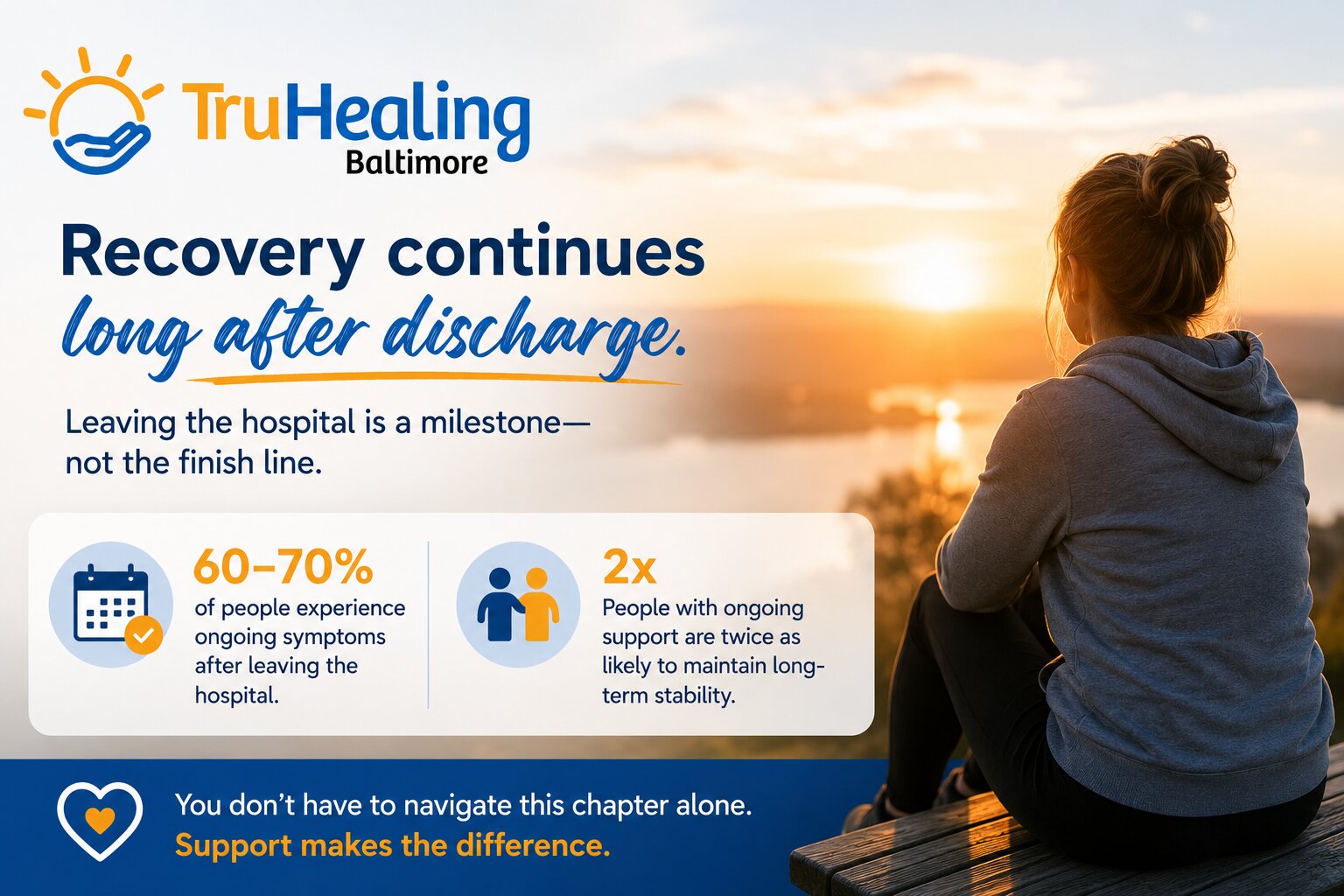
Leaving the hospital can feel like reaching the finish line.
For many people, it’s actually the beginning of a new chapter.
A chapter focused less on surviving and more on rebuilding.
If you’re feeling stuck, disconnected, or unsure about what comes next, you’re not failing recovery.
You’re experiencing a part of recovery that many people never talk about.
And you don’t have to navigate it alone.
Call (833) 782-2241 or visit our partial hospitalization program services to learn more about our treatment programs and partial hospitalization program services Anne Arundel County, Maryland.