

For many people, the hardest part of seeking treatment is not admitting they need help.
It is believing they have to give up their entire life to get it.
That fear keeps countless people stuck.
They know anxiety is becoming harder to manage.
They know depression is affecting their relationships, work, sleep, and motivation.
They know something needs to change.
Yet every time they think about treatment, they imagine disappearing from daily life completely.
They picture packing a bag.
Taking time away from family.
Leaving responsibilities behind.
Putting life on hold.
As a result, they wait.
Weeks become months.
Months become years.
And during that time, anxiety and depression often continue growing stronger.
If you’ve been searching for a way to get meaningful help without staying overnight, you’re not alone.
In fact, this is one of the most common concerns we hear from people who are exploring treatment for the first time.
Many eventually discover that there is a middle ground between weekly therapy and round-the-clock care.
Within the first stages of exploring a higher level of structured support, people often realize they may not have to choose between getting help and maintaining important parts of their daily life.
Step 1: Recognize When “Pushing Through” Stops Working
Many people spend years convincing themselves they simply need to try harder.
They tell themselves things will improve once work becomes less stressful.
Once they get more sleep.
Once the holidays are over.
Once life slows down.
The problem is that life rarely slows down on its own.
Anxiety does not usually disappear because someone becomes busier.
Depression rarely improves because someone ignores it.
Instead, symptoms often become woven into everyday life.
You may notice yourself cancelling plans more frequently.
You may feel exhausted despite sleeping.
You may find it difficult to concentrate.
Tasks that once felt simple begin requiring enormous effort.
Even enjoyable activities may feel draining.
At first, these changes can seem subtle.
Over time, however, they begin affecting almost every part of life.
Many people continue pushing forward because they are functioning.
They are still showing up.
Still working.
Still taking care of responsibilities.
But functioning and thriving are not the same thing.
A car can keep moving with a warning light on the dashboard.
That doesn’t mean the problem should be ignored.
Step 2: Understand That More Support Doesn’t Mean More Failure
One of the biggest barriers to treatment is the belief that needing additional help means something has gone wrong.
People often view treatment levels as a ladder.
If they need more support, they assume they have somehow moved backward.
The reality is much different.
Needing additional support is not a sign of weakness.
It is a sign that your needs have changed.
Think about physical health.
If someone sprains an ankle, they might use ice and rest.
If the injury is more severe, they may need physical therapy.
Nobody views physical therapy as failure.
It is simply the appropriate response to the situation.
Mental health works the same way.
Sometimes weekly appointments are enough.
Sometimes they are not.
Recognizing that difference can be empowering.
Because it shifts the question from:
“Why can’t I handle this alone?”
To:
“What type of support would help me move forward?”
Step 3: Stop Assuming Treatment Means Leaving Home
One reason many people delay care is because they imagine treatment as an all-or-nothing decision.
Either they continue struggling alone.
Or they leave home entirely.
For many individuals, neither option feels realistic.
Parents still need to care for children.
Professionals still need to manage responsibilities.
Students still have obligations.
Family members still need support.
This is where structured daytime care often becomes appealing.
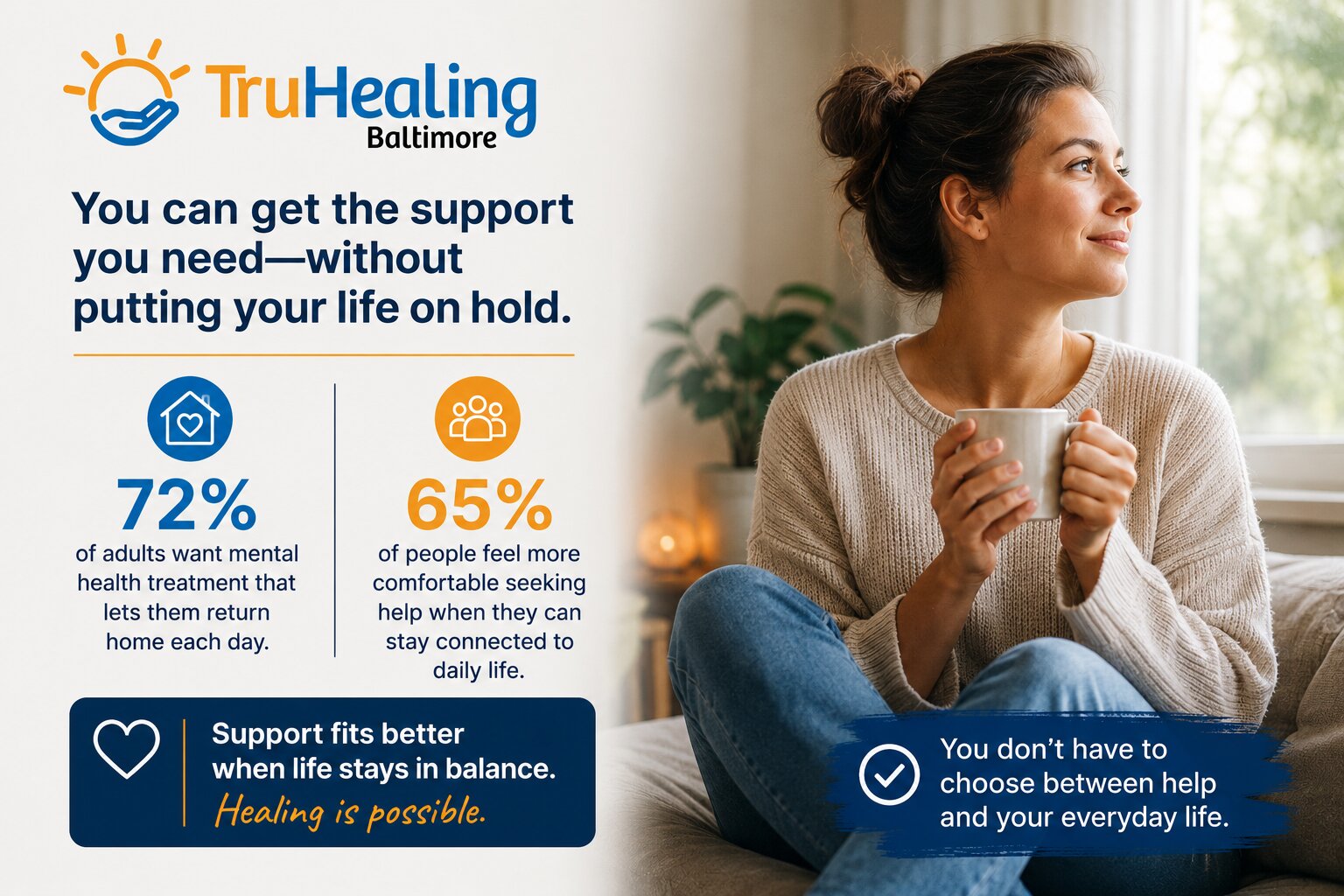
Instead of stepping away from life completely, individuals receive significant therapeutic support during the day and return home in the evening.
For many people, this creates a sense of balance.
They receive the care they need while remaining connected to the people and routines that matter most.
Step 4: Notice How Anxiety and Depression Affect Everyday Decisions
Many people think anxiety and depression only affect emotions.
In reality, they often affect decision-making as well.
Anxiety encourages avoidance.
Depression encourages withdrawal.
Together, they can create a powerful force that keeps people stuck.
Someone may avoid treatment because it feels overwhelming.
They may postpone making phone calls.
Delay appointments.
Tell themselves they’ll look into options next week.
Months later, they find themselves in the exact same place.
Depression can create a similar cycle.
When motivation disappears, even small tasks feel impossible.
Seeking help can feel like climbing a mountain.
This is one reason structured support can be valuable.
It provides guidance during periods when decision-making feels difficult.
Instead of trying to navigate everything alone, individuals receive consistent support while building healthier coping strategies.
Step 5: Learn Why Daily Practice Matters
One challenge many people face with weekly therapy is the gap between sessions.
You might have a productive conversation on Tuesday.
Then spend the next six days trying to apply what you learned on your own.
For some people, that’s enough.
For others, it isn’t.
Healing often works like learning a new language.
You do not become fluent through occasional practice.
You improve through repetition.
Consistency.
Guidance.
Correction.
Support.
Structured daytime care provides more opportunities to build and reinforce skills.
Instead of discussing coping strategies once per week, individuals have more frequent chances to practice them.
That repetition can make a significant difference.
Step 6: Listen to Stories From People Who Were Hesitant Too
Many people enter treatment believing they are the exception.
They think nobody else understands what they are experiencing.
Then they hear someone describe their own story.
The exhausted parent.
The overwhelmed professional.
The college student who feels stuck.
The person who appears successful while privately struggling.
Those moments often create something powerful.
Recognition.
People realize they are not uniquely broken.
They are human.
And human beings often struggle in remarkably similar ways.
One former client described treatment this way:
“I spent years thinking I needed to become stronger before asking for help. What I actually needed was help so I could become stronger.”
That shift in perspective changed everything.
Step 7: Give Yourself Permission to Imagine Feeling Better
This may sound simple.
For many people, it is surprisingly difficult.
After living with anxiety or depression for a long time, symptoms begin to feel normal.
The struggle becomes familiar.
People stop imagining that life could feel different.
They lower expectations.
They settle for survival.
Yet one of the most powerful moments in treatment often occurs when someone realizes improvement is possible.
Not perfection.
Not a stress-free life.
Just better.
More manageable.
More peaceful.
More hopeful.
Sometimes the first step toward healing is allowing yourself to believe that healing might actually happen.
Why Going Home at Night Matters to So Many People
The desire to return home each evening is incredibly common.
Home represents familiarity.
Comfort.
Pets waiting at the door.
Family dinners.
Favorite blankets.
Personal routines.
For many individuals, knowing they can receive meaningful support during the day while sleeping in their own bed at night removes one of the biggest barriers to treatment.
That flexibility often helps treatment feel accessible rather than intimidating.
People searching for a mental health day program Baltimore option frequently discover that they are not looking to escape life.
They are looking for a way to participate in life more fully.
A Different Kind of Success Story
When people imagine treatment success, they often picture dramatic transformations.
The reality is usually quieter.
Success might look like getting out of bed without dread.
Driving to work without panic.
Sleeping through the night.
Answering text messages again.
Laughing at a joke.
Feeling interested in life.
One former client shared that the biggest change wasn’t dramatic at all.
“It was the first Saturday morning in years when I woke up and didn’t immediately feel overwhelmed.”
That moment may seem small.
To them, it felt life-changing.
Healing is often built from moments exactly like that.
You May Be Closer Than You Think
If you’ve been wondering whether you need more support than weekly therapy but less than live-in treatment, you’re asking a question many people ask before taking the next step.
You do not need to have everything figured out.
You do not need to be in crisis.
You do not need to wait until things get worse.
Many people find relief after discovering treatment options in Areas We Serve or seeking help in Anne Arundel that fit their daily lives while providing more support than they have been receiving.
Sometimes the smallest decision creates the biggest change.
Not because everything improves overnight.
Because it finally creates momentum in the right direction.
Frequently Asked Questions
Can I receive treatment for anxiety and depression without staying overnight?
Yes. Some treatment options provide structured daytime care that allows individuals to receive support during the day and return home each evening.
How do I know if weekly therapy is no longer enough?
If symptoms continue interfering with daily life, relationships, work, sleep, or emotional well-being despite ongoing therapy, it may be worth exploring additional support.
Will I still be able to spend time with my family?
Many people choose structured daytime care because it allows them to remain connected to family, home life, and important responsibilities.
Is this only for people in crisis?
No. Many individuals seek treatment before reaching a crisis point because they want help managing symptoms before they become more severe.
What kinds of conditions are commonly treated?
People often seek support for anxiety, depression, mood disorders, trauma-related symptoms, and situations where mental health challenges significantly affect daily life.
How long does structured daytime treatment usually last?
Treatment length varies depending on individual needs, progress, and clinical recommendations.
What if I’m nervous about starting?
That feeling is extremely common. Many people feel uncertain before beginning treatment. Often, gathering information and speaking with professionals can help reduce anxiety about the process.
Can treatment really help if I’ve struggled for years?
Yes. Many people seek help after years of anxiety or depression and find meaningful improvement through consistent support, skill-building, and individualized care.
Call (833) 782-2241 or visit our partial hospitalization program services to learn more about our treatment programs, partial hospitalization program services in Baltimore, Maryland.