

There is a particular kind of loneliness that can show up after dark.
The workday ends. The phone gets quieter. The distractions fade. Suddenly, you’re left alone with thoughts you’ve been outrunning since morning.
Maybe you’ve been carrying depression for months. Maybe longer.
You get up every day. You go to work. You handle responsibilities. People around you might even describe you as dependable.
But nighttime tells a different story.
That’s when the sadness gets louder. That’s when your mind starts replaying mistakes, worries, and fears. That’s when you find yourself searching online for answers because you know something needs to change.
If you’re worried that getting help could interfere with your job, we want you to know something important:
You are not the first person to feel trapped between protecting your mental health and protecting your paycheck.
Many people in Baltimore face this exact struggle. The good news is that support may be more flexible than you think. Learning about an outpatient treatment schedule can be a helpful first step if you’re trying to balance recovery with work and daily responsibilities.
Step 1: Recognize That Nighttime Depression Is Real
A lot of people question themselves when depression seems worse at night.
You may wonder why you can function during the day but fall apart in the evening.
There are several reasons this can happen.
During the day, work gives your brain something to focus on. You’re responding to emails, solving problems, attending meetings, or managing responsibilities.
At night, those distractions disappear.
The thoughts that were sitting quietly in the background suddenly move to center stage.
Many people describe nighttime depression as feeling like a wave. The day may be manageable, but once evening arrives, the weight becomes much harder to carry.
Recognizing this pattern is important because it reminds you that you’re not imagining it.
What you’re experiencing is real.
Step 2: Stop Waiting for the “Perfect Time” to Get Help
One of the most common reasons people delay treatment is timing.
They tell themselves:
“I’ll reach out after this project.”
“I’ll wait until work slows down.”
“I’ll do something next month.”
Unfortunately, depression rarely respects schedules.
The perfect time usually never arrives.
We’ve worked with many people who spent months waiting for the right moment to ask for help. Looking back, most say the same thing:
“I wish I had reached out sooner.”
You don’t have to be in crisis to deserve support.
You don’t have to wait until you’re completely overwhelmed.
The earlier you seek help, the more options you often have.
Step 3: Build an Evening Routine That Supports Your Mental Health
Depression thrives in isolation and unpredictability.
One way to push back is by creating structure.
That doesn’t mean every evening needs to be perfectly planned.
It simply means giving yourself a few reliable anchors.
Consider:
- Going to bed at the same time each night
- Limiting alcohol or substances that worsen mood
- Taking a short walk after work
- Calling someone you trust
- Reading instead of scrolling social media
- Preparing for the next day
Small habits can create stability during difficult moments.
Think of them as guardrails rather than solutions.
They won’t fix everything, but they can help keep you moving forward.
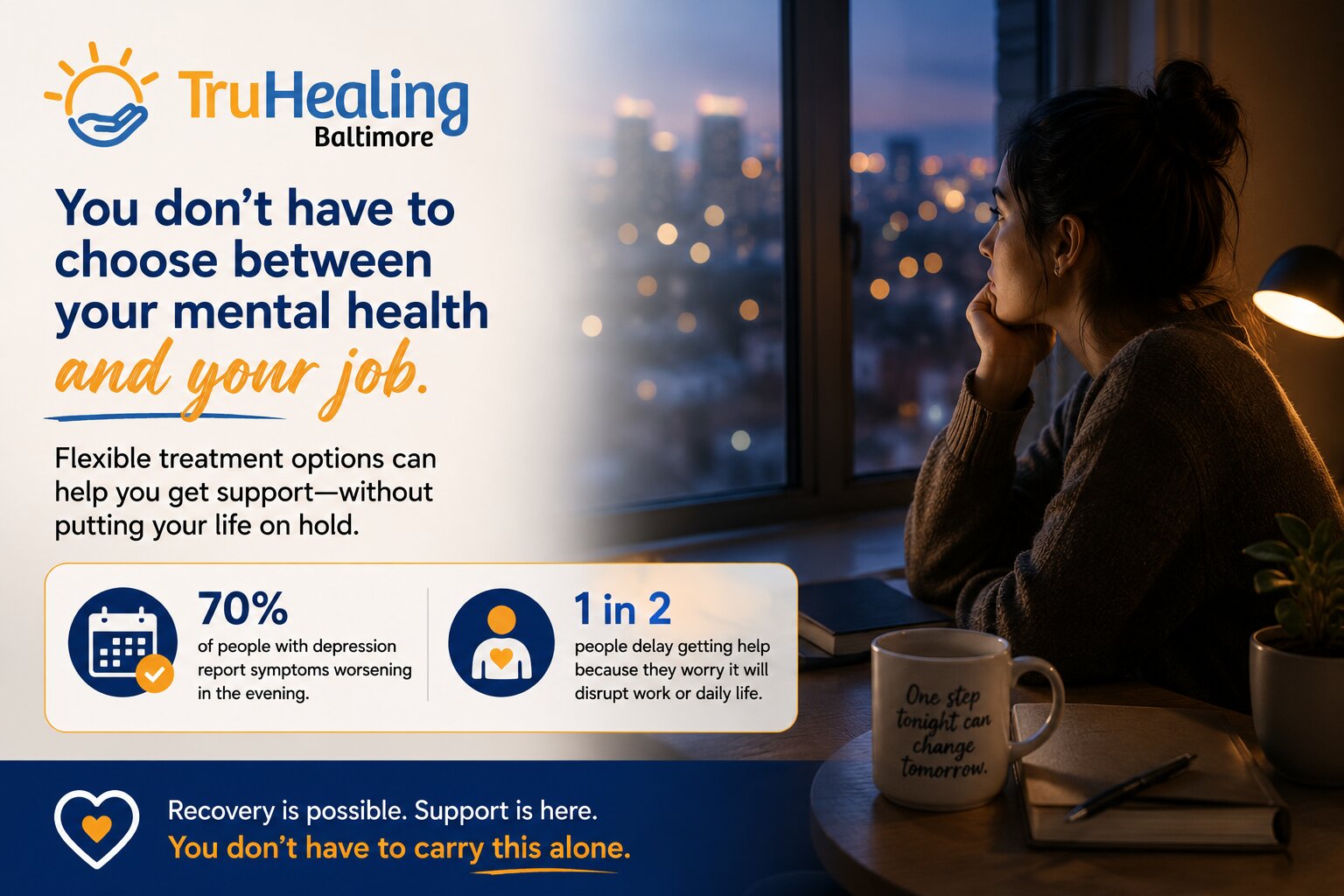
Step 4: Explore Support That Fits Around Work
One of the biggest misconceptions about treatment is that it requires stepping away from life completely.
For some people, more intensive support is necessary.
For many others, flexible treatment options make it possible to receive care while continuing to work.
We’ve spoken with countless individuals who initially assumed they couldn’t get help because of their jobs.
Teachers.
Nurses.
Construction workers.
Office professionals.
Business owners.
Parents working two jobs.
Many were surprised to learn that support options existed outside of traditional daytime hours.
For individuals searching for evening therapy groups Baltimore residents can access, flexibility often becomes part of the solution.
The goal is not to make you choose between your mental health and your responsibilities.
The goal is to find a path that allows both to matter.
Step 5: If You Ghosted Treatment Before, Don’t Let Shame Make the Decision
This is important.
If you’ve started treatment before and stopped showing up, you’re not alone.
People leave treatment for reasons that have nothing to do with whether they deserve help.
Sometimes depression drains motivation.
Sometimes work becomes overwhelming.
Sometimes life gets messy.
We’ve seen people disappear after a few sessions because they felt embarrassed about missing appointments.
Weeks later, they wanted to come back but assumed they had ruined their chance.
They hadn’t.
One of the biggest misconceptions about treatment is that you only get one opportunity.
The truth is that many people return after stepping away.
Recovery isn’t always a straight line.
Sometimes it looks like taking a step back before moving forward again.
The door remains open.
Step 6: Learn From People Who Came Back
Over the years, we’ve seen many people return after believing they had waited too long.
One person stopped treatment because they couldn’t imagine balancing work and recovery at the same time.
Months later, they returned after realizing that continuing to struggle alone was affecting every area of their life.
They expected criticism.
Instead, they found understanding.
Another person spent years convincing themselves that their depression wasn’t serious enough to deserve treatment.
They were still working.
Still paying bills.
Still functioning.
But they described every evening as feeling like they were carrying a backpack full of bricks.
Eventually, they reached out.
Months later, they told us something simple but powerful:
“I forgot what it felt like not to dread nighttime.”
Stories like these aren’t meant to suggest recovery happens overnight.
They’re reminders that change is possible.
Even after setbacks.
Even after missed appointments.
Even after periods of silence.
Step 7: Focus on One Next Step Instead of the Entire Road
Depression often makes the future feel impossible.
You start thinking about everything at once.
Work.
Family.
Finances.
Treatment.
Sleep.
Responsibilities.
The list becomes overwhelming.
Instead of focusing on every step ahead, focus on the next one.
Just one.
That could mean:
- Saving a phone number
- Learning about treatment options
- Talking to a trusted friend
- Scheduling an assessment
- Asking questions about scheduling
You don’t need all the answers today.
You only need enough clarity to take one small step forward.
Frequently Asked Questions
Why does my depression feel worse at night?
Many people notice their depression intensifies after dark because daytime distractions disappear. Work, responsibilities, and social interactions can temporarily occupy attention, allowing difficult thoughts and emotions to surface more strongly in the evening.
Can I get mental health treatment without missing work?
In many cases, yes. Different treatment options offer different levels of flexibility. Some programs are designed to accommodate work schedules and family responsibilities.
What if I started treatment before and stopped going?
This is more common than many people realize. Life circumstances, depression symptoms, work demands, and other challenges can interrupt treatment. Stopping treatment doesn’t mean you can’t return and continue receiving support.
How do I know if I need professional help?
If depression is affecting your sleep, mood, relationships, work performance, motivation, or overall quality of life, it may be helpful to speak with a professional. You don’t need to wait for a crisis to seek support.
Will treatment affect my career?
Many people worry about this before reaching out. In reality, untreated depression often has a greater impact on job performance over time than receiving appropriate support.
What if I’m embarrassed to come back after disappearing?
You may feel embarrassed, but treatment providers have worked with many people who have stepped away and returned. Reaching back out is often welcomed, not judged.
Are evening treatment options available?
Depending on your needs and location, treatment programs may offer scheduling options that allow individuals to receive care while maintaining employment and other responsibilities.
You Don’t Have to Carry This Alone Tonight
If depression feels heavier after sunset and you’re worried that getting help could interfere with work, remember that support doesn’t always require putting your life on hold.
We’ve worked with many people who felt trapped between protecting their mental health and protecting their responsibilities. Many of them eventually discovered they didn’t have to choose one or the other.
And if you’ve stepped away from treatment before, please know this: a pause is not the end of your story.
Help is still here.
Call (833) 782-2241 or visit our intensive outpatient program services to learn more about our treatment programs and intensive outpatient program services Baltimore County, Maryland.