

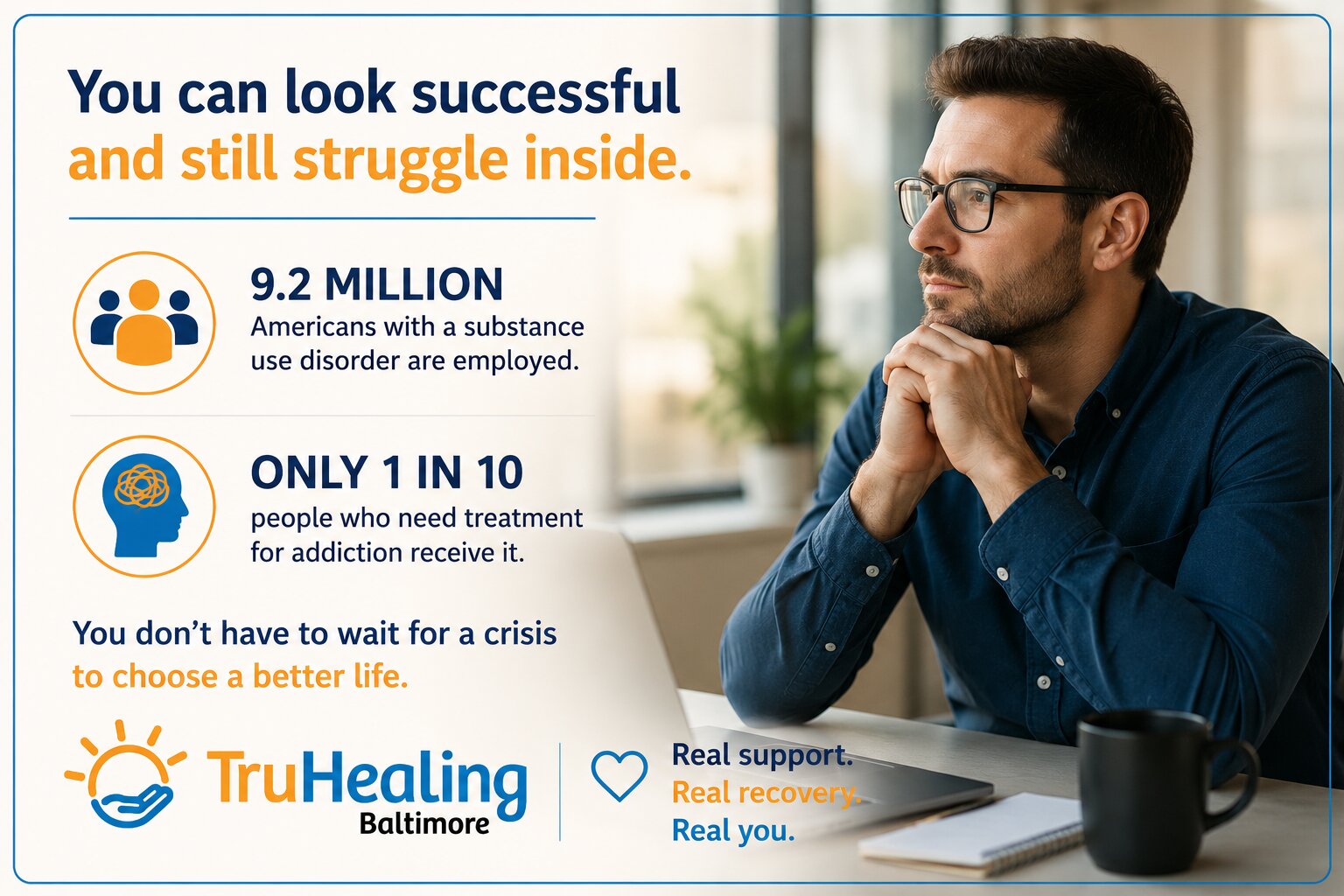
From the outside, life may appear completely under control. You show up for work, pay the bills, take care of your family, and keep your commitments. Friends and coworkers may even describe you as dependable or successful.
But behind that image, alcohol or drug use has quietly become something you rely on to get through the day, manage stress, or simply feel normal.
Many people describe themselves as a functioning addict because they haven’t lost everything. They haven’t been arrested, lost a job, or experienced the dramatic consequences often associated with addiction. Yet maintaining appearances doesn’t mean substance use isn’t taking a growing toll.
If you’re beginning to question whether alcohol or drugs have become more important than you intended, learning more about TruHealing Baltimore’s substance abuse treatment programs can help you understand your options before the situation becomes more difficult.
Recovery doesn’t require waiting until life falls apart. It can begin the moment you recognize something needs to change.
What It Means
The phrase functioning addict is not an official medical diagnosis, but it is widely used to describe someone who continues meeting many daily responsibilities while living with a substance use disorder.
A person may continue to:
- Go to work every day
- Care for children
- Maintain relationships
- Pay bills
- Keep appointments
- Appear successful
At the same time, alcohol or drug use may have become increasingly difficult to control.
Because outward responsibilities are still being managed, both the individual and the people around them may underestimate how serious the problem has become.
Addiction isn’t defined by whether someone has a job or owns a home.
It’s defined by the continued use of substances despite harmful consequences and a reduced ability to control that use.
Common Signs
Not everyone experiences addiction in the same way.
Someone whose life appears stable may still notice warning signs such as:
- Frequently thinking about the next opportunity to drink or use drugs
- Using substances to cope with stress, anxiety, or emotions
- Needing larger amounts to achieve the same effect
- Making excuses for drinking or drug use
- Hiding the amount or frequency of use
- Feeling uncomfortable when substances aren’t available
- Promising to cut back but struggling to follow through
- Organizing daily routines around alcohol or drugs
- Feeling exhausted from maintaining appearances
Friends and family may not recognize these struggles because so much effort goes into keeping them hidden.
Why It Often Delays Getting Help
One of the greatest challenges is that success can create the illusion that everything is under control.
Many people tell themselves:
- “I’m still going to work.”
- “I haven’t lost my family.”
- “Other people have it much worse.”
- “I can stop whenever I decide to.”
These thoughts can delay treatment for months or even years.
Meanwhile, substance use often continues increasing gradually.
Tolerance develops.
Dependence becomes stronger.
Physical and mental health may slowly decline.
The absence of a dramatic crisis doesn’t mean the absence of addiction.
Waiting for obvious consequences isn’t necessary—and often makes recovery more difficult than it needs to be.
The Hidden Cost of Holding Everything Together
Keeping life running while struggling with addiction takes an enormous amount of energy.
Many people describe constantly feeling:
- Emotionally drained
- Anxious about being discovered
- Guilty after using
- Ashamed that they need substances to cope
- Disconnected from friends and family
- Unable to fully relax
The pressure to appear successful can become exhausting.
Over time, substance use may begin affecting areas that were once protected.
Relationships become strained.
Performance at work declines.
Health problems develop.
Sleep worsens.
Financial stress increases.
Even before others notice, many individuals quietly recognize that maintaining the balance is becoming harder.
That recognition isn’t weakness.
It’s often the beginning of honesty.
How to Reach Out Before Everything Falls Apart
One of the biggest myths about recovery is that people need to reach “rock bottom.”
In reality, seeking help earlier often leads to better outcomes.
You don’t need to wait until you’ve lost your career, your family, or your health.
If alcohol or drug use is creating stress, secrecy, or loss of control, those experiences matter.
Reaching out might begin with:
Talking to Someone You Trust
Opening up to a family member, close friend, therapist, or healthcare provider can reduce the isolation that often accompanies addiction.
Scheduling a Professional Assessment
An addiction assessment isn’t a commitment to any specific level of treatment.
It’s an opportunity to better understand what’s happening and explore available options.
Learning About Treatment
Treatment is not one-size-fits-all.
Depending on individual needs, care may include:
- Medical detox
- Residential treatment
- Partial hospitalization programs (PHP)
- Intensive outpatient programs (IOP)
- Individual counseling
- Group therapy
- Relapse prevention planning
Seeking information is a sign of strength—not failure.
Giving Yourself Permission to Rest
Many people spend years trying to prove they can continue managing everything alone.
Recovery offers something different.
It offers the chance to stop performing and begin healing.
Frequently Asked Questions
Can you function and still be addicted?
Yes. Many people continue working, maintaining relationships, and meeting daily responsibilities while living with a substance use disorder. Outward success does not rule out addiction.
What are the signs?
Common signs include increasing tolerance, hiding substance use, relying on alcohol or drugs to cope with stress, unsuccessful attempts to cut back, cravings, and feeling emotionally exhausted from maintaining appearances.
How do you help someone who seems fine?
Approach the conversation with compassion rather than judgment. Share specific concerns, listen without arguing, and encourage the person to speak with a healthcare provider or addiction treatment professional. Remember that someone doesn’t have to experience a major crisis before benefiting from support.
You Don’t Have to Wait for Life to Fall Apart
If you’re carrying the weight of keeping everything together while privately struggling with alcohol or drugs, you’re not alone. Recovery isn’t reserved for people who have lost everything—it is available to anyone who recognizes that substance use is taking more than it is giving.
At TruHealing Baltimore, we provide compassionate, evidence-based substance use treatment for people at every stage of recovery. Whether you’re exploring your options for the first time or ready to take the next step, our team is here to help.
Call TruHealing Baltimore today at (833) 782-2241 to learn more about our substance abuse treatment programs and begin your recovery journey.